Migrate OneDrive to pCloud with RcloneView: Complete Guide
Switching from OneDrive to pCloud? RcloneView connects both services and handles the full migration visually — from planning and transferring to verification and ongoing sync.
OneDrive is deeply embedded in the Microsoft 365 ecosystem, and for many users it serves as the default cloud storage. But there are compelling reasons to move to pCloud: lifetime storage plans that eliminate recurring fees, strong privacy policies under Swiss jurisdiction, and a client-side encryption option (pCloud Crypto) for sensitive files. The challenge is getting your files from one to the other reliably and completely.
RcloneView solves this by connecting to both OneDrive and pCloud, displaying them side by side, and giving you visual tools to copy, compare, and schedule transfers. No command-line work, no downloading files to your local machine first, and no risk of leaving files behind in nested folders.
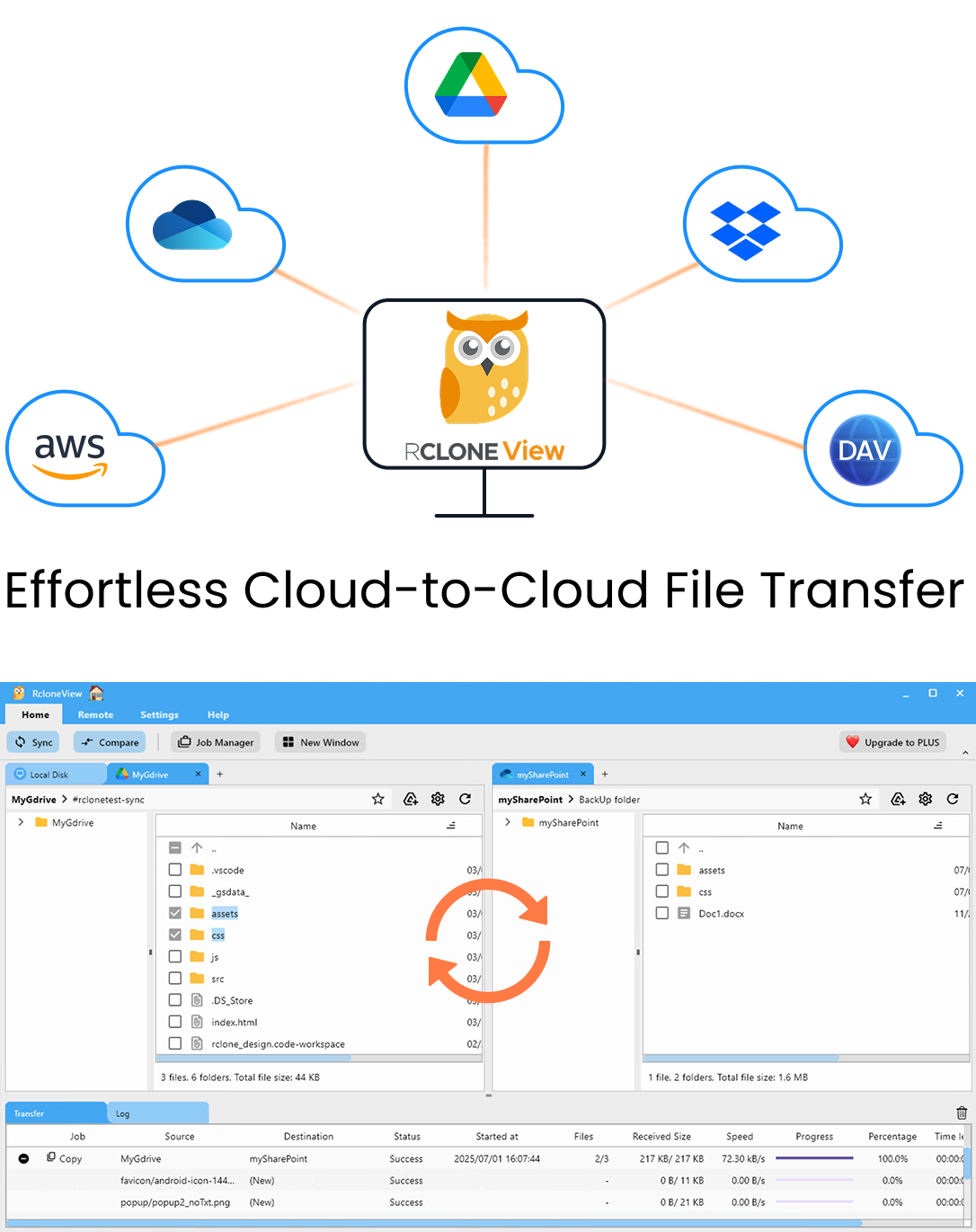
Manage & Sync All Clouds in One Place
RcloneView is a cross-platform GUI for rclone. Compare folders, transfer or sync files, and automate multi-cloud workflows with a clean, visual interface.
- One-click jobs: Copy · Sync · Compare
- Schedulers & history for reliable automation
- Works with Google Drive, OneDrive, Dropbox, S3, WebDAV, SFTP and more
Free core features. Plus automations available.
Why Migrate from OneDrive to pCloud
There are several practical reasons users choose pCloud over OneDrive:
- Lifetime storage plans: pCloud offers one-time payment plans (500 GB, 2 TB, or 10 TB) that eliminate monthly or annual subscription fees. Over several years, the savings compared to Microsoft 365 storage can be substantial.
- Swiss privacy: pCloud is headquartered in Switzerland and operates under Swiss data protection laws, which are among the strictest in the world. For users concerned about data privacy and government access requests, this is a meaningful difference.
- Client-side encryption: pCloud Crypto provides zero-knowledge encryption for selected folders. Files are encrypted on your device before upload, and pCloud cannot access the contents.
- Simplicity: pCloud offers a focused, clean interface for file storage and sharing without the complexity of the broader Microsoft 365 ecosystem. If you only need storage and sync, pCloud keeps things straightforward.
- No vendor lock-in: If you are reducing your dependency on the Microsoft ecosystem — perhaps moving to Google Workspace or open-source alternatives — migrating files off OneDrive is a necessary step.
Step 1: Set Up Both Remotes in RcloneView
Connect OneDrive and pCloud so RcloneView can access both:
- Open RcloneView and click + New Remote.
- Add OneDrive: Select OneDrive from the provider list, complete the Microsoft OAuth login, select your account type (Personal or Business), and name it (e.g.,
MyOneDrive). - Add pCloud: Select pCloud from the provider list, complete the OAuth authorization, and name it (e.g.,
MyPCloud). - Both remotes now appear in the Explorer and are ready to browse.
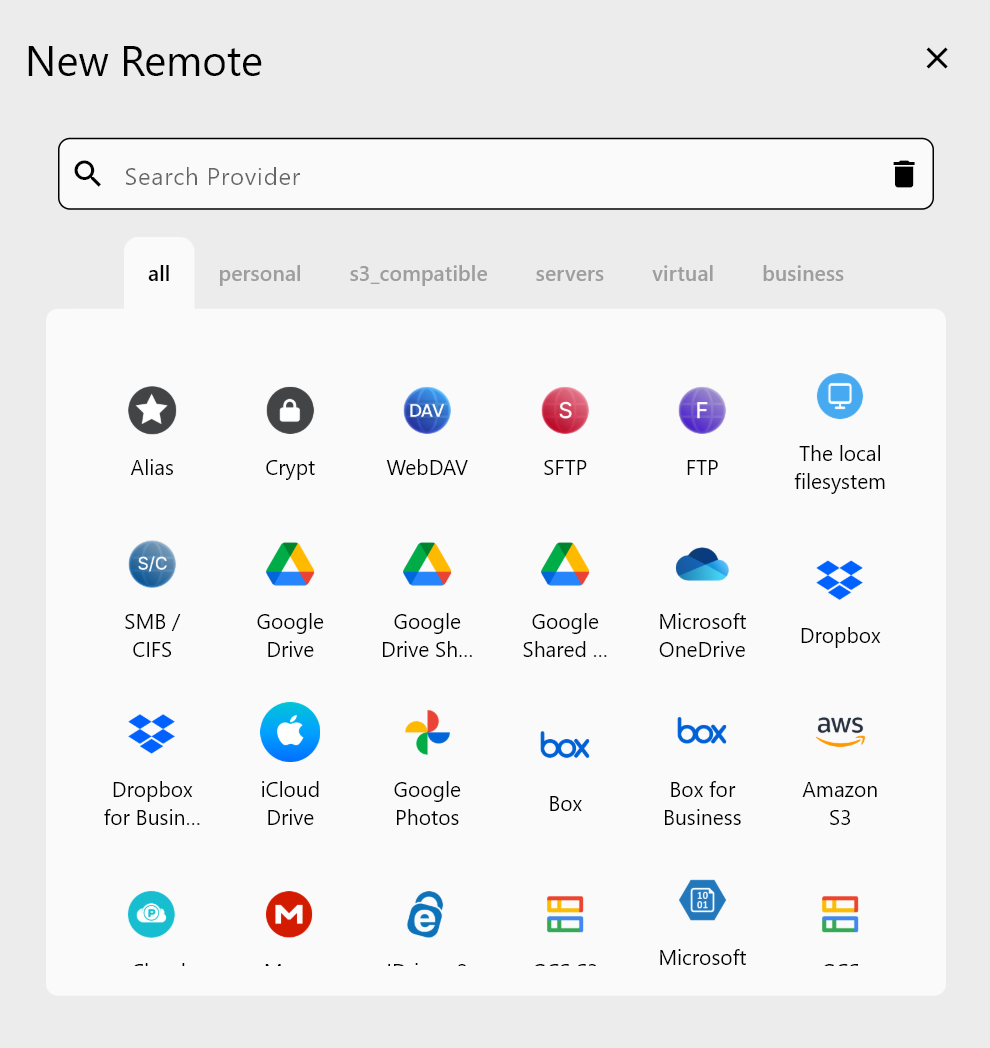
If you are using OneDrive for Business with a SharePoint library, make sure to select the correct drive during the OAuth setup. RcloneView will present a list of available drives associated with your Microsoft account.
Step 2: Plan Your Migration Strategy
Before moving any files, spend time planning:
- Audit your OneDrive storage: Browse your OneDrive remote in RcloneView to review the full folder structure and total size. Identify what needs to migrate versus what can be archived or deleted.
- Check pCloud capacity: Verify your pCloud plan has enough space. Lifetime plans are fixed at 500 GB, 2 TB, or 10 TB — there is no way to temporarily expand capacity.
- Decide on folder structure: You can replicate your OneDrive structure exactly in pCloud, or reorganize during the migration. RcloneView lets you copy to any destination path.
- Estimate transfer time: Large migrations (hundreds of gigabytes) may take hours or even days depending on your internet connection and provider rate limits. Plan accordingly and consider running transfers overnight.
- Choose your approach: For a one-time full migration, a single copy job works well. For a phased migration where you continue using OneDrive during the transition, schedule recurring sync jobs.
Step 3: Handle OneDrive-Specific Filename and Path Issues
OneDrive has several filename and path behaviors that can cause problems during migration. Address these before you start copying:
Character Restrictions
OneDrive allows certain characters in filenames that pCloud may handle differently. Conversely, OneDrive itself restricts characters like ", *, :, <, >, ?, \, |, and leading/trailing spaces. If you have files with unusual characters, review them before transfer.
Path Length Limits
OneDrive enforces a 400-character total path length limit. If you have deeply nested folders with long names, the full paths in pCloud should remain within reasonable limits. pCloud is generally more permissive, but extremely long paths can cause issues with sync clients on certain operating systems.
OneNote Notebooks
OneNote notebooks stored in OneDrive are not regular files — they are structured data accessible through the OneNote API. Rclone and RcloneView will see the notebook folders but cannot meaningfully transfer OneNote content. Export your notebooks from OneNote separately (as PDF or .onepkg) before migration.
Office Document Formats
Word, Excel, and PowerPoint files stored in OneDrive are standard Office formats (.docx, .xlsx, .pptx) and transfer without issues. However, links to shared documents, co-authoring sessions, and comments tied to OneDrive sharing will not carry over to pCloud.
Files On-Demand Items
If you use OneDrive's Files On-Demand feature, some files may exist only as cloud placeholders on your local machine. This does not affect RcloneView, which connects directly to OneDrive's cloud API rather than reading from your local sync folder.
Step 4: Transfer Your Files
Open OneDrive on one side and pCloud on the other in the RcloneView Explorer.
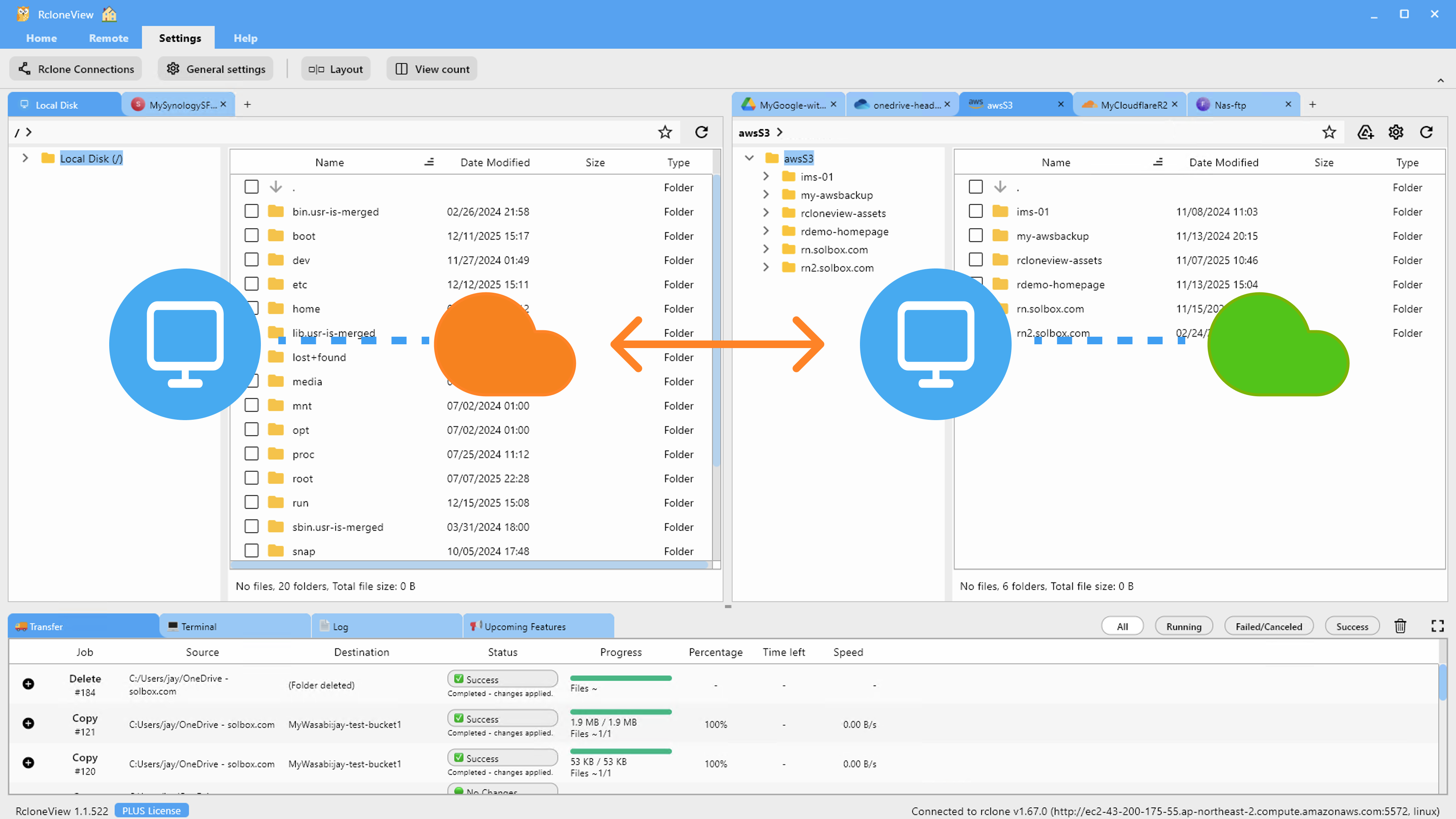
Small Migrations: Drag and Drop
For a few folders or a limited dataset, drag files directly from OneDrive to pCloud. RcloneView handles the transfer and displays real-time progress.
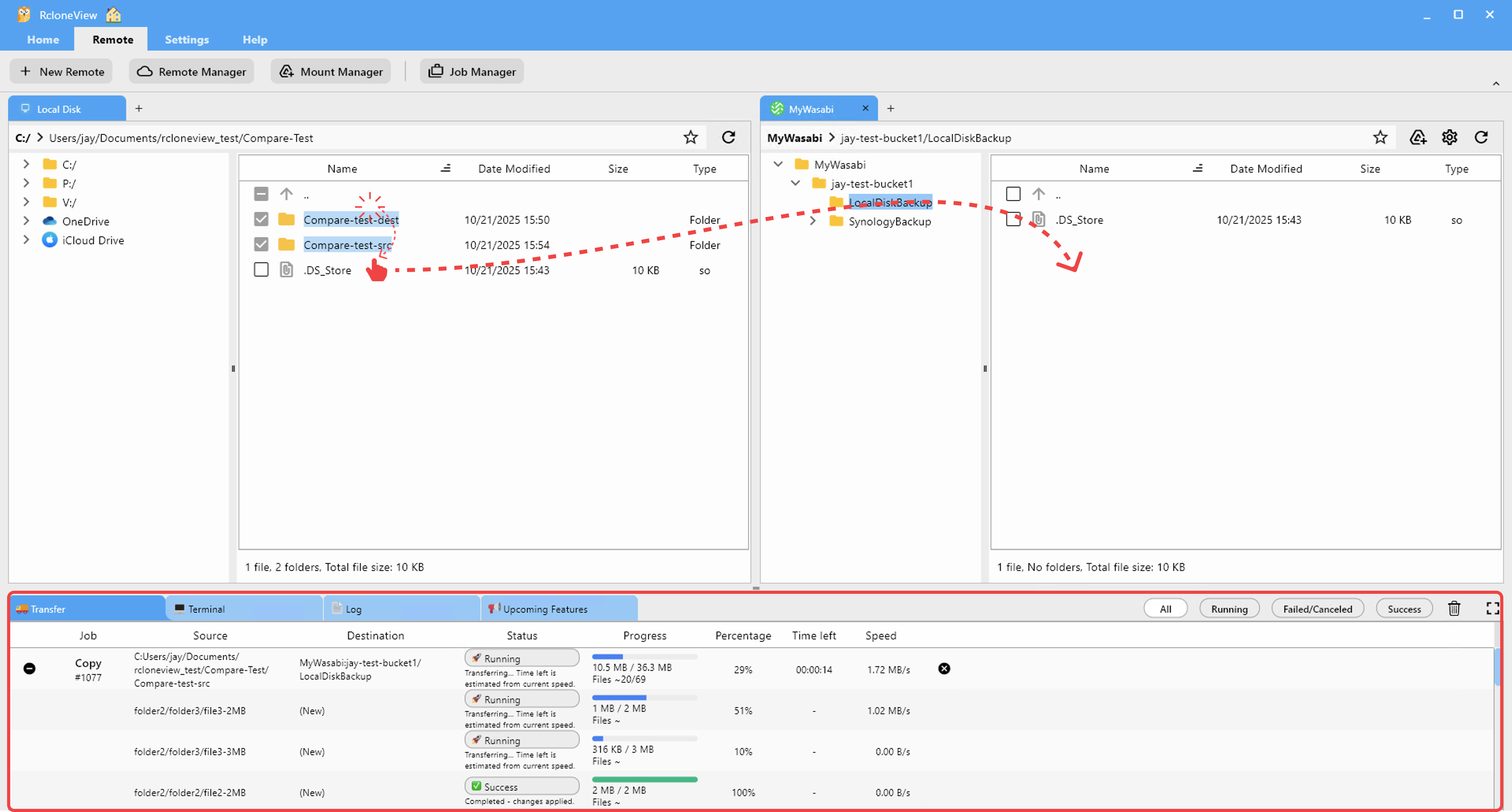
Large Migrations: Copy Job
For datasets of 50 GB or more, create a structured copy job:
- Select the OneDrive source folder (or root for a full migration).
- Select the pCloud destination folder.
- Run a Dry Run first to preview the file count, total size, and any potential issues.
- Execute the copy job and monitor progress in the transfer panel.
- RcloneView automatically retries failed individual files due to timeouts or rate limits.
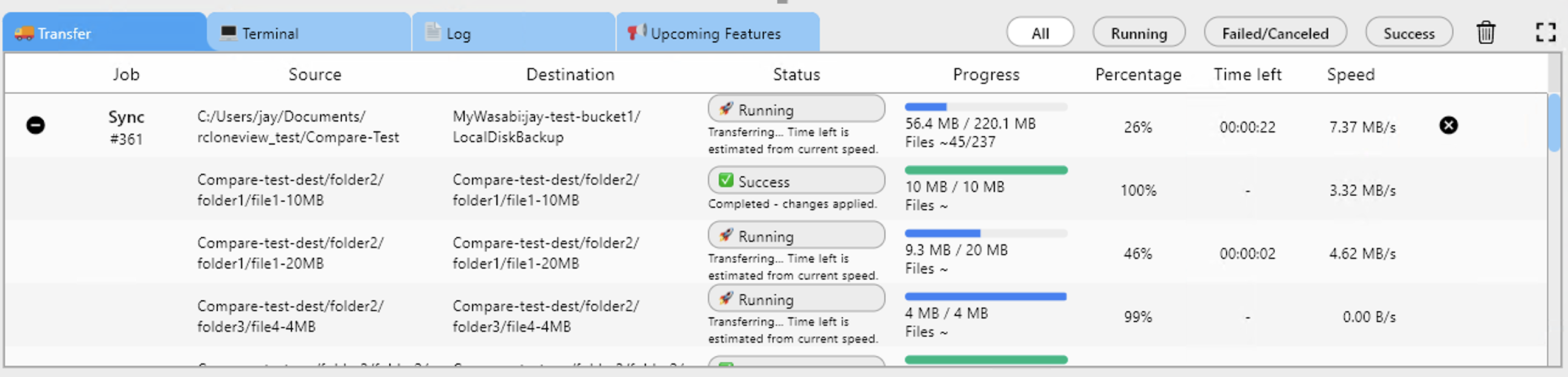
For very large migrations, consider breaking the work into batches by top-level folder. This makes it easier to track progress, resume after interruptions, and verify each section independently.
Step 5: Verify the Migration
After the transfer completes, confirm that everything arrived correctly:
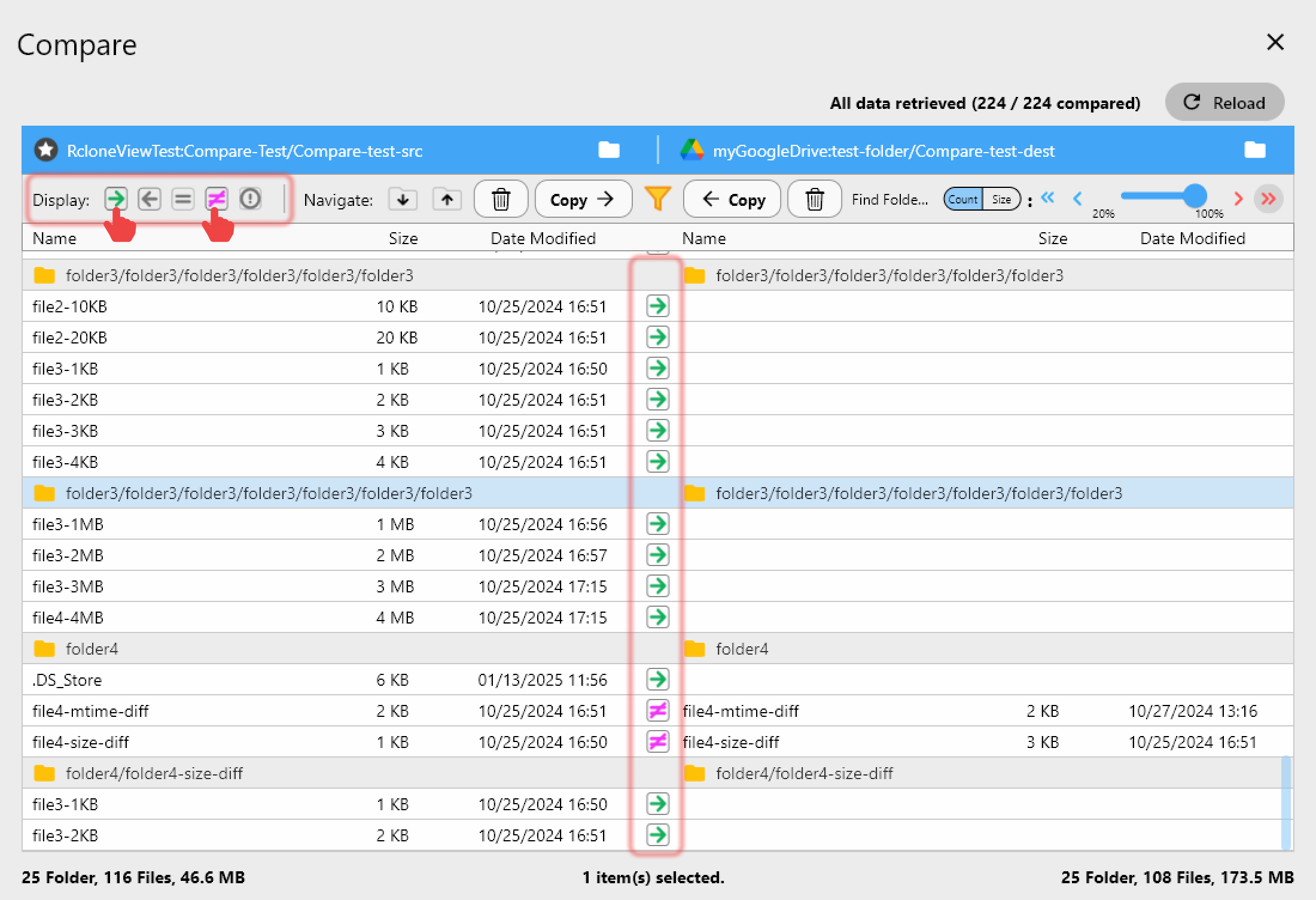
- Use the Compare feature in RcloneView to check your OneDrive source against the pCloud destination.
- Review the comparison results for files marked as missing, different in size, or mismatched.
- Re-copy any files that failed or were skipped.
Common issues to watch for during verification:
- Timestamp differences: OneDrive and pCloud may store modification times with different precision. Minor timestamp discrepancies (within a few seconds) are normal and do not indicate data loss.
- Empty folders: Some sync tools skip empty folders. Check that your folder structure is complete.
- Large files: If any files over 5 GB failed, check pCloud's upload limits for your plan and retry individually.
Step 6: Schedule Transition Sync
If your team is migrating gradually and you need both services to stay synchronized during the transition:
- Create a Sync job from OneDrive to pCloud in RcloneView.
- Open the Job Scheduling panel and configure a daily or twice-daily schedule.
- Any new files added to OneDrive will appear in pCloud at the next scheduled run.
- Once everyone has moved their workflows to pCloud, disable the schedule and decommission the OneDrive sync.
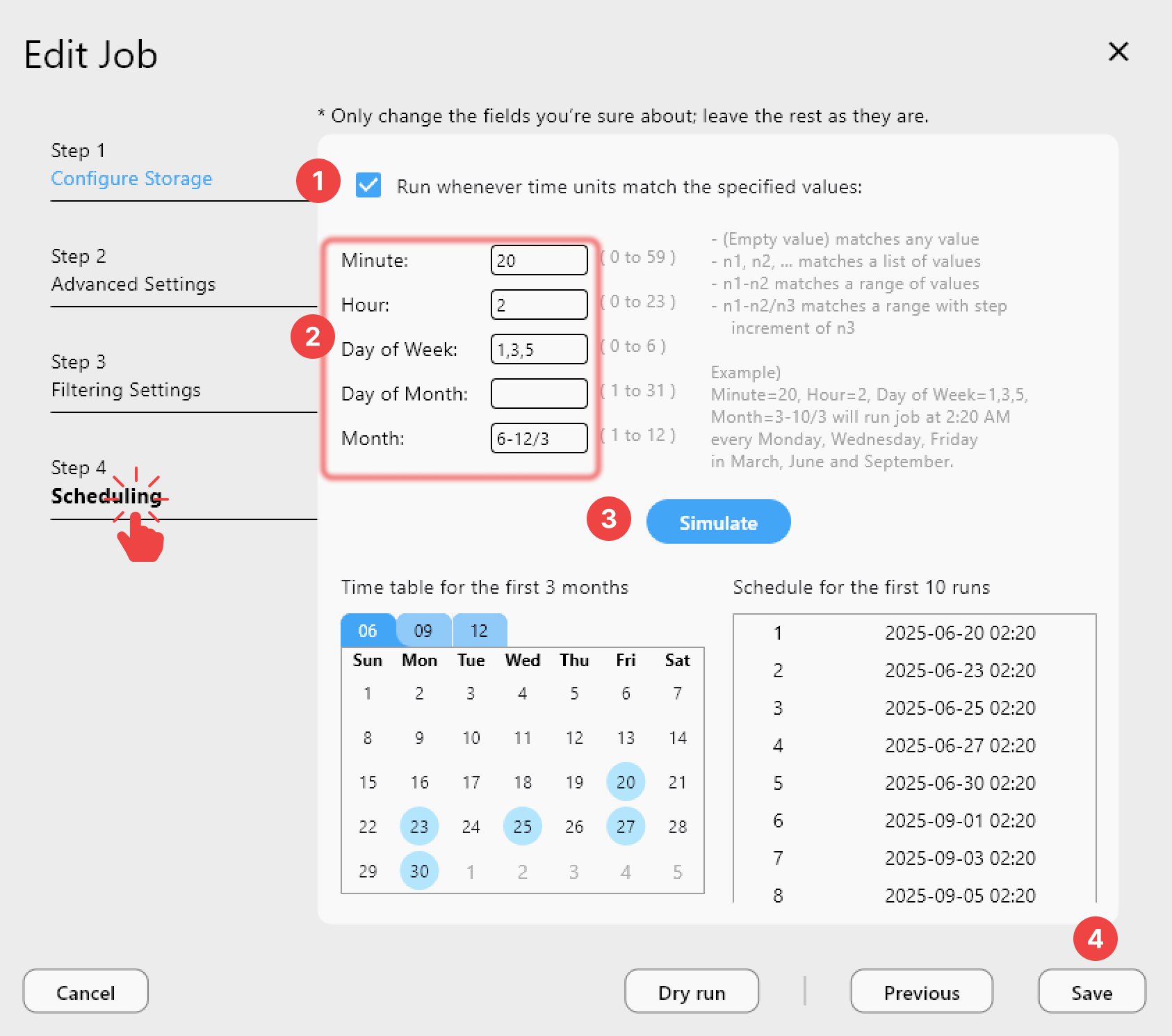
Be careful with the direction of sync. If people start using pCloud while others are still on OneDrive, a one-way sync (OneDrive to pCloud) is safer than a bidirectional approach. You can create a second job in the opposite direction if truly bidirectional sync is needed, but coordinate carefully to avoid conflicts.
Post-Migration Checklist
After you have verified the migration and your team is using pCloud:
- Recreate shared links: Any OneDrive shared links will stop working once you remove the files. Create new pCloud share links and distribute them.
- Update application integrations: If you have apps or services that reference OneDrive paths (backup tools, media servers, automation scripts), update them to point to pCloud.
- Configure pCloud sync client: Install the pCloud desktop client on each machine that needs local access.
- Enable pCloud Crypto: If privacy was a factor in your migration, set up pCloud Crypto for sensitive folders.
- Keep OneDrive active temporarily: Maintain your OneDrive subscription for 30 to 60 days as a rollback safety net, then cancel or downgrade.
- Export OneNote notebooks: If you have not already done so, export any OneNote content that was not part of the file transfer.
Getting Started
- Download RcloneView from rcloneview.com.
- Connect OneDrive and pCloud using their OAuth authorization flows.
- Plan, copy, verify, and schedule your migration with full visual control at every step.
From OneDrive to pCloud — a managed migration with no files left behind.
Related Guides:
- Migrate pCloud to OneDrive with RcloneView
- Effortless Transfers Between Google Drive and OneDrive
- Browse and Manage Remote Storage
Supported Cloud Providers