Analyze Cloud Storage Usage and Quotas with RcloneView
Before you can optimize cloud costs, you need to see exactly where your storage is going. RcloneView puts usage data and quota information for every connected remote in one place.
Most cloud storage costs are driven by volume. Whether you pay per gigabyte on S3, stay within a free tier on Google Drive, or share a team quota on OneDrive, knowing how much space each remote consumes is essential for cost control and capacity planning. Rclone's about command queries a provider's API for total, used, free, and trashed space. RcloneView surfaces this information visually so you can monitor all your remotes without switching between provider dashboards.
Manage & Sync All Clouds in One Place
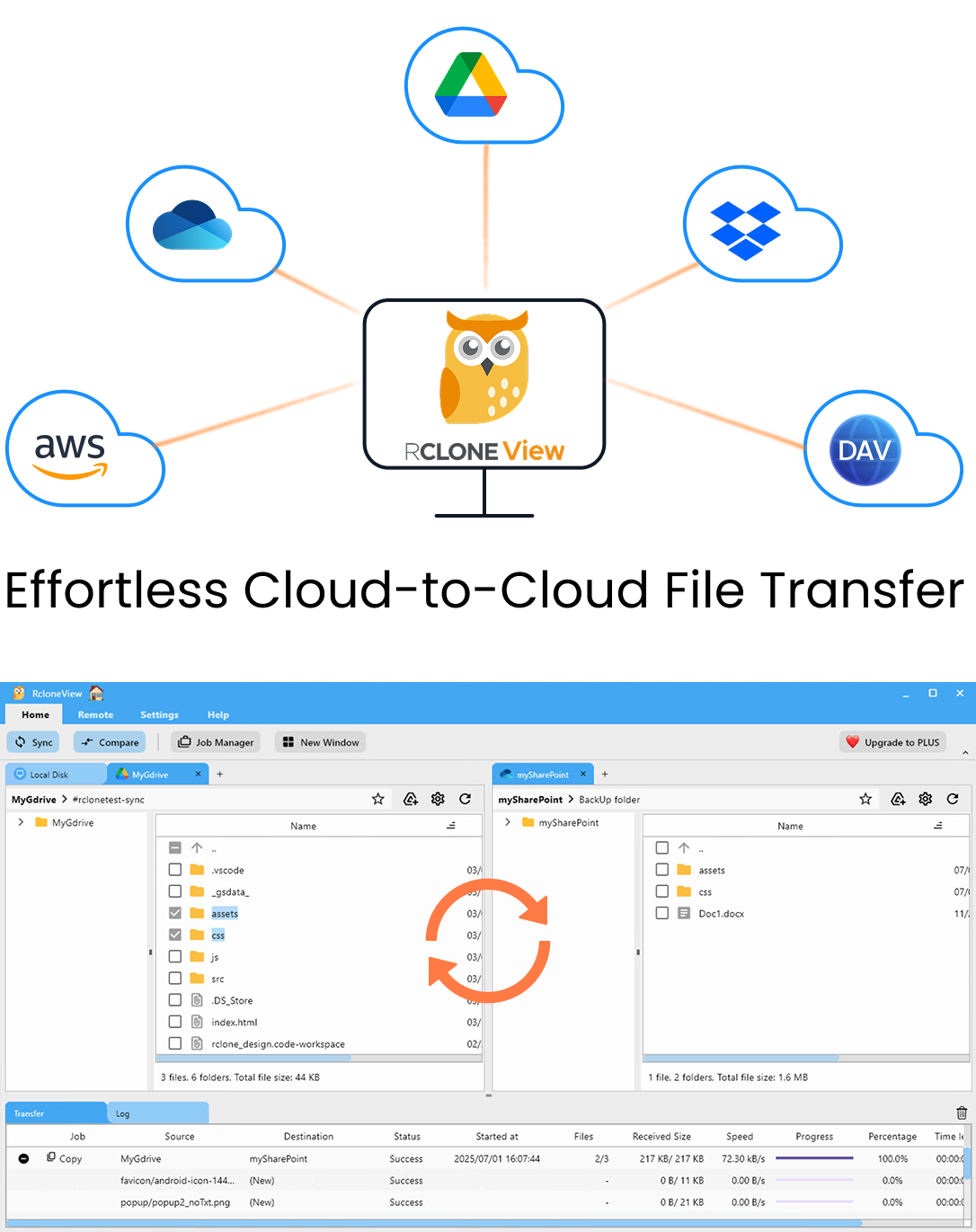
RcloneView is a cross-platform GUI for rclone. Compare folders, transfer or sync files, and automate multi-cloud workflows with a clean, visual interface.
- One-click jobs: Copy · Sync · Compare
- Schedulers & history for reliable automation
- Works with Google Drive, OneDrive, Dropbox, S3, WebDAV, SFTP and more
Free core features. Plus automations available.
What Rclone About Reports
The rclone about command returns storage metrics directly from the provider's API. A typical response includes:
| Metric | Description |
|---|---|
| Total | Total storage quota allocated to the account |
| Used | Space currently consumed by files |
| Free | Remaining available space |
| Trashed | Space used by items in trash/recycle bin |
| Other | Space used by other services (e.g., Gmail for Google accounts) |
Not every provider reports all fields. S3-compatible services, for example, often report only used space since buckets have no fixed quota. Google Drive reports all five fields, making it one of the most informative.
Viewing Storage Usage in RcloneView
RcloneView provides a visual overview of your connected remotes:
- Open RcloneView and navigate to the Dashboard or Remote Explorer.
- Select the remote you want to inspect.
- View the storage summary showing used, free, and total space.
For a quick check across all remotes, the dashboard gives you an at-a-glance view of every connected provider's consumption.
Running Rclone About from the Terminal
For raw numbers or scripting, open the Terminal in RcloneView and run:
rclone about gdrive:
Sample output:
Total:   15 GiB
Used:    9.2 GiB
Free:    5.8 GiB
Trashed: 1.4 GiB
Other:   3.1 GiB
To check multiple remotes quickly:
rclone about gdrive:
rclone about onedrive:
rclone about s3-backup:
Use --json for machine-readable output that can be parsed by scripts:
rclone about gdrive: --json
Identifying Large Folders
Knowing total usage is a start. Pinpointing which folders consume the most space requires the rclone size command:
rclone size gdrive:/Photos
This returns the total count and size of all files in the specified path. To find your largest folders, run it against top-level directories and compare.
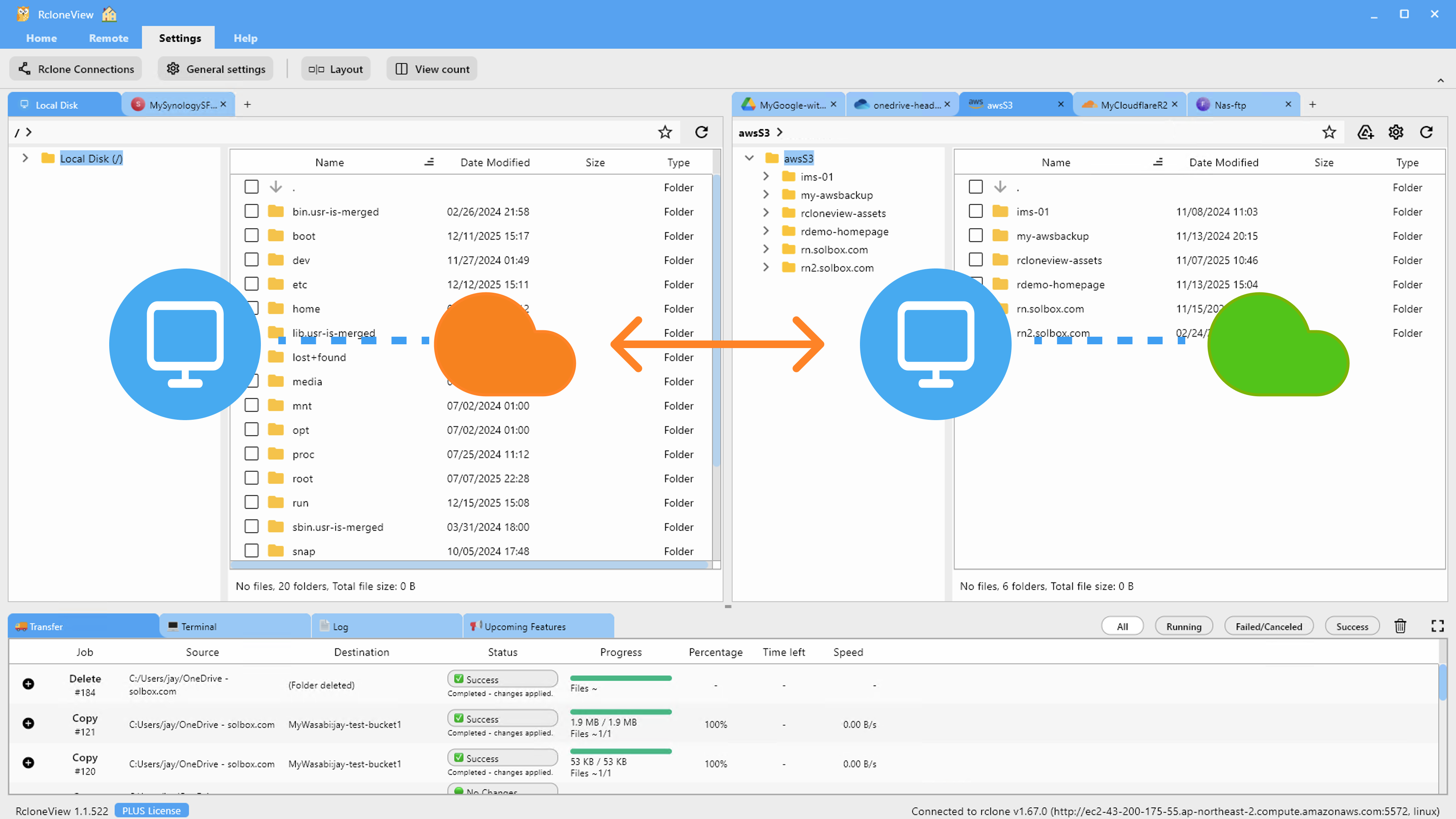
In RcloneView's Explorer, you can browse into any remote and see folder sizes as you navigate, making it straightforward to find space hogs without running commands.
Quota Monitoring Across Providers
Different providers handle quotas differently:
| Provider | Quota Model | Notes |
|---|---|---|
| Google Drive | Shared across Drive, Gmail, Photos | 15 GB free; Workspace plans vary |
| OneDrive | Per-user allocation | 5 GB free; Microsoft 365 plans offer 1 TB+ |
| Dropbox | Per-account quota | 2 GB free; Plus offers 2 TB |
| Backblaze B2 | Pay-per-use, no fixed quota | Billed monthly per GB stored |
| Amazon S3 | Pay-per-use, no fixed quota | Tiered pricing by storage class |
| pCloud | Lifetime or subscription quota | 10 GB free; lifetime plans available |
For pay-per-use providers like S3 and B2, there is no quota to hit, but monitoring usage directly controls your bill. For quota-based providers, running out of space silently breaks syncs and backups.
Planning Capacity and Estimating Costs
Use storage usage data to plan ahead:
- Track growth over time -- run
rclone aboutperiodically and log the results. A simple spreadsheet tracking monthly usage per remote reveals trends. - Estimate monthly costs for pay-per-use providers:
- Backblaze B2: $0.006/GB/month for storage
- Amazon S3 Standard: $0.023/GB/month
- Wasabi: $0.0069/GB/month (1 TB minimum)
- Set alerts -- if a quota-based remote crosses 80% usage, plan a cleanup or upgrade.
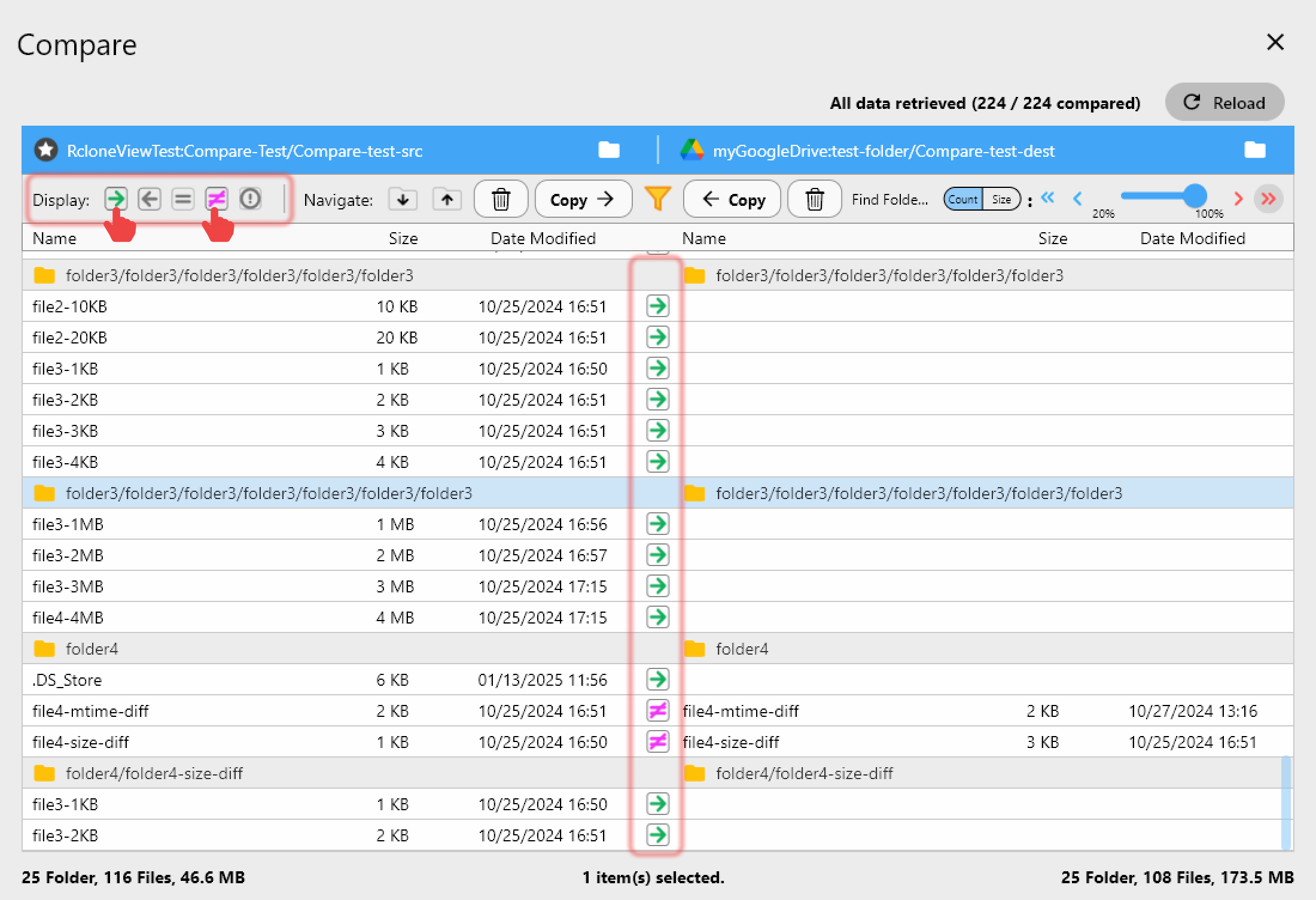
- Compare providers -- if one remote is cheaper per GB, consider migrating cold data there.
Reclaiming Space from Trash
One of the most overlooked storage consumers is trash. Google Drive and OneDrive both count trashed files against your quota. The rclone about output shows trashed space explicitly, and you can reclaim it with:
rclone cleanup gdrive:
In RcloneView, this is available through the UI without typing commands. Reclaiming trashed space is often the fastest way to free gigabytes without deleting any active files.
Comparing Usage Across Providers
When managing multiple cloud accounts, a cross-provider comparison helps with decisions like:
- Where to store new backups -- route data to the remote with the most headroom.
- Which provider to scale -- if S3 costs are growing faster than B2, investigate why.
- When to archive -- move infrequently accessed data from expensive storage to a cheaper tier.
RcloneView's multi-remote dashboard makes this comparison immediate. Instead of logging into three different provider dashboards, you see all usage data in one interface.
Best Practices
- Check quotas before starting large transfers -- a full destination will cause silent failures.
- Monitor trash usage and clean it regularly to avoid phantom quota consumption.
- Log usage monthly for cost tracking and trend analysis.
- Use
rclone sizeon specific folders to find the biggest consumers of space. - Automate checks by saving
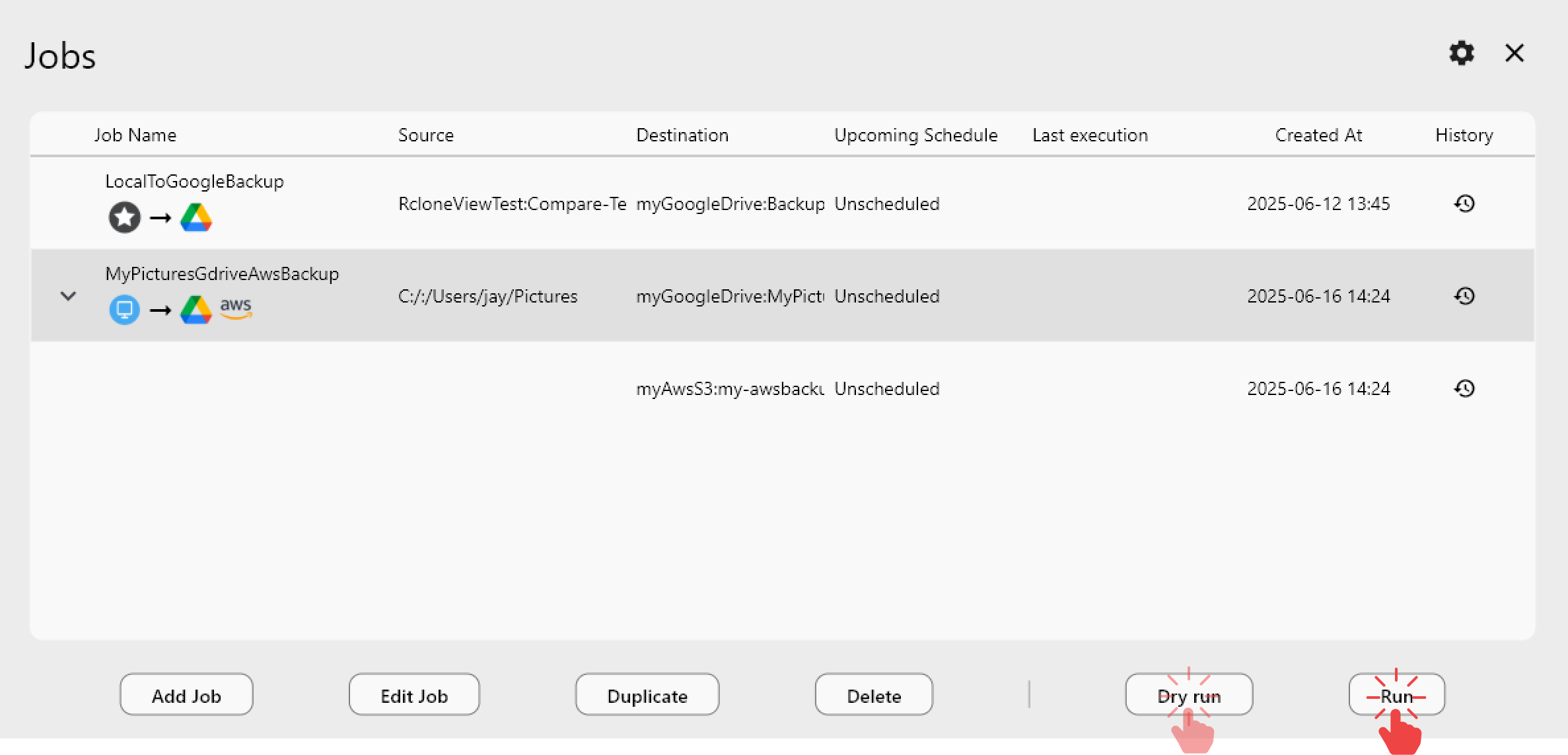
rclone aboutcommands as scheduled jobs in RcloneView.
Related Guides:
- Clean Up Cloud Storage: Empty Trash and Remove Old Versions
- Wasabi vs Backblaze B2 vs IDrive e2 Comparison
- Google Drive vs OneDrive for Business
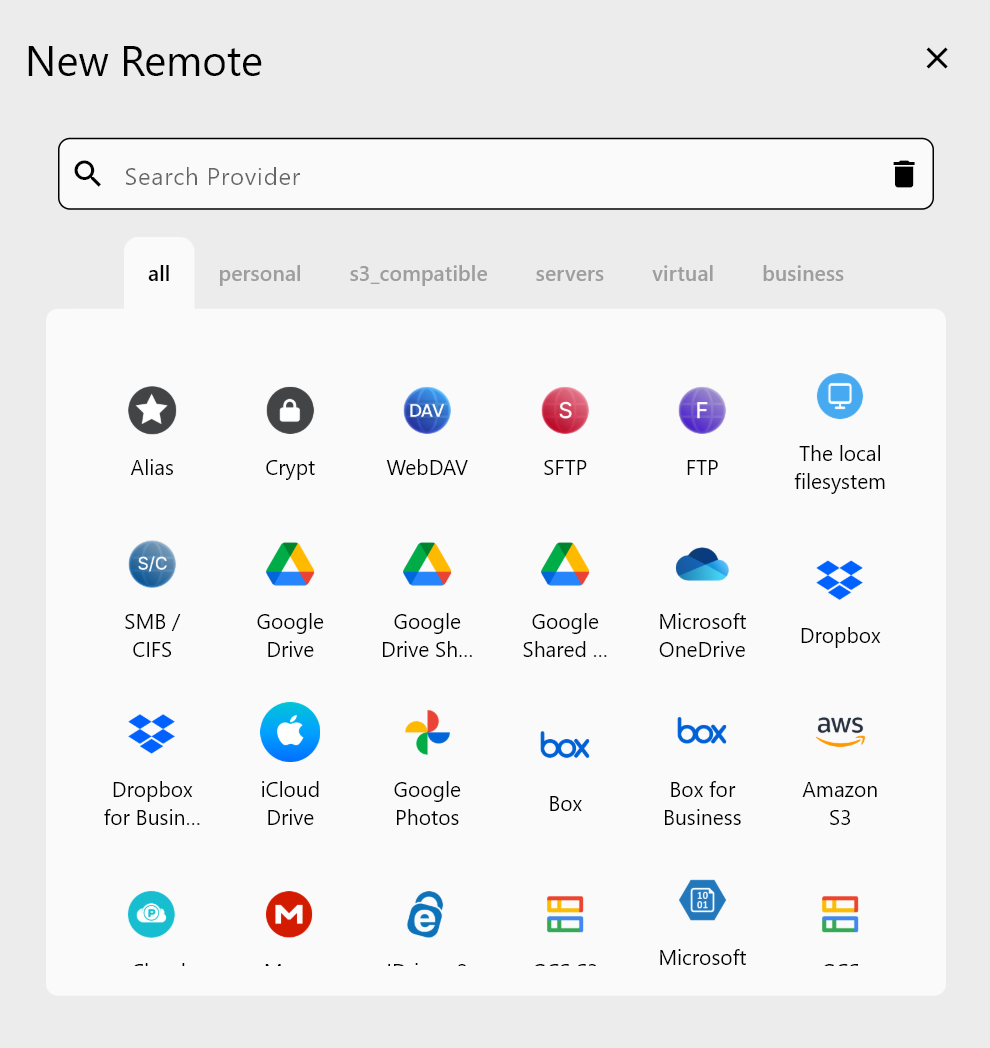
Supported Cloud Providers