Prevent Accidental Overwrites and Data Loss During Cloud Sync — Safety Guide for RcloneView
"I accidentally synced in the wrong direction and my files are gone." This is the most common data loss scenario in cloud sync. It's preventable.
Cloud sync is powerful precisely because it changes files. That same power makes it dangerous when misconfigured. A sync job running in the wrong direction can overwrite newer files with older versions, or delete files that only exist on one side. RcloneView includes safety features to prevent these scenarios — but you need to know about them and use them.
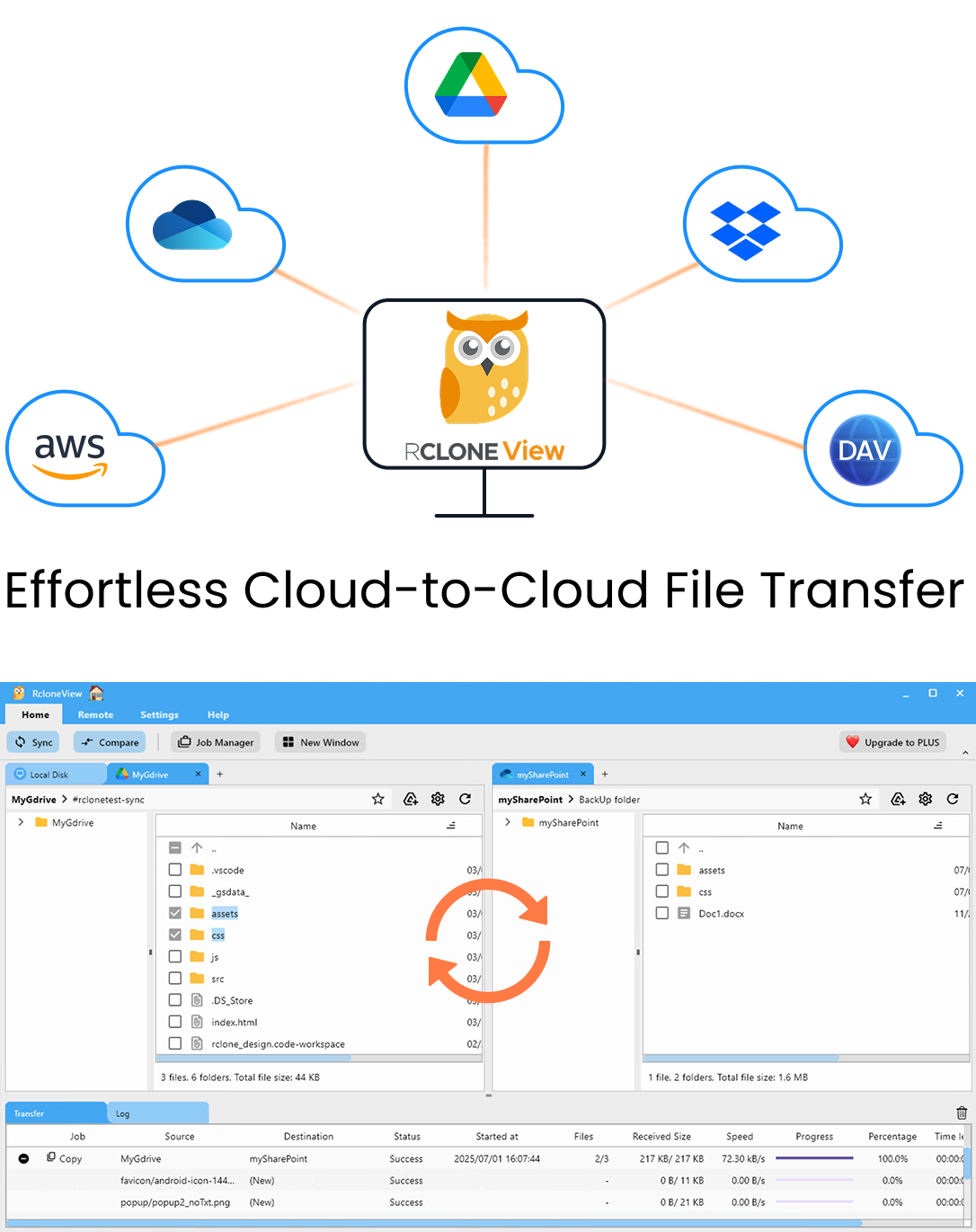
Manage & Sync All Clouds in One Place
RcloneView is a cross-platform GUI for rclone. Compare folders, transfer or sync files, and automate multi-cloud workflows with a clean, visual interface.
- One-click jobs: Copy · Sync · Compare
- Schedulers & history for reliable automation
- Works with Google Drive, OneDrive, Dropbox, S3, WebDAV, SFTP and more
Free core features. Plus automations available.
The Most Common Mistakes
Wrong sync direction
You want to sync A → B, but accidentally set up B → A. If B has older versions, they overwrite your newer files on A.
Sync vs Copy confusion
Sync makes the destination match the source exactly — including deleting files that exist on the destination but not the source. Copy only adds files. Using Sync when you meant Copy can delete data.
Empty source folder
If the source is empty (disconnected drive, expired token, wrong path), Sync will delete everything at the destination to "match" the empty source.
Safety Best Practices
1) Always use Folder Comparison first
Before any sync, compare the source and destination:
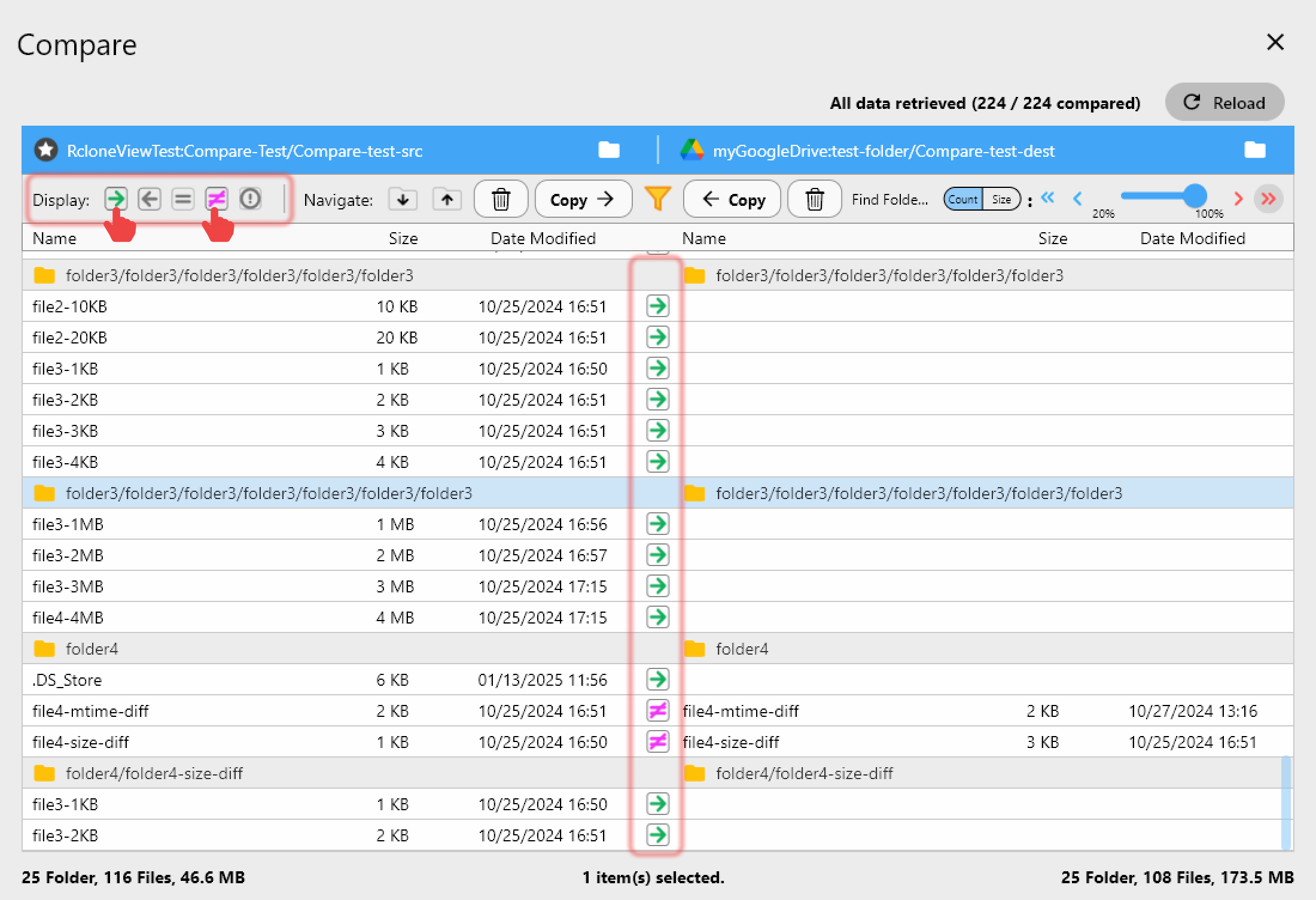
This shows you exactly what will change. If the comparison looks wrong, stop and verify your setup.
2) Use Dry Run mode
Dry Run previews what a sync job would do without actually transferring or deleting anything. Review the output to confirm the job is configured correctly before running it for real.
3) Start with Copy, not Sync
If you're unsure about your configuration, use Copy first. Copy only adds files — it never deletes anything. Once you've verified the result, switch to Sync for ongoing maintenance.
4) Test on a small folder
Before syncing your entire library, test the job on a single small folder. Verify the result before scaling up.
5) Keep backups of critical data
Before running a large sync for the first time, back up the destination to a third location. If anything goes wrong, you can restore.
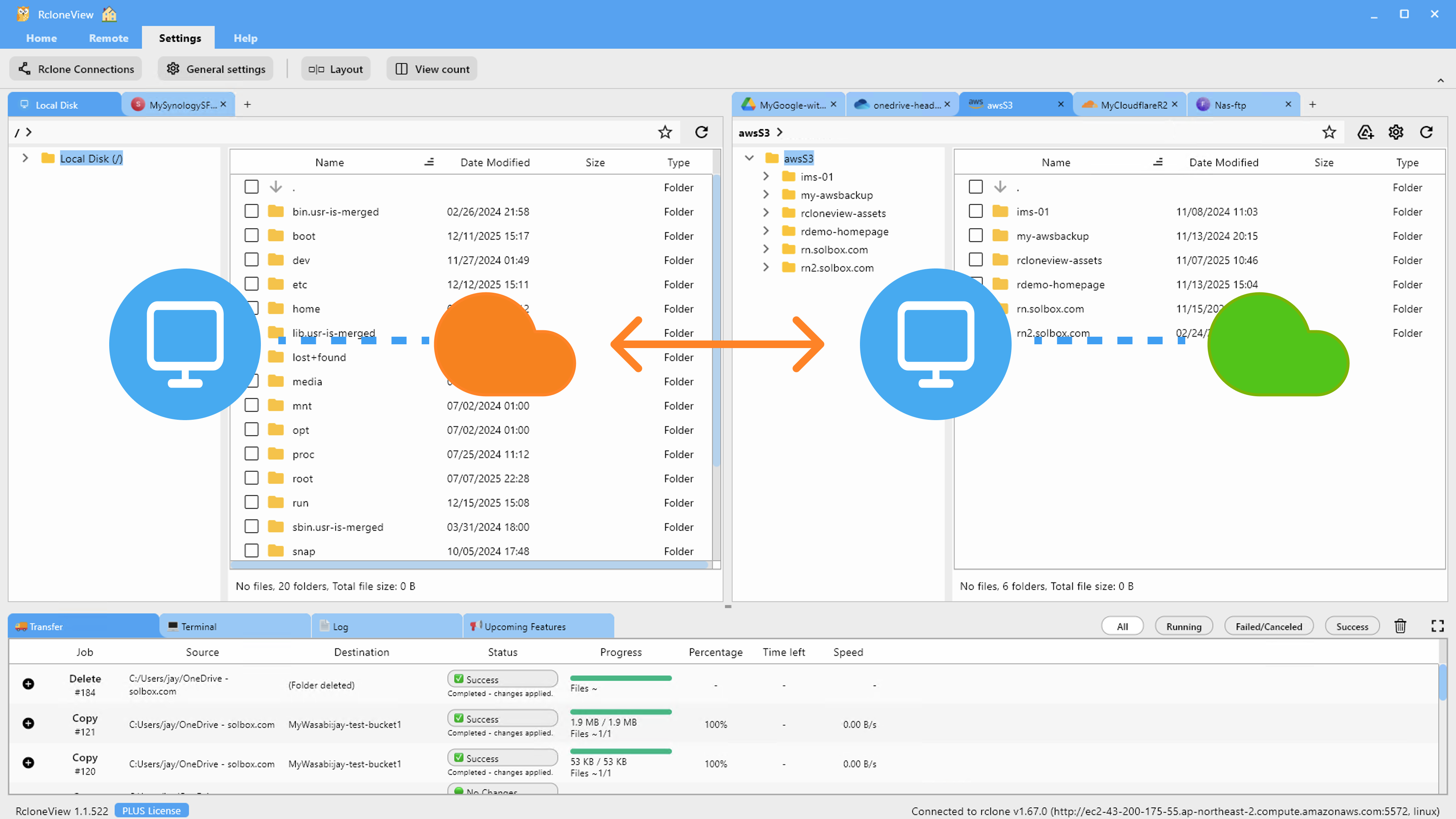
6) Check sync direction twice
In the two-pane explorer, verify which side is source and which is destination:
7) Review job history after runs
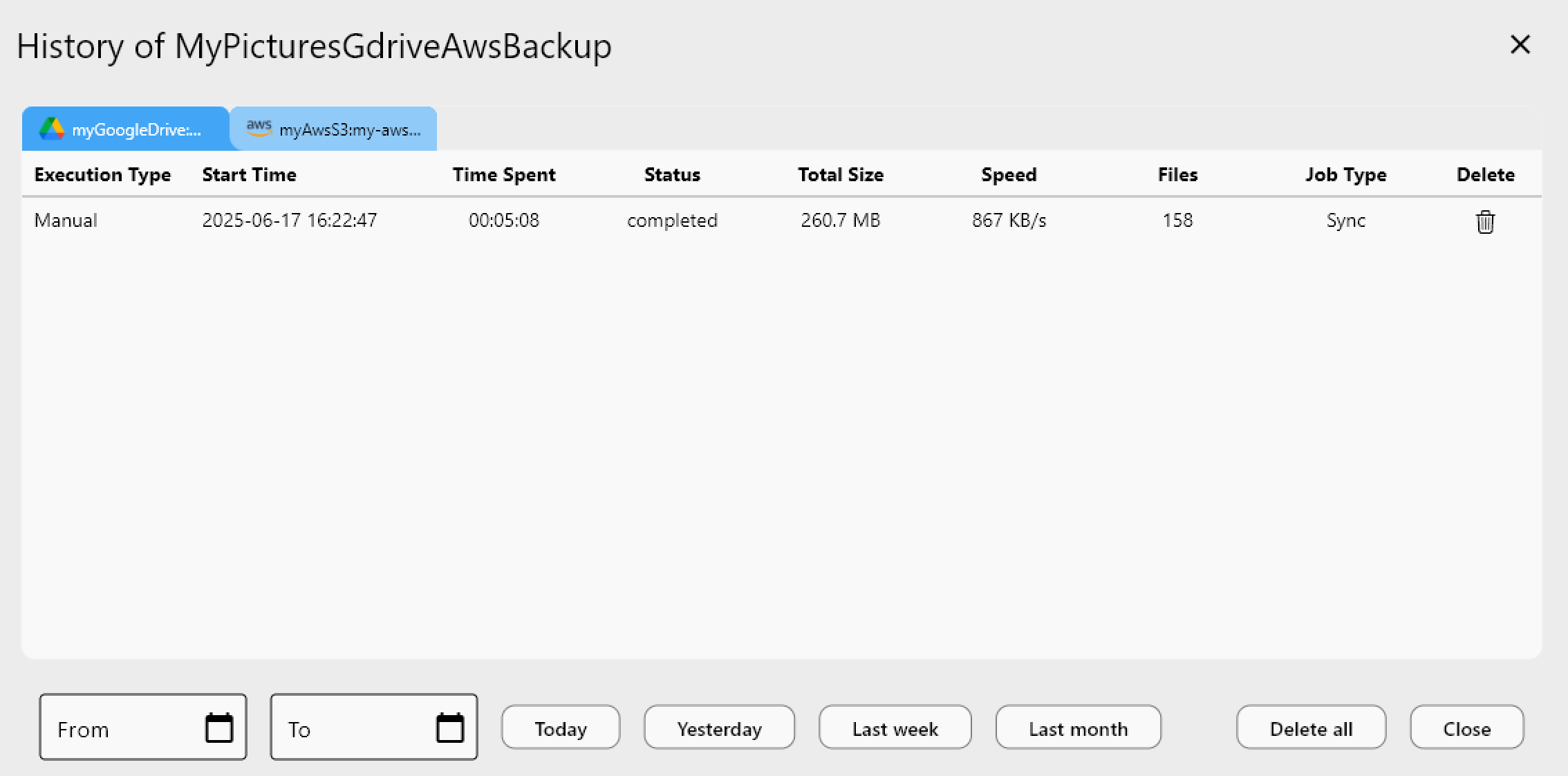
Check job history to see what was transferred, deleted, or skipped. Unexpected deletions are a red flag.
Recovery If Something Goes Wrong
If you accidentally overwrite or delete files:
- Check your provider's trash/recycle bin — most providers keep deleted files for 30 days
- Check version history — Google Drive, OneDrive, and Dropbox keep file versions
- Restore from your backup — this is why step 5 above matters
Getting Started
- Download RcloneView from rcloneview.com.
- Always compare before you sync.
- Use Dry Run on new jobs.
- Start with Copy until you're confident.
- Check job history after every run.
The best data loss prevention is the five seconds you spend verifying before clicking "Run."
Related Guides:
Supported Cloud Providers