Run Rclone in Docker for Automated Cloud Sync — Headless Backup with RcloneView Configuration
RcloneView is perfect for configuring and monitoring cloud sync. But what about headless servers, Kubernetes clusters, or NAS devices running Docker? Configure with RcloneView, deploy with Docker.
RcloneView is a desktop application — great for setup, monitoring, and manual operations. But for always-on automated backups on headless servers, Docker containers running rclone are ideal. The best workflow: configure your remotes and test jobs in RcloneView, then deploy the same configuration in Docker.
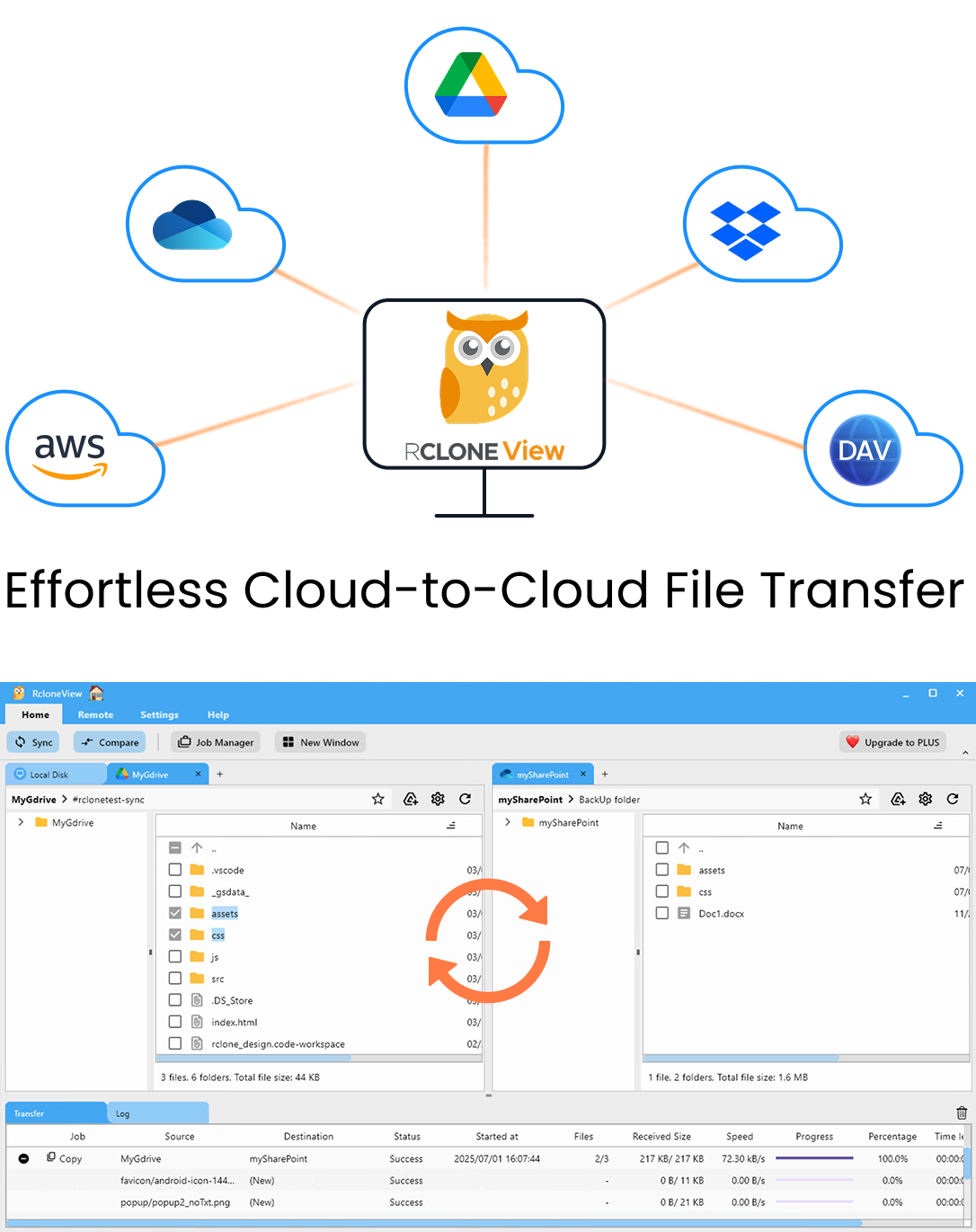
Manage & Sync All Clouds in One Place
RcloneView is a cross-platform GUI for rclone. Compare folders, transfer or sync files, and automate multi-cloud workflows with a clean, visual interface.
- One-click jobs: Copy · Sync · Compare
- Schedulers & history for reliable automation
- Works with Google Drive, OneDrive, Dropbox, S3, WebDAV, SFTP and more
Free core features. Plus automations available.
The Hybrid Approach
Configure & Test: RcloneView (desktop GUI)
         ↓ (share rclone.conf)
Deploy & Run:    Docker container (headless, automated)
         ↓
Monitor:         Slack/Discord notifications
Docker Setup
Basic rclone Docker container
# docker-compose.yml
version: '3'
services:
  rclone-sync:
    image: rclone/rclone:latest
    container_name: rclone-sync
    volumes:
      - ./rclone.conf:/config/rclone/rclone.conf:ro
      - /data:/data
    command: sync /data remote:backup --log-file=/tmp/rclone.log --log-level INFO
    restart: unless-stopped
With scheduled cron
version: '3'
services:
  rclone-cron:
    image: rclone/rclone:latest
    container_name: rclone-cron
    volumes:
      - ./rclone.conf:/config/rclone/rclone.conf:ro
      - ./scripts:/scripts:ro
      - /data:/data
    entrypoint: /bin/sh
    command: -c "while true; do /scripts/backup.sh; sleep 86400; done"
    restart: unless-stopped
backup.sh
#!/bin/sh
echo "Starting backup: $(date)"
rclone copy /data remote:backup \
  --transfers=8 \
  --checkers=16 \
  --log-level INFO
echo "Backup complete: $(date)"
Configure with RcloneView First
Why configure in RcloneView?
- Visual remote setup — Add and test remotes with a GUI instead of editing config files.
- Test transfers — Run manual transfers and verify they work before automating.
- Folder Comparison — Verify source and destination alignment.
- Export config — RcloneView uses the standard rclone.conf file.
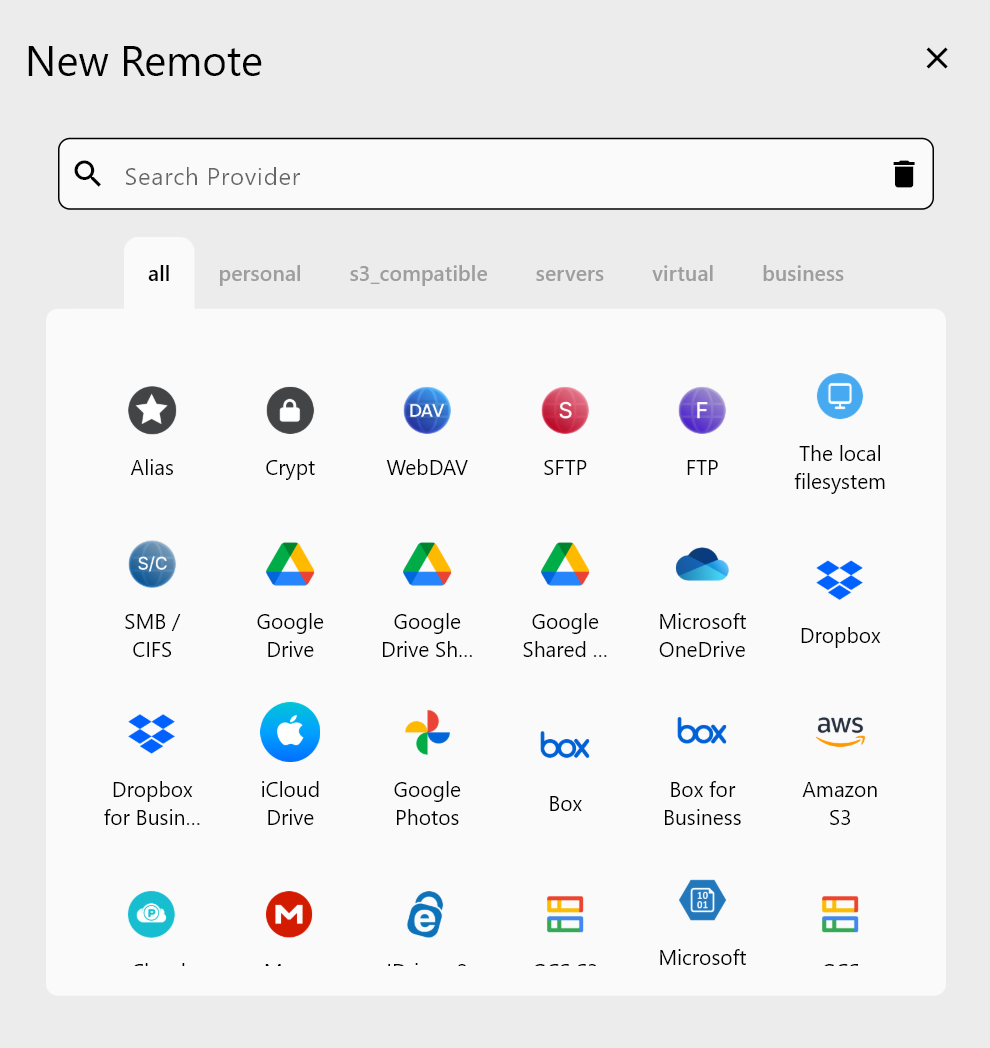
Export the config
The rclone config file is located at:
- Linux:
~/.config/rclone/rclone.conf - macOS:
~/.config/rclone/rclone.conf - Windows:
%APPDATA%\rclone\rclone.conf
Copy this file to your Docker deployment.
Use Cases
1) NAS Docker backup
Run rclone in Docker on your Synology or QNAP NAS:
services:
  backup:
    image: rclone/rclone:latest
    volumes:
      - /volume1/rclone.conf:/config/rclone/rclone.conf:ro
      - /volume1/data:/data:ro
    command: copy /data b2:nas-backup --transfers=4
2) Server-to-cloud backup
Automate server directory backups to S3:
services:
  server-backup:
    image: rclone/rclone:latest
    volumes:
      - ./rclone.conf:/config/rclone/rclone.conf:ro
      - /var/www:/source:ro
      - /var/backups/db:/db-backups:ro
    command: copy /source s3:server-backup/www --transfers=8
3) Multi-cloud sync
Run multiple containers for different sync tasks:
services:
  gdrive-to-b2:
    image: rclone/rclone:latest
    volumes:
      - ./rclone.conf:/config/rclone/rclone.conf:ro
    command: sync gdrive:important b2:gdrive-backup --transfers=4

  onedrive-to-b2:
    image: rclone/rclone:latest
    volumes:
      - ./rclone.conf:/config/rclone/rclone.conf:ro
    command: sync onedrive:work b2:onedrive-backup --transfers=4
Monitoring Docker Rclone
Health checks
Add health checks to your docker-compose:
healthcheck:
  test: ["CMD", "rclone", "about", "remote:"]
  interval: 1h
  timeout: 30s
  retries: 3
Log monitoring
Mount a log volume and monitor with standard Docker logging:
docker logs rclone-sync --tail 50
Notifications
Use rclone's built-in webhook support or pipe to notification services.
RcloneView for Verification
Periodically check Docker-managed backups from RcloneView on your desktop:
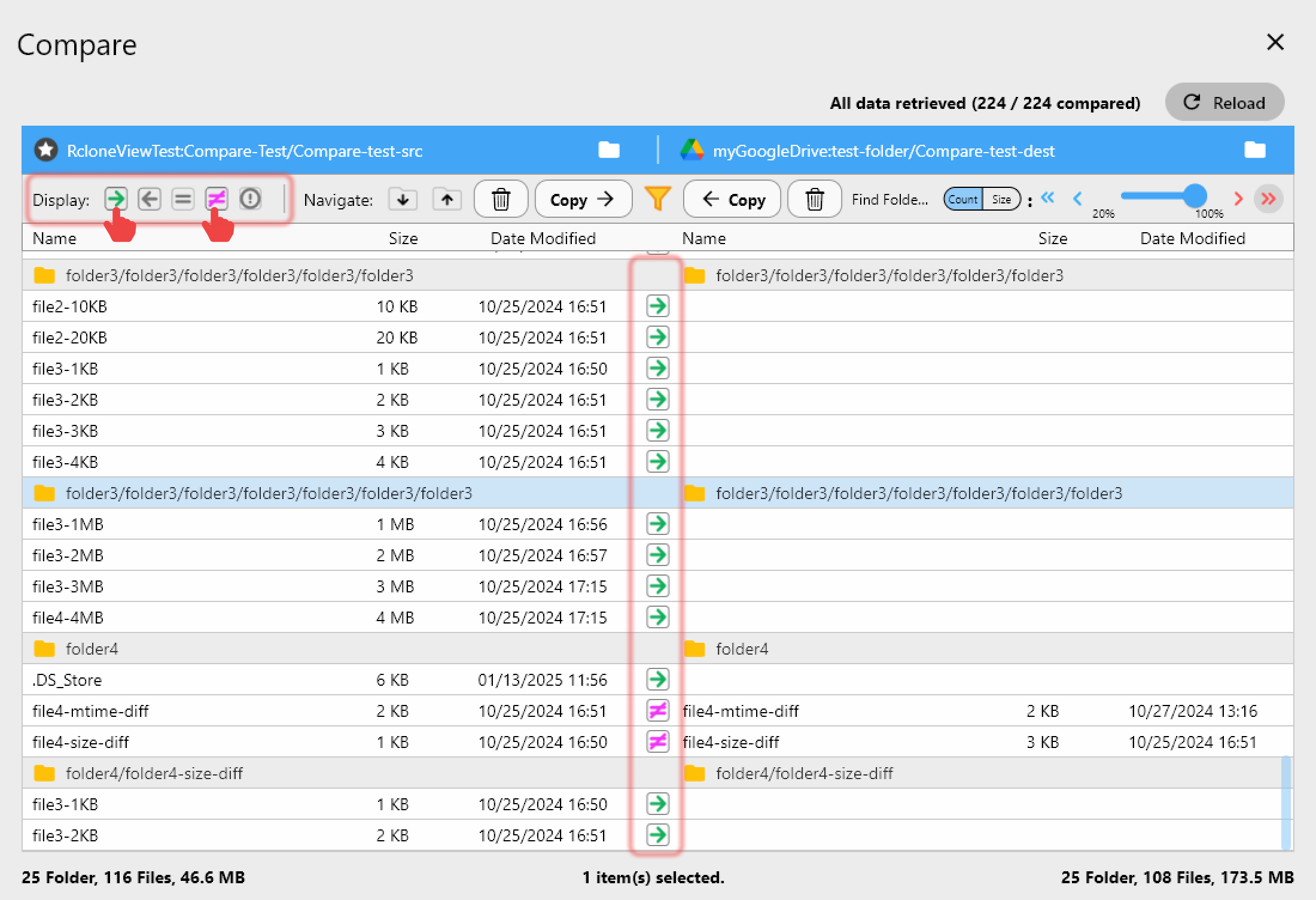
This gives you visual confirmation that automated backups are working correctly.
Getting Started
- Download RcloneView from rcloneview.com for initial setup.
- Configure and test remotes in the GUI.
- Export rclone.conf to your server.
- Deploy Docker containers with your sync commands.
- Verify periodically from RcloneView.
GUI for configuration, Docker for execution.
Related Guides:
Supported Cloud Providers