Manage Proton Drive Files and Cloud Sync with RcloneView
Proton Drive puts privacy first with end-to-end encryption — but managing encrypted files across multiple clouds requires the right tooling. RcloneView gives you a visual interface to browse, sync, back up, and organize your Proton Drive files alongside any other cloud provider.
Proton Drive is the encrypted cloud storage service from Proton, the Swiss company behind ProtonMail. Every file uploaded to Proton Drive is end-to-end encrypted before it leaves your device, meaning not even Proton can read your data. For privacy-conscious users, journalists, legal professionals, and anyone who values data sovereignty, Proton Drive is an increasingly popular choice.
The trade-off is that Proton Drive operates somewhat independently from the broader cloud ecosystem. If you also rely on Google Drive for collaboration, Amazon S3 for archives, or OneDrive for work, moving data between these services and Proton Drive can be tedious. RcloneView solves this by letting you manage Proton Drive alongside 70+ other cloud providers through a single, intuitive two-pane GUI — without ever compromising your encryption.
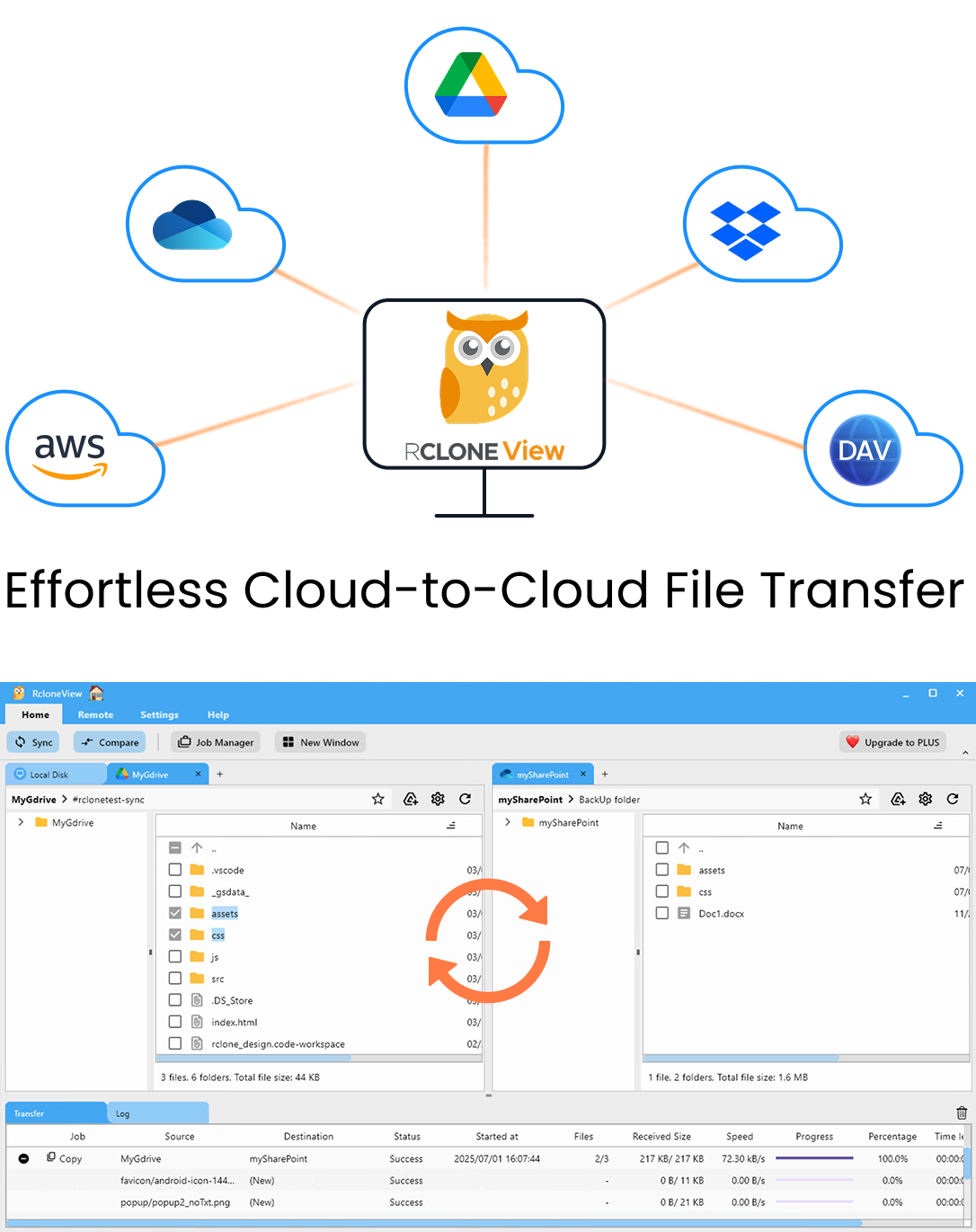
Manage & Sync All Clouds in One Place
RcloneView is a cross-platform GUI for rclone. Compare folders, transfer or sync files, and automate multi-cloud workflows with a clean, visual interface.
- One-click jobs: Copy · Sync · Compare
- Schedulers & history for reliable automation
- Works with Google Drive, OneDrive, Dropbox, S3, WebDAV, SFTP and more
Free core features. Plus automations available.
Why Use RcloneView with Proton Drive
Proton Drive's web and desktop apps handle basic file management well, but they do not support cross-cloud operations. With RcloneView you unlock capabilities that Proton's native tools cannot offer:
- Browse Proton Drive storage in a familiar two-pane file manager — navigate folders, check file sizes, and manage your encrypted library visually.
- Sync Proton Drive with Google Drive, OneDrive, or S3 — keep working copies in collaboration tools while preserving a privacy-first master copy.
- Schedule automated backups from other clouds into Proton Drive, leveraging its encryption as your secure backup destination.
- Compare folder contents between Proton Drive and any other cloud to detect drift, missing files, or outdated copies.
- Add a second layer of encryption using rclone's crypt remote on top of Proton Drive's built-in end-to-end encryption for maximum security.
- Avoid vendor lock-in by maintaining copies of critical data across multiple providers.
Setting Up the Proton Drive Remote
Connecting Proton Drive to RcloneView takes just a few steps:
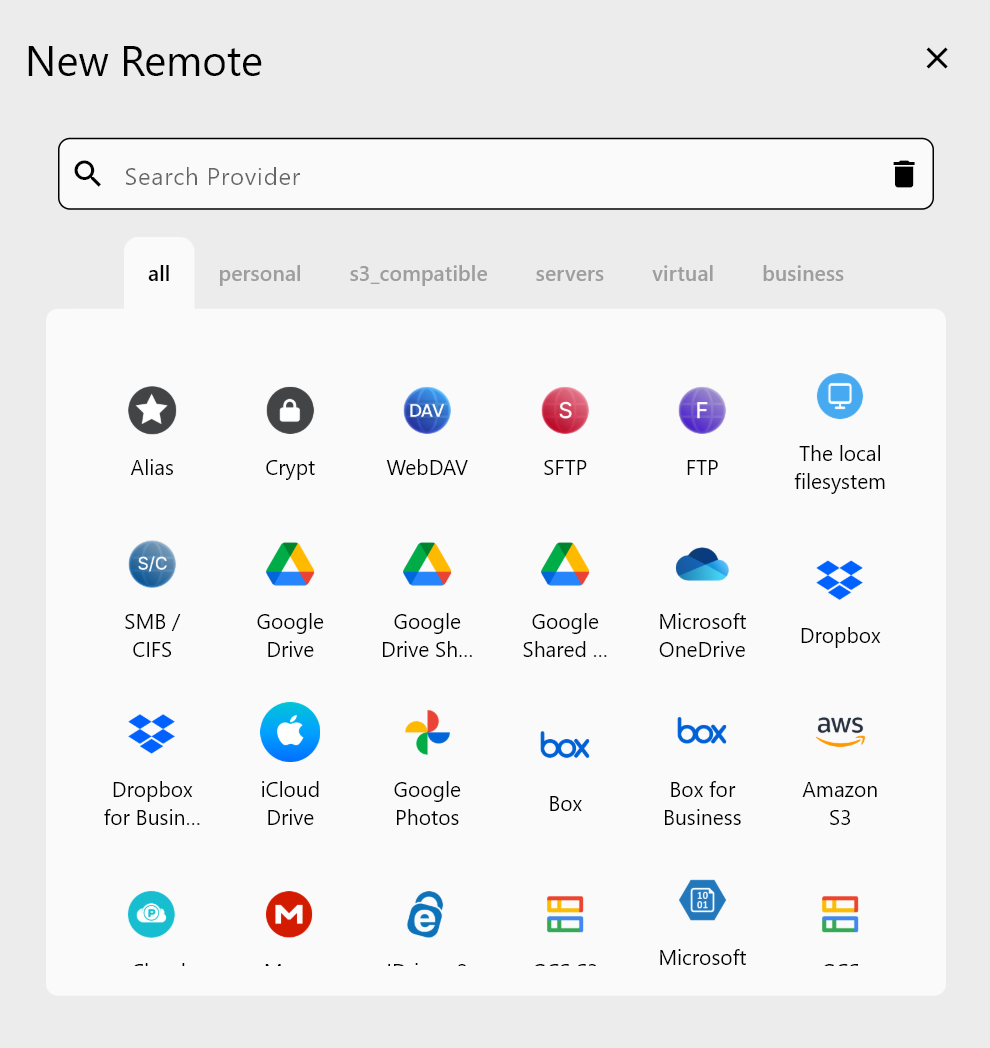
- Open RcloneView and click + New Remote.
- Select Proton Drive from the provider list.
- Enter your Proton account credentials. If you use two-factor authentication (2FA), you will be prompted for your TOTP code as well.
- Name the remote (e.g.,
MyProtonDrive) and save.
Once connected, your Proton Drive storage will appear in the Explorer pane, ready to browse. All files remain end-to-end encrypted on Proton's servers — RcloneView decrypts them on the fly during transfers using your local credentials.
A note on authentication: Proton Drive does not use OAuth like Google Drive or OneDrive. Instead, you authenticate directly with your Proton username and password. Make sure your Proton account password is strong, and consider enabling 2FA in your Proton account settings for added security.
Browsing and Managing Encrypted Files
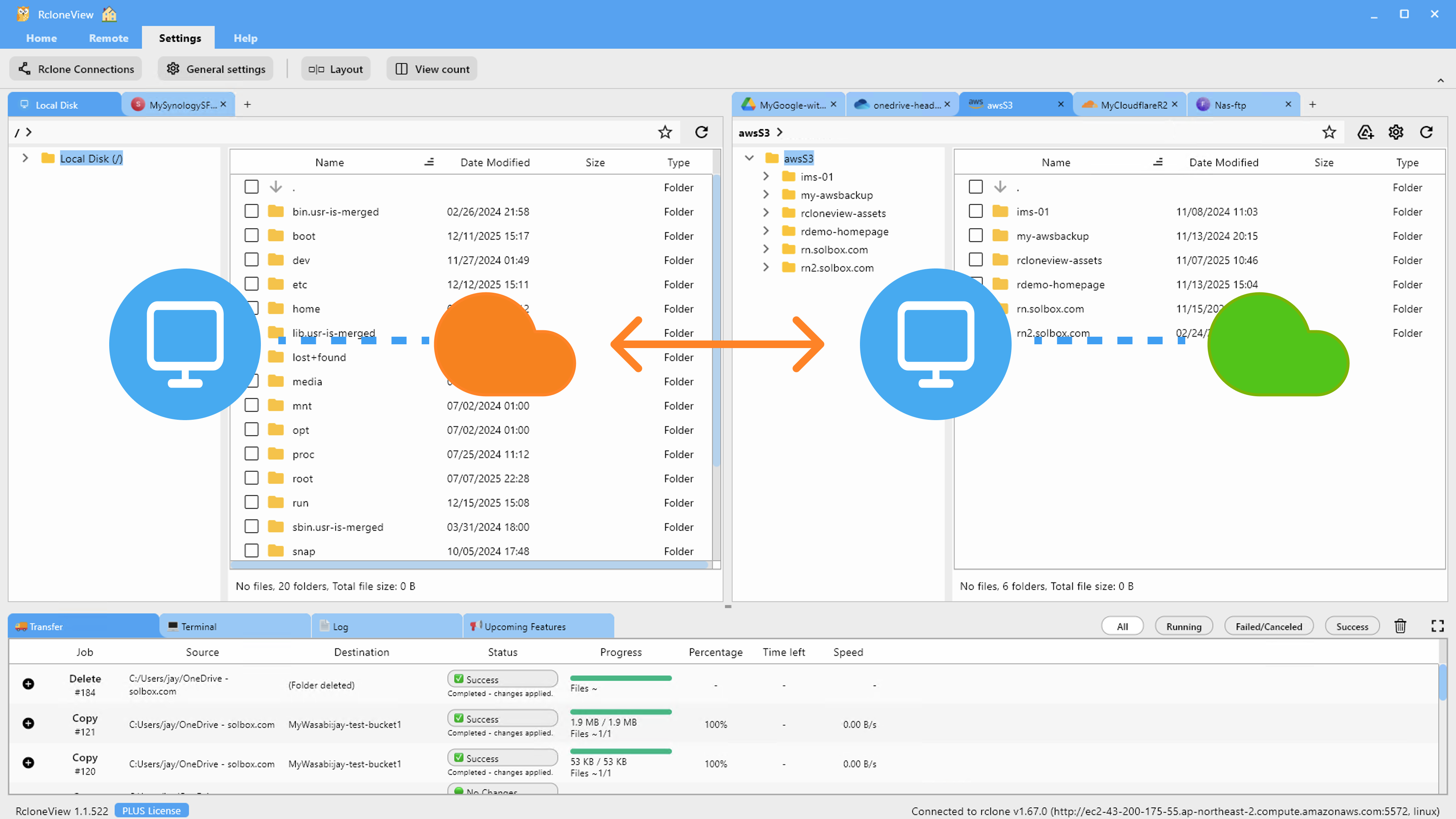
RcloneView displays your Proton Drive files in its two-pane Explorer, just like any other cloud. You will see your folder structure, file names, sizes, and modification dates — all presented clearly despite the underlying encryption.
From the Explorer you can:
- Navigate your entire Proton Drive folder hierarchy.
- Create new folders to organize files before uploading sensitive data.
- Delete files you no longer need.
- Open a second cloud in the opposite pane to compare or transfer files directly.
- Preview file metadata including sizes and timestamps for quick auditing.
The experience is identical to managing any unencrypted cloud — the complexity of Proton's end-to-end encryption is handled transparently in the background.
Syncing Proton Drive with Other Clouds
The most powerful use case for Proton Drive in RcloneView is keeping it in sync with your other cloud services.
Proton Drive as a Secure Mirror
If your team collaborates on Google Drive or OneDrive, you can set up a one-way sync from those services into Proton Drive. This creates an encrypted backup copy of all shared work files, protected by Proton's zero-access encryption. Even if your Google or Microsoft account is compromised, the Proton Drive copy remains secure.
Proton Drive to S3 for Disaster Recovery
For organizations that need geographic redundancy, sync Proton Drive data to an Amazon S3 bucket or an S3-compatible service like Wasabi. This gives you a second off-site copy in a different infrastructure, combining Proton's privacy with S3's durability.
How to Transfer Files
RcloneView offers several transfer methods depending on your needs:
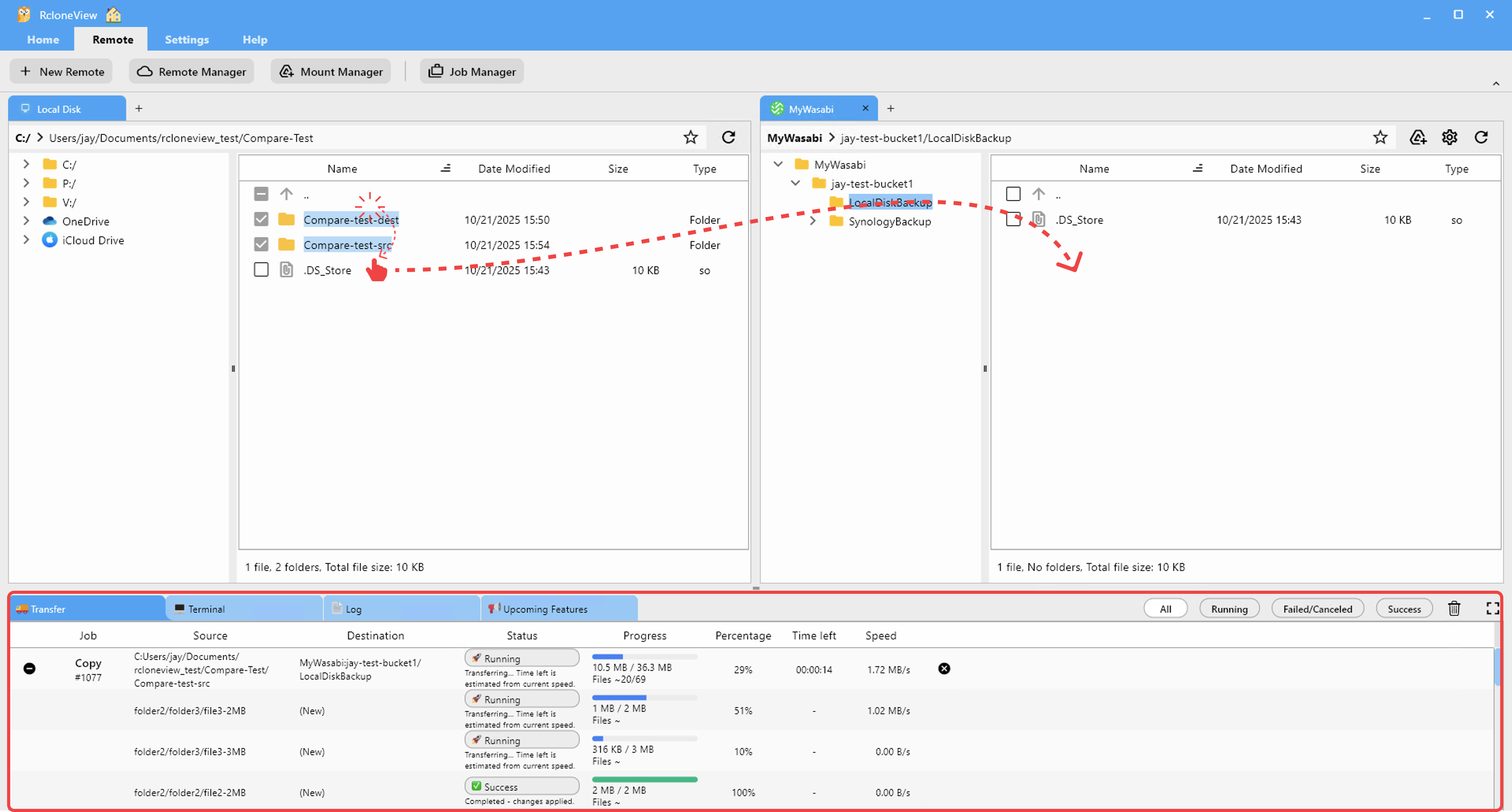
- Drag and Drop: Select files in the Proton Drive pane and drag them to any other cloud in the opposite pane. This is ideal for one-time transfers or small batches.
- Compare and Copy: Run a folder comparison to identify differences between Proton Drive and your target, then copy only what is missing or changed.
- Sync: Mirror an entire folder structure. Always run a Dry Run first to preview what will change before committing.
Scheduling Privacy-First Backups
Proton Drive's encryption makes it an ideal backup destination for sensitive data. You can automate this process in RcloneView:
- Create a Copy or Sync job from your source cloud (or local drive) to your Proton Drive remote.
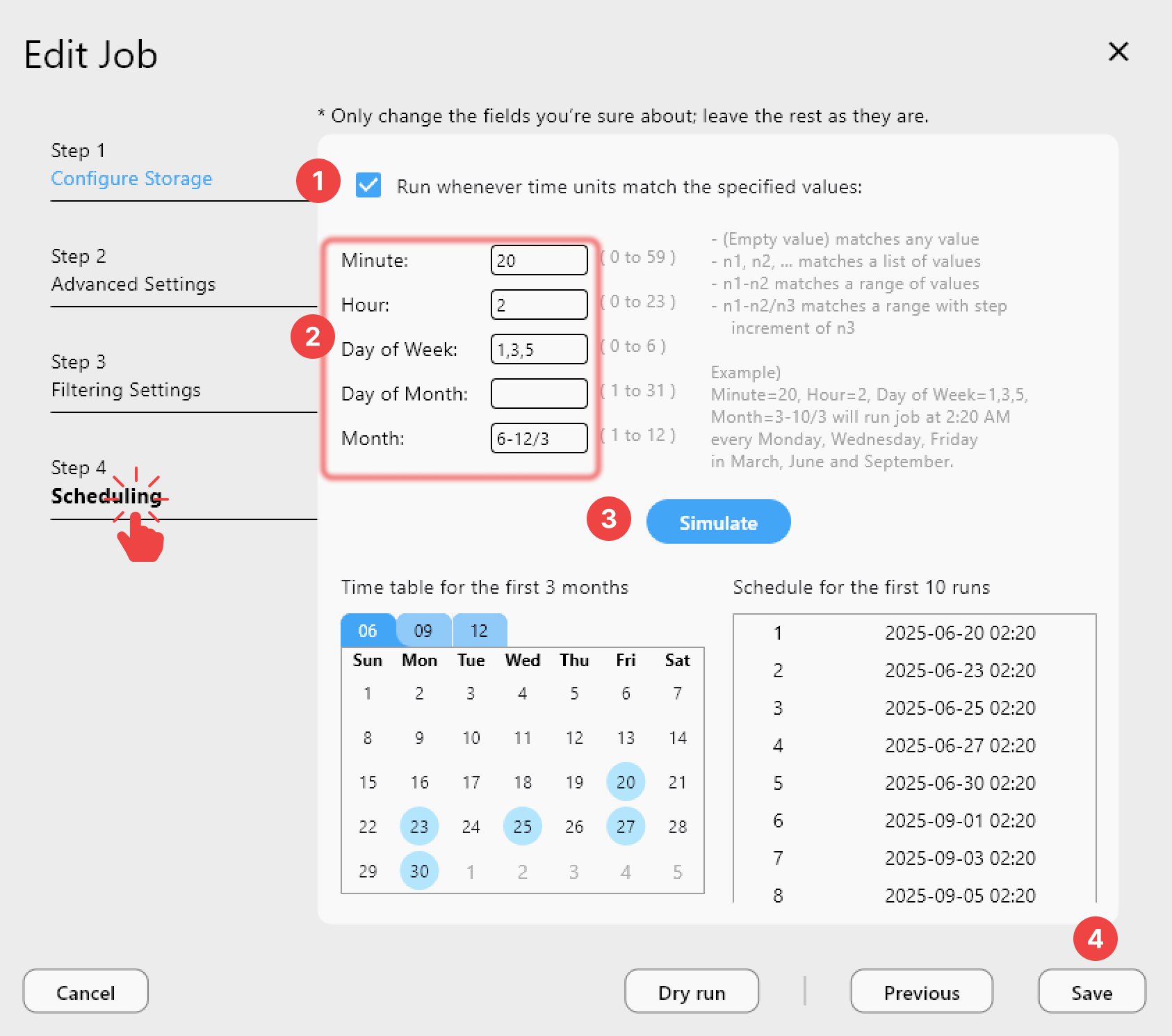
- Open the Job Scheduling panel.
- Set a recurring schedule — daily for active projects, weekly for archives.
- Save and enable the schedule.
RcloneView runs the job automatically at the configured time and logs every execution in the Job History panel. You can review transfer counts, errors, and durations at any time to ensure your encrypted backups are up to date.
This approach is especially valuable for professionals handling client data, medical records, legal documents, or financial information. The data is encrypted at rest on Proton's servers in Switzerland, subject to Swiss privacy laws, and your backup runs happen automatically without manual intervention.
Adding a Second Layer of Encryption
Proton Drive already encrypts your files end-to-end, but some users want an additional layer of protection. RcloneView supports rclone's crypt remote, which adds client-side encryption on top of any storage backend.
To set this up:
- Add your Proton Drive remote as described above.
- Create a new Crypt remote in RcloneView that points to a folder within your Proton Drive remote.
- Configure your encryption password and salt.
- Use the crypt remote for all sensitive transfers.
With this configuration, your files are encrypted by rclone before being sent to Proton Drive, where they are encrypted again by Proton. Even in a hypothetical scenario where Proton's encryption were compromised, your data would remain protected by the crypt layer.
Performance Tips for Proton Drive
Proton Drive's encryption adds processing overhead compared to unencrypted providers. Here are some tips to optimize your experience:
- Start with smaller syncs when first setting up. Once you confirm everything works correctly, scale up to larger directories.
- Use incremental syncs rather than full re-syncs. After the initial transfer, subsequent runs will only process new and changed files, which is much faster.
- Set appropriate bandwidth limits if you are running backups during work hours. RcloneView lets you configure transfer speed caps to avoid saturating your connection.
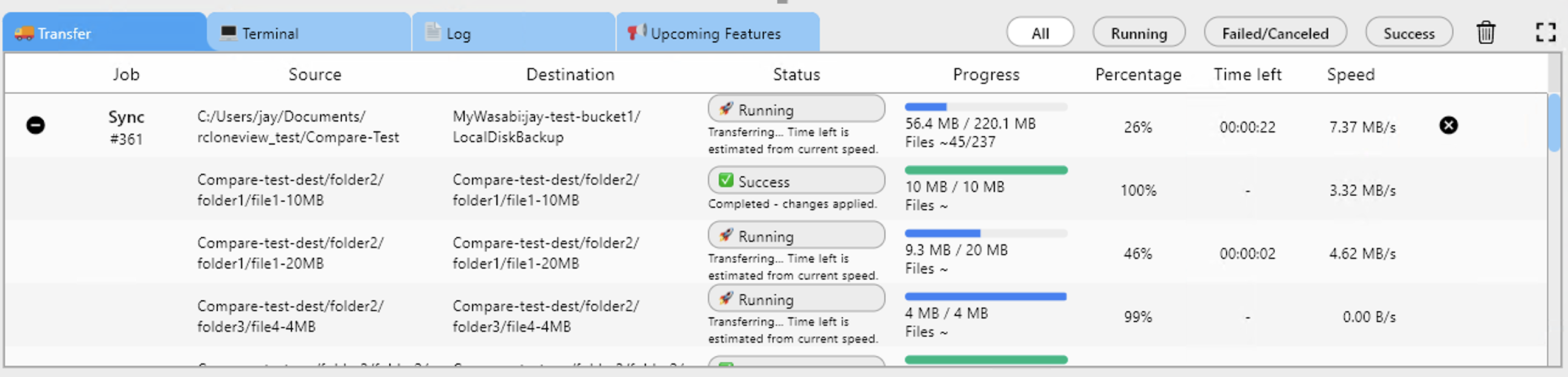
- Monitor transfer progress in the real-time monitoring panel to track upload and download speeds, file counts, and estimated completion times.
- Be patient with large initial migrations — encrypting and uploading terabytes of data will take time regardless of your connection speed.
Use Cases for Proton Drive with RcloneView
Journalists and Whistleblowers
Store source materials and sensitive documents on Proton Drive, synced from a local working directory. The end-to-end encryption ensures even a subpoena to Proton cannot expose file contents.
Legal and Medical Professionals
Back up client files and patient records to Proton Drive's Swiss-hosted, encrypted storage. Schedule nightly backups from your primary cloud to maintain a compliant off-site copy.
Personal Privacy
Keep personal photos, financial documents, and identity records on Proton Drive as a secure vault, while using Google Drive or OneDrive for everyday convenience. RcloneView makes the bridge seamless.
Multi-Cloud Redundancy
Combine Proton Drive with two or three other providers to build a resilient storage strategy. If one provider has an outage or policy change, your data is safe elsewhere.
Getting Started
- Download RcloneView from rcloneview.com.
- Connect Proton Drive using your Proton account credentials in the New Remote wizard.
- Add your other clouds — Google Drive, S3, OneDrive, or any of the 70+ supported providers.
- Browse, sync, and schedule — privacy-first storage, managed visually.
Proton Drive protects your data with end-to-end encryption. RcloneView gives you the tools to manage it alongside everything else.
Related Guides:
- Adding Remote Storage (Google Drive Example)
- Browse and Manage Remote Storage
- Job Scheduling and Execution
Supported Cloud Providers