RcloneView vs Robocopy: Cloud and Local File Management Compared
Robocopy is a powerful Windows command-line tool for local and network file copies. RcloneView extends file management into the cloud with a GUI, 70+ provider support, and cross-platform operation.
Robocopy (Robust File Copy) has been part of Windows since Vista and remains a trusted utility for system administrators and power users. It handles local and network file copies with features like mirroring, retry logic, multi-threaded transfers, and permission preservation. However, Robocopy has no cloud storage support. RcloneView fills that gap by providing a graphical interface for managing files across more than 70 cloud providers, while also handling local-to-cloud and cloud-to-cloud operations. This comparison clarifies when each tool is the right choice.
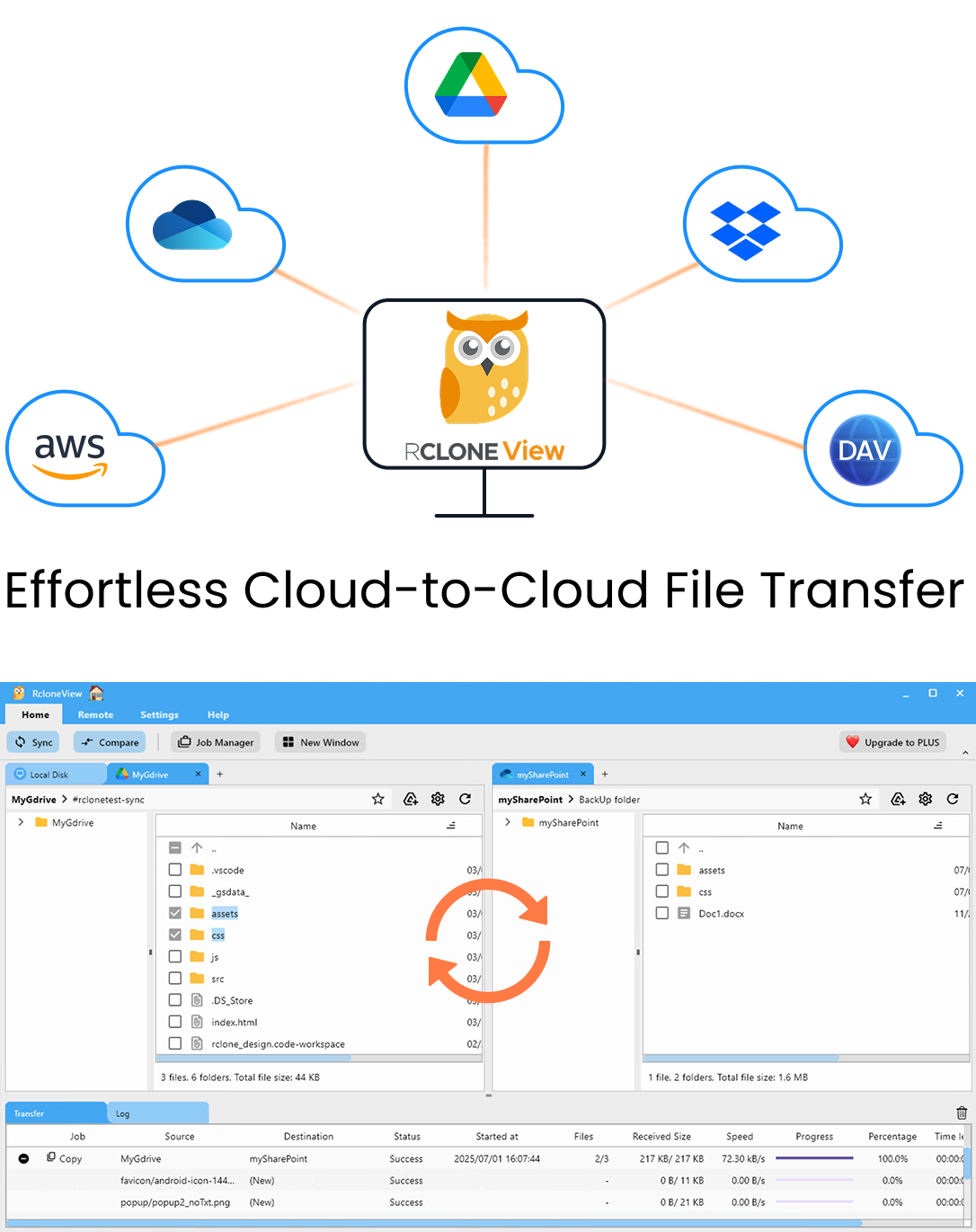
Manage & Sync All Clouds in One Place
RcloneView is a cross-platform GUI for rclone. Compare folders, transfer or sync files, and automate multi-cloud workflows with a clean, visual interface.
- One-click jobs: Copy · Sync · Compare
- Schedulers & history for reliable automation
- Works with Google Drive, OneDrive, Dropbox, S3, WebDAV, SFTP and more
Free core features. Plus automations available.
Feature Comparison
| Feature | RcloneView | Robocopy |
|---|---|---|
| Primary purpose | Multi-cloud file management | Local/network file copy |
| Cloud provider support | 70+ providers | None |
| Local/network file copy | Yes | Yes (primary strength) |
| Cloud-to-cloud transfers | Yes | No |
| GUI | Yes (full visual interface) | No (command-line only) |
| Folder comparison | Yes | No (logging only) |
| Mount cloud as local drive | Yes | No |
| File sync/mirror | Yes | Yes (/MIR flag) |
| Job scheduling | Yes (built-in) | Via Windows Task Scheduler |
| Multi-threaded copy | Yes (configurable) | Yes (/MT flag) |
| Retry on failure | Yes (automatic) | Yes (/R and /W flags) |
| Permission preservation | No | Yes (/COPYALL, /SEC flags) |
| Junction/symlink handling | Limited | Yes (/SL, /XJ flags) |
| Bandwidth throttling | Yes | No (but /IPG inter-packet gap) |
| Real-time transfer monitoring | Yes (visual progress) | Text-based log output |
| Platforms | Windows, macOS, Linux | Windows only |
| Pricing | Free | Free (built into Windows) |
What Robocopy Does Well
Robocopy is a refined tool for its specific domain: copying files between local drives and network shares on Windows. Its strengths are well-earned over two decades of use:
Resilient copying: Robocopy handles interrupted transfers gracefully. The /R (retry count) and /W (wait time) flags let you configure automatic retries for files that fail due to locks, permissions, or network interruptions. In enterprise environments with unreliable network shares, this reliability is essential.
Mirror mode: The /MIR flag creates an exact mirror of the source at the destination, including deleting files in the destination that no longer exist in the source. This is widely used for backup scripts and server migration.
Multi-threaded transfers: The /MT flag enables parallel file copies, significantly speeding up transfers of many small files across network connections. This has been available since Windows 7.
Permission and attribute preservation: Robocopy can copy NTFS permissions, ownership, audit information, and timestamps with flags like /COPYALL and /SEC. For migrations between Windows file servers, this is critical.
Filtering and exclusion: Robocopy offers granular filtering by file attributes, dates, sizes, and name patterns. You can exclude directories, skip files older than a certain date, or copy only files with specific attributes.
Zero installation: Robocopy is built into every modern version of Windows. There is nothing to download, install, or configure. Open a command prompt and it is available.
What RcloneView Does Well
RcloneView addresses a fundamentally different space: cloud storage management with a visual interface.
Cloud provider support: RcloneView connects to over 70 cloud storage providers — Google Drive, OneDrive, Dropbox, Amazon S3, Azure Blob, Backblaze B2, Wasabi, Cloudflare R2, pCloud, Mega, and dozens more. Robocopy cannot interact with any of these.
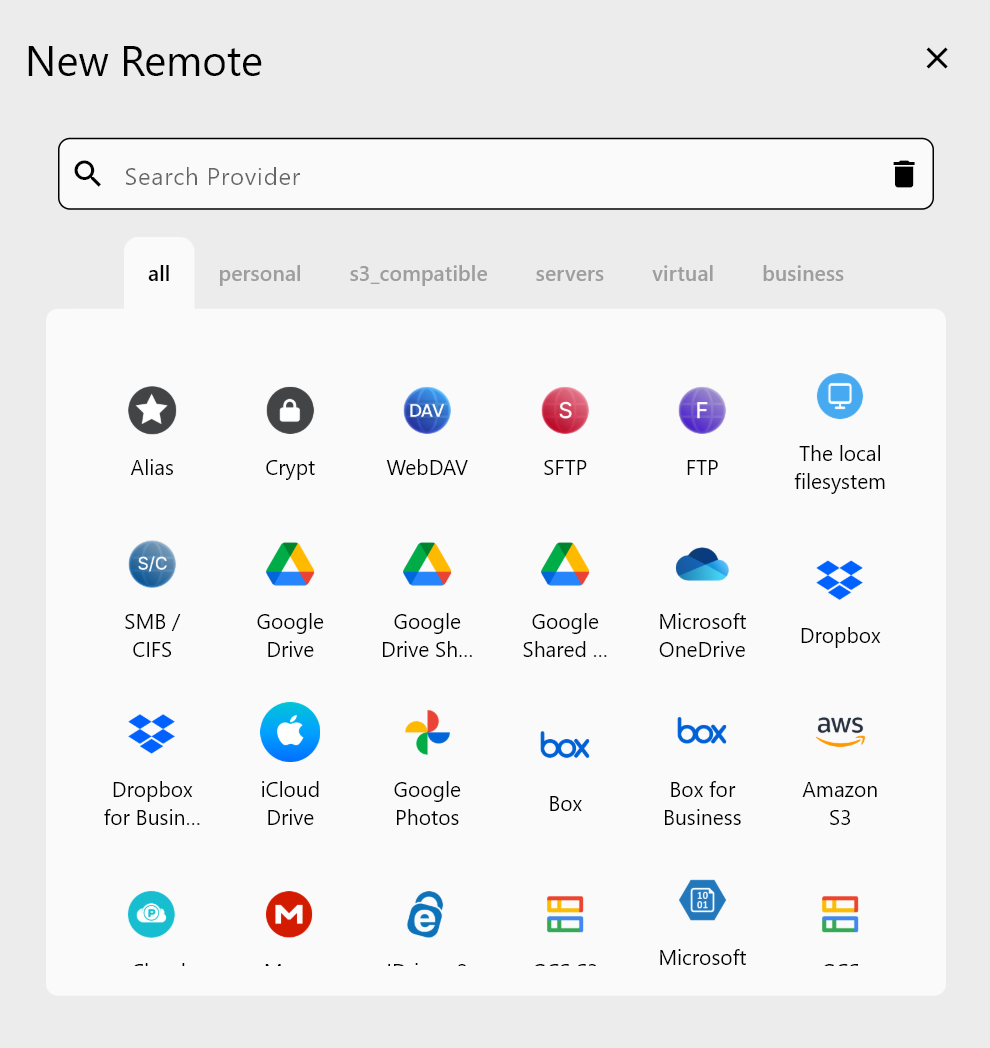
Cloud-to-cloud transfers: Move files directly between two cloud providers without downloading to your local machine. Migrate from Google Drive to OneDrive, copy from S3 to Backblaze B2, or sync between any supported providers.
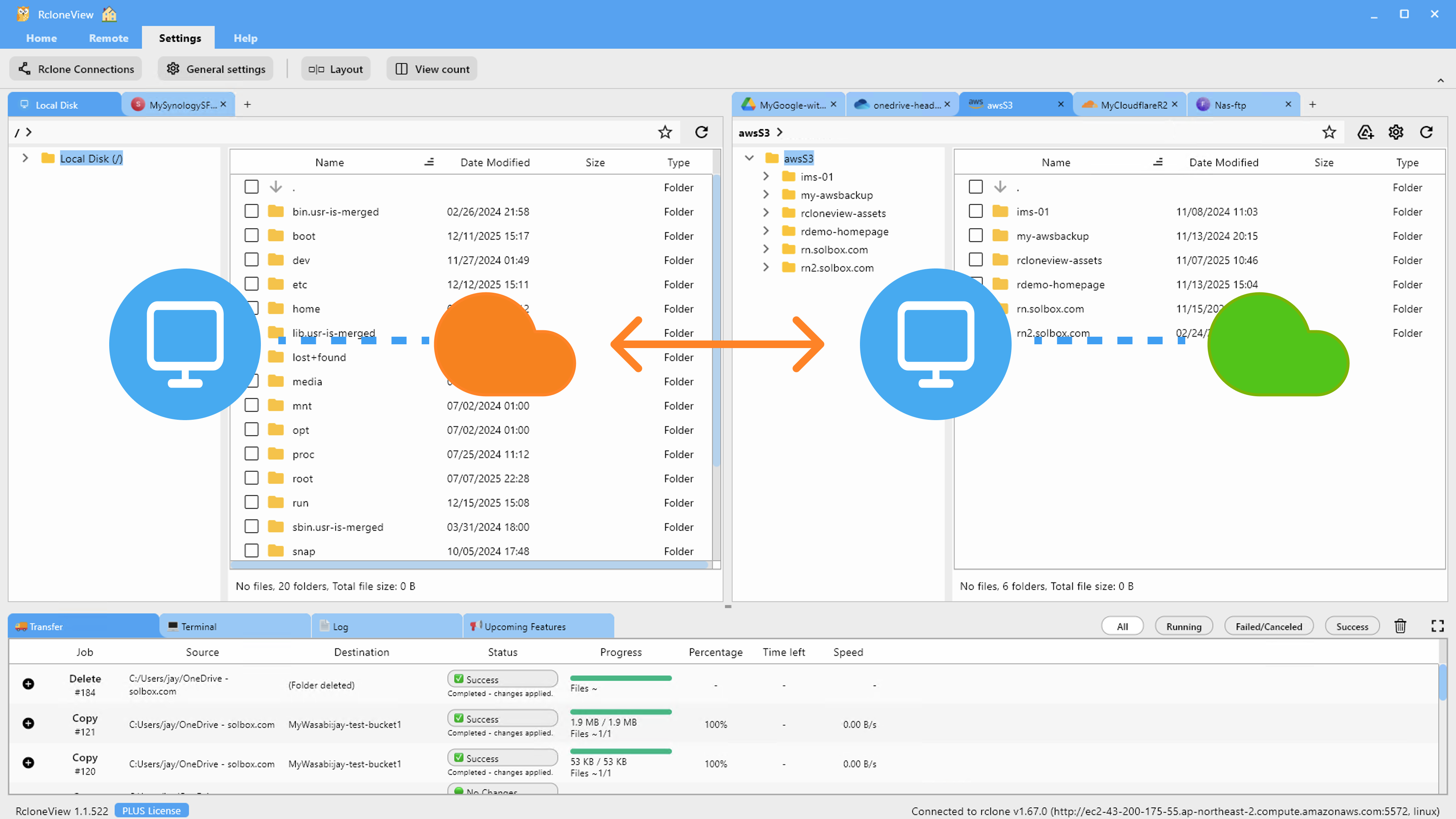
Visual interface: RcloneView provides a two-pane file explorer, drag-and-drop transfers, visual folder comparison, job management, and real-time transfer monitoring. Robocopy's output is text in a terminal window.
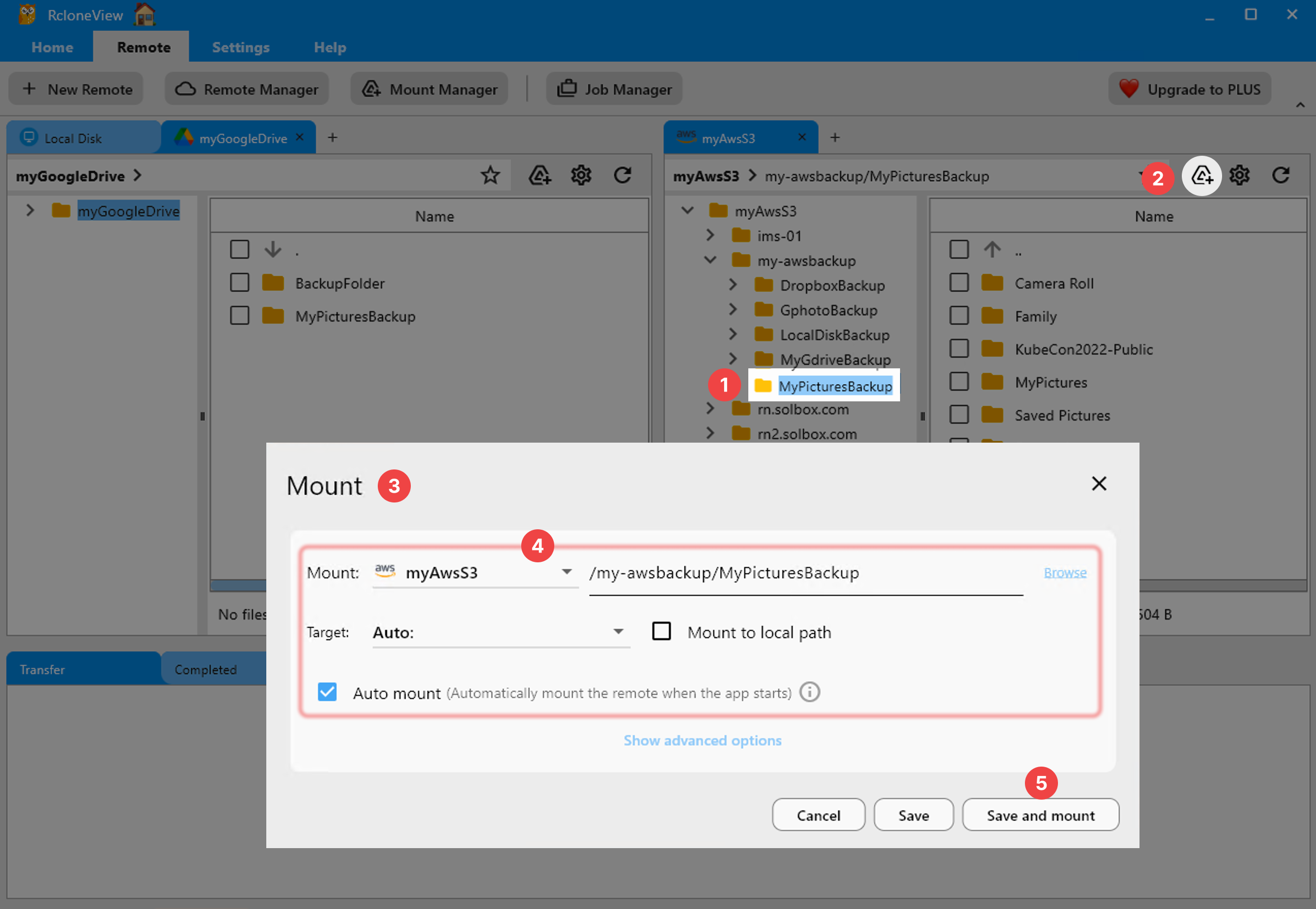
Mounting: Mount any cloud storage as a local drive letter or mount point. Browse your S3 bucket in File Explorer, open pCloud files in your applications, or access Azure Blob containers as if they were local folders.
Cross-platform: RcloneView runs on Windows, macOS, and Linux. Robocopy is Windows-only with no official ports to other operating systems.
Scheduling Approaches
Robocopy relies on external scheduling. The standard approach is to create a batch script with your Robocopy command and schedule it through Windows Task Scheduler. This works well but requires managing two separate tools and writing the command syntax manually.
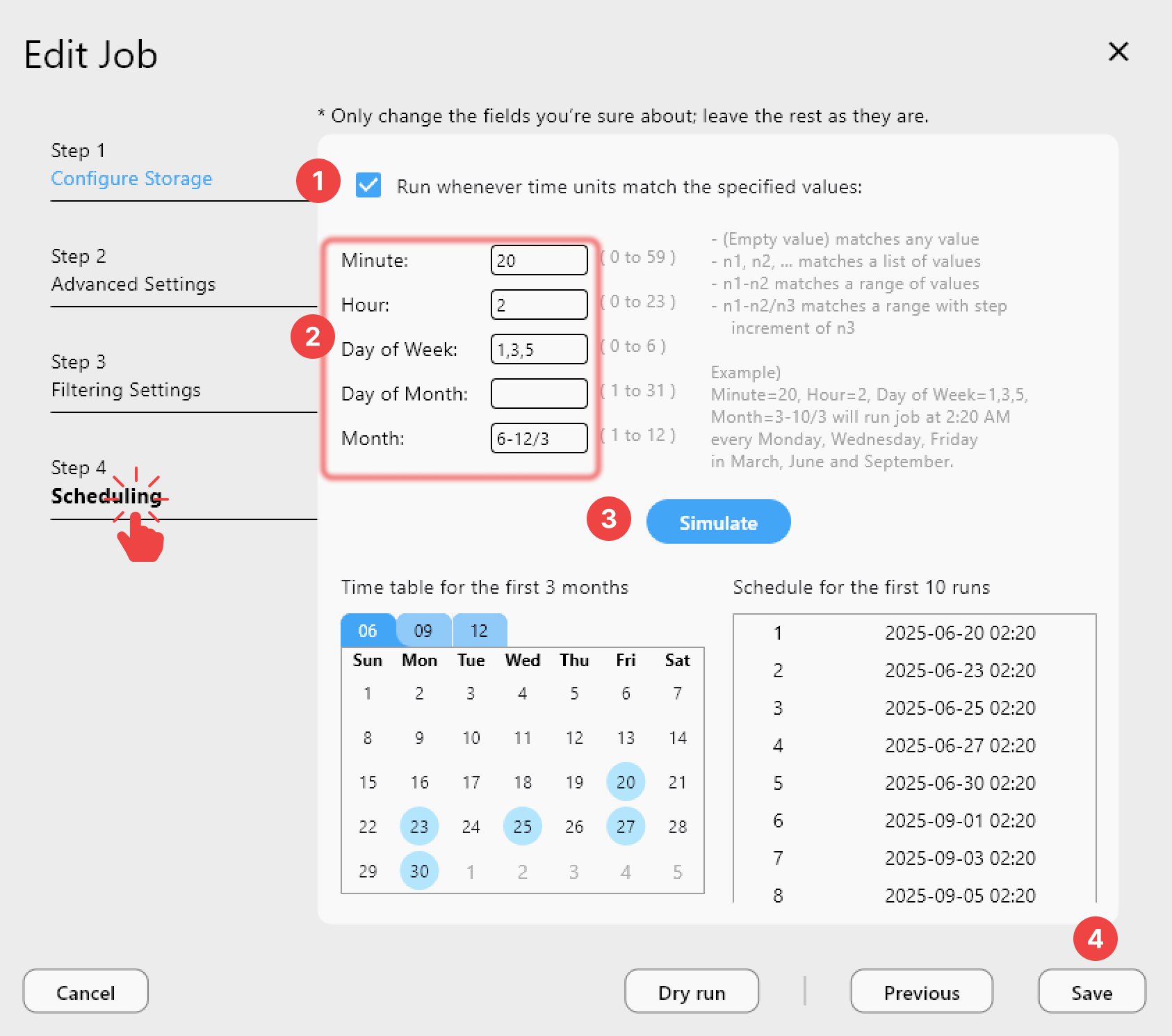
RcloneView includes built-in job scheduling. You define a sync or copy operation in the GUI, save it as a job, and set a recurring schedule — all within the same application. Job history is tracked so you can review past runs and their results.
Cloud Support: The Decisive Difference
This is the fundamental gap between the two tools. Robocopy was designed in an era when files lived on local drives and network shares. It has no concept of cloud storage, cloud APIs, or cloud authentication.
If your files are in the cloud — or need to get there — Robocopy cannot help. You would need to first mount the cloud storage as a local drive using a separate tool (which introduces its own complexity and performance considerations), then point Robocopy at the mount point. This is a fragile workaround, not a solution.
RcloneView connects to cloud providers natively through their APIs. Authentication is handled through OAuth or access keys, transfers use the provider's native protocols, and features like server-side copy (where supported) move data without it ever touching your local machine.
Performance Comparison for Local Copies
For pure local-to-local or local-to-network copies on Windows, Robocopy is hard to beat. It is deeply optimized for NTFS, integrates with Windows I/O subsystems, and its multi-threaded mode efficiently handles bulk file copies. Robocopy also understands Windows-specific constructs like junctions, symbolic links, and NTFS alternate data streams.
RcloneView can also perform local file operations (local-to-local, local-to-cloud, cloud-to-local), but it is optimized for cloud transfer patterns. For a pure Windows server-to-server file migration over SMB, Robocopy will likely be faster and more appropriate.
The right approach is to use each tool where it excels: Robocopy for local/network file operations on Windows, RcloneView for anything involving cloud storage.
Scripting and Automation
Robocopy is a command-line tool that integrates naturally into batch scripts, PowerShell workflows, and CI/CD pipelines. Its exit codes are well-documented and widely used in automation. If you manage Windows infrastructure through scripts, Robocopy fits seamlessly.
RcloneView provides a GUI-first experience, but the underlying rclone engine is also a powerful command-line tool. Advanced users can combine RcloneView's visual interface for configuration and ad-hoc work with rclone CLI commands in scripts and automation. Any job created in RcloneView can also be expressed as an rclone command.
When to Choose Robocopy
- You are copying files between local drives or Windows network shares.
- You need to preserve NTFS permissions, ownership, and audit information.
- You need to handle junctions, symbolic links, or alternate data streams.
- You are writing Windows batch scripts or PowerShell automation for file operations.
- You want a tool that is already installed on every Windows machine with zero setup.
When to Choose RcloneView
- You need to manage files in cloud storage — any of 70+ providers.
- You need cloud-to-cloud transfers without downloading files locally.
- You want a visual interface for file management, comparison, and transfer monitoring.
- You need cross-platform support (Windows, macOS, Linux).
- You want built-in scheduling without relying on Task Scheduler.
- You need to mount cloud storage as a local drive.
- You manage a multi-cloud environment with files spread across providers.
Getting Started with RcloneView
- Download RcloneView from rcloneview.com.
- Add your cloud remotes — connect Google Drive, OneDrive, S3, or any of 70+ providers.
- Browse, transfer, sync, and mount cloud storage through the visual interface.
Robocopy remains an excellent tool for local and network file operations on Windows. When your workflow extends to the cloud, RcloneView picks up where Robocopy leaves off.
Related Guides:
Supported Cloud Providers