Fix Rclone Mount and FUSE Errors in RcloneView
Mounting cloud storage as a local drive is one of the most powerful features in rclone, but FUSE dependencies and OS-specific quirks can cause frustrating errors. This guide walks through every common mount failure and how to fix it.
Rclone's mount feature lets you access remote cloud storage as if it were a local folder or drive letter. RcloneView makes this easy with its Mount Manager, but behind the scenes the mount depends on a FUSE (Filesystem in Userspace) layer that must be correctly installed and configured on your operating system. When something goes wrong, the error messages are often cryptic. This guide covers the most common mount and FUSE errors you will encounter on Windows, macOS, and Linux, with step-by-step fixes for each.
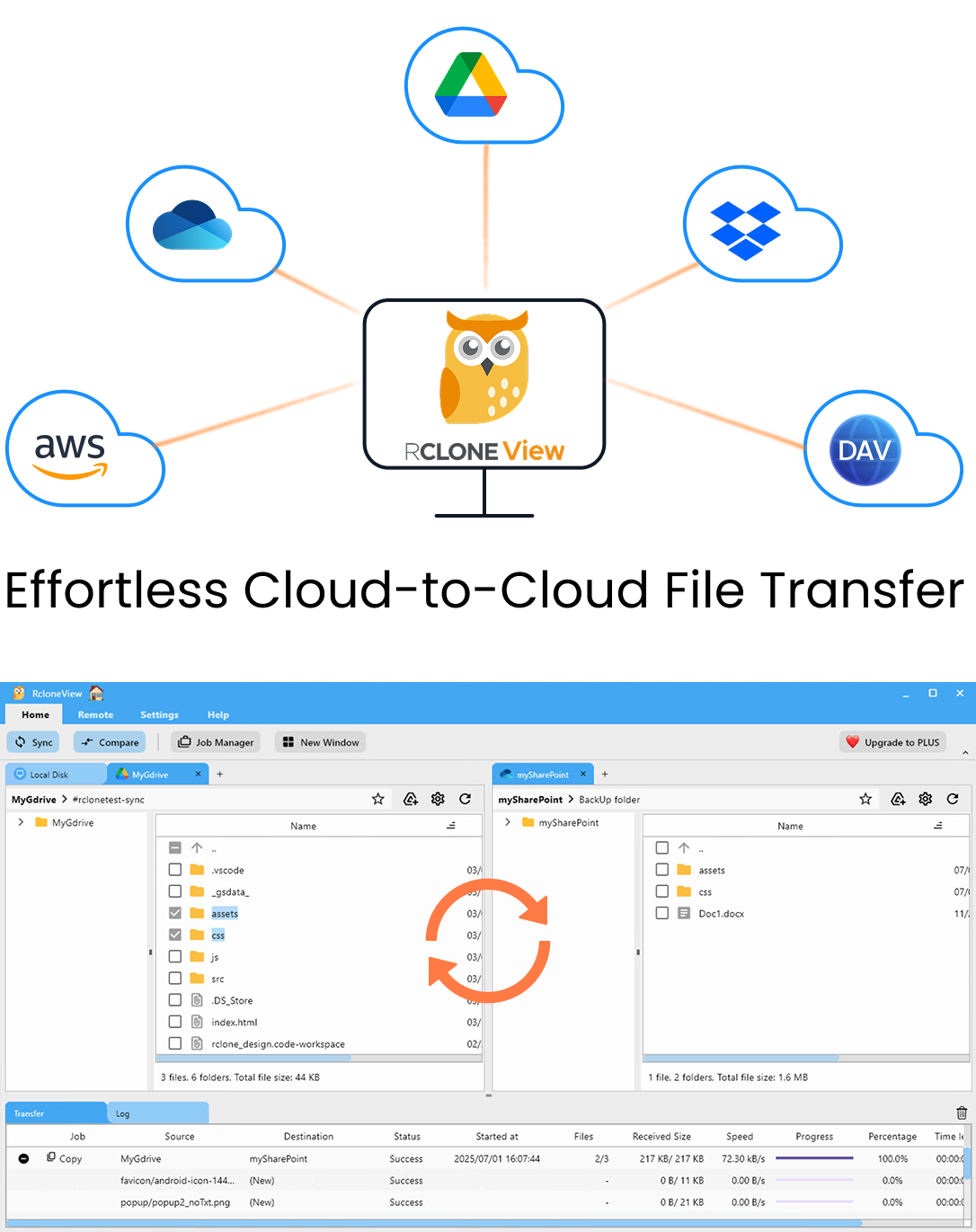
Manage & Sync All Clouds in One Place
RcloneView is a cross-platform GUI for rclone. Compare folders, transfer or sync files, and automate multi-cloud workflows with a clean, visual interface.
- One-click jobs: Copy · Sync · Compare
- Schedulers & history for reliable automation
- Works with Google Drive, OneDrive, Dropbox, S3, WebDAV, SFTP and more
Free core features. Plus automations available.
Understanding How Rclone Mounts Work
Before diving into fixes, it helps to understand the architecture. When you mount a remote in RcloneView, rclone creates a virtual filesystem that translates file operations (open, read, write, list) into API calls to your cloud provider. This virtual filesystem is exposed to your operating system through a FUSE driver:
- Windows uses WinFsp (Windows File System Proxy).
- macOS uses macFUSE (formerly OSXFUSE).
- Linux uses the kernel FUSE module (
fuseorfuse3).
If the FUSE driver is missing, outdated, or misconfigured, the mount will fail before rclone can even start serving files. The VFS (Virtual File System) cache layer sits on top of this and handles caching, buffering, and read-ahead — its own set of issues can cause problems even when FUSE itself is working.
WinFsp Missing or Not Detected on Windows
Symptoms
- Error message:
mount helper not foundorcannot find WinFsp. - The mount command exits immediately with no drive letter appearing.
- RcloneView shows a mount failure notification.
Fix Steps
- Download and install WinFsp from winfsp.dev. Choose the latest stable release (.msi installer).
- Run the installer as Administrator — WinFsp installs a kernel-mode driver that requires elevated privileges.
- Reboot after installation. While not always required, a reboot ensures the driver is fully loaded.
- Verify installation by opening a command prompt and running:
You should see the WinFsp directory with
dir "C:\Program Files (x86)\WinFsp"bin,lib, and other folders. - Check the PATH — WinFsp's
bindirectory must be on your system PATH. The installer usually adds it, but if you get persistent errors, addC:\Program Files (x86)\WinFsp\binto your system environment variables manually. - Try the mount again in RcloneView's Mount Manager.
If you are running an older version of WinFsp, upgrade to the latest release. Some rclone versions require newer WinFsp features, and version mismatches can cause silent failures.
macFUSE Not Found on macOS
Symptoms
- Error:
FUSE library not foundormount helper not found. - The mount fails silently or exits with code 1.
- On macOS Ventura or later, you may see a system extension blocked warning.
Fix Steps
- Download macFUSE from osxfuse.github.io. Install the latest stable release.
- Allow the system extension — after installation, go to System Settings > Privacy & Security and approve the macFUSE kernel extension. On Apple Silicon Macs, this may require a reboot into Recovery Mode to enable kernel extensions.
- Reboot your Mac after approving the extension.
- Verify by running in Terminal:
If the directory exists, macFUSE is installed correctly.
ls /Library/Filesystems/macfuse.fs - Check Gatekeeper — if macOS blocks the mount with a security warning, go to Privacy & Security settings and click "Allow Anyway."
For Apple Silicon Macs running macOS Sonoma or later, you may need to reduce the security level to "Reduced Security" in Recovery Mode to allow third-party kernel extensions. This is a macOS requirement, not an rclone limitation.
FUSE Not Installed on Linux
Symptoms
- Error:
fusermount: command not foundorfuse: device not found. - Mount fails with
mount helper program not found. - Permission denied when accessing
/dev/fuse.
Fix Steps
Install FUSE:
# Debian/Ubuntu
sudo apt install fuse3

# Fedora/RHEL
sudo dnf install fuse3

# Arch Linux
sudo pacman -S fuse3

# Alpine
sudo apk add fuse3
Enable the FUSE kernel module:
sudo modprobe fuse
To make it persistent across reboots, add fuse to /etc/modules-load.d/fuse.conf.
Fix permissions on /dev/fuse:
sudo chmod 666 /dev/fuse
Or add your user to the fuse group:
sudo usermod -aG fuse $USER
Log out and back in for the group change to take effect.
Allow non-root users to mount:
Edit /etc/fuse.conf and uncomment the line:
user_allow_other
This is required if you want to use the --allow-other flag, which lets other users (and system services) access the mounted filesystem.
Permission Denied Errors
Permission issues manifest differently on each OS, but the root cause is usually the same: the user running rclone does not have the necessary privileges to create or access the mount.
Windows
- Run RcloneView as Administrator if mounting to a system-level path.
- Ensure the mount point (drive letter or folder) is not already in use by another program.
- Check that your antivirus is not blocking WinFsp or rclone.
macOS
- If you see
operation not permitted, check that rclone and RcloneView have Full Disk Access in System Settings > Privacy & Security > Full Disk Access. - Ensure the mount point directory exists and is writable by your user.
Linux
- Verify your user can access
/dev/fuse:ls -la /dev/fuse - If running rclone as a service (systemd), ensure the service file includes
User=youruserand that the user is in thefusegroup. - SELinux or AppArmor policies may block FUSE mounts. Check logs with
ausearch -m avc(SELinux) ordmesg(AppArmor) and add appropriate exceptions.
Mount Point Busy or Stale Mounts
A stale mount occurs when rclone exits unexpectedly (crash, kill signal, system sleep) but the mount point remains registered with the OS. Any attempt to access the path or remount to it will fail with "transport endpoint is not connected" (Linux), "resource busy" (macOS), or a hanging Explorer window (Windows).
Linux Fix
# Force unmount the stale mount
fusermount -uz /path/to/mount

# If fusermount fails, use lazy unmount
sudo umount -l /path/to/mount
macOS Fix
# Unmount the stale path
diskutil unmount force /path/to/mount

# Or use umount
sudo umount -f /path/to/mount
Windows Fix
- Open Task Manager and end any
rclone.exeprocesses that are still running. - If a drive letter appears stuck, open a Command Prompt as Administrator and run:
Replace
net use X: /deleteX:with the stuck drive letter. - Restart Windows Explorer from Task Manager if the drive letter does not disappear.
After clearing the stale mount, retry the mount from RcloneView's Mount Manager.
VFS Cache Directory Issues
Rclone's VFS cache stores temporary copies of files being read or written. If the cache directory runs out of space, has incorrect permissions, or is on a slow filesystem, mounts will either fail or behave erratically.
Common Problems
- Disk full — the default cache location is in your user's temp directory, which may be on a small system partition.
- Permission denied — the cache directory is owned by another user or has restrictive permissions.
- Slow cache drive — placing the cache on a network drive or spinning disk causes poor mount performance.
Fixes
Change the cache directory to a location with sufficient fast storage:
rclone mount remote: /mnt/cloud --cache-dir /path/to/fast/ssd/cache
In RcloneView, you can set the cache directory in the mount configuration options.
Set cache size limits to prevent the cache from consuming all available space:
--vfs-cache-max-size 10G
--vfs-cache-max-age 1h
Check permissions on the cache directory:
ls -la /path/to/cache
# Ensure your user owns it
chown -R $USER:$USER /path/to/cache
Mounts Disappear After Reboot
By default, rclone mounts are not persistent — they do not survive a system restart. If you need mounts to come back automatically, you have several options.
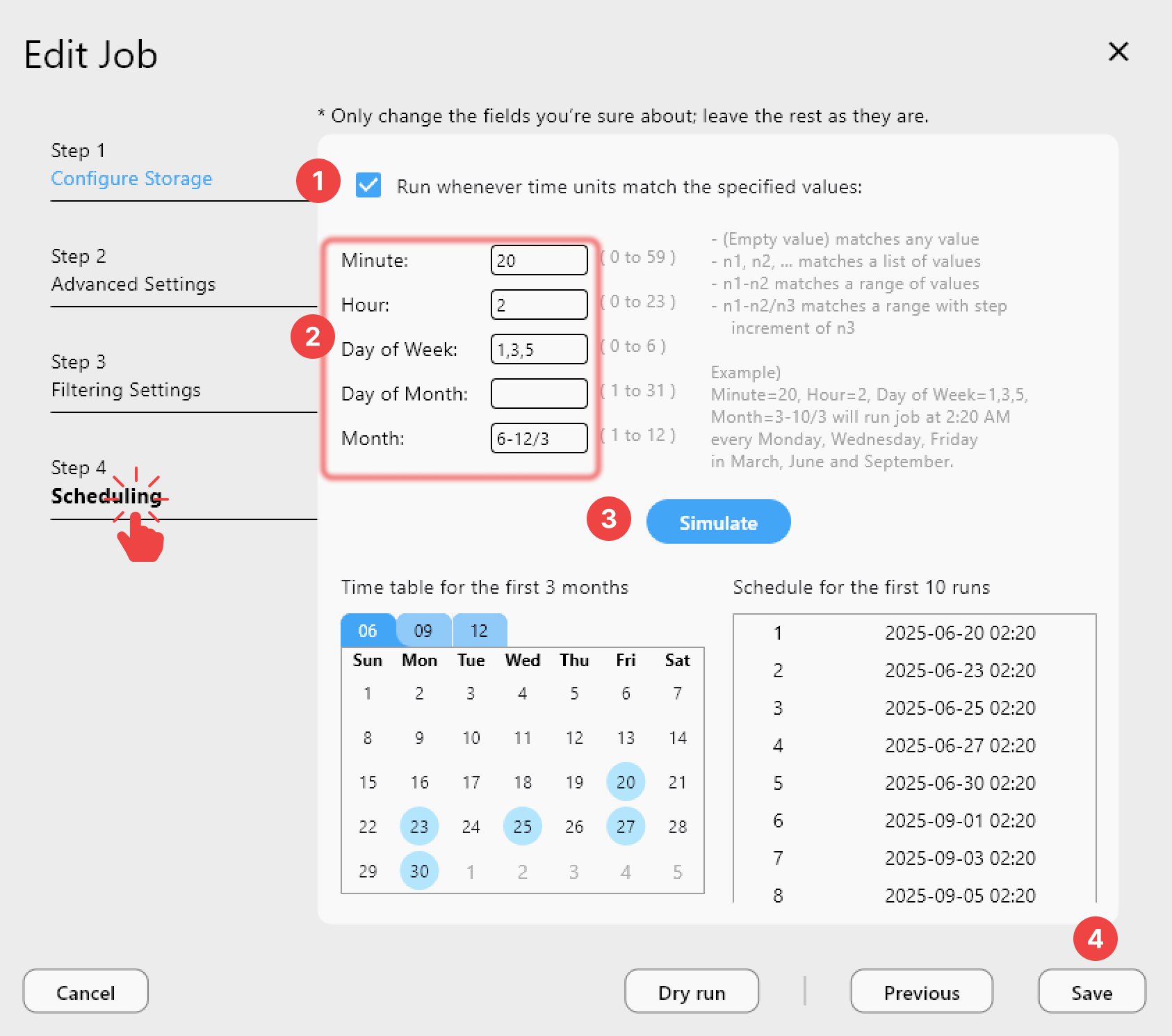
Using RcloneView Job Scheduling
RcloneView lets you create scheduled jobs that can re-establish mounts at system startup. Configure a mount job and set its schedule to run at login or boot time.
Linux systemd Service
Create a systemd user service:
[Unit]
Description=Rclone Mount - Remote
After=network-online.target
Wants=network-online.target

[Service]
Type=notify
ExecStart=/usr/bin/rclone mount remote: /mnt/cloud --vfs-cache-mode full
ExecStop=/bin/fusermount -uz /mnt/cloud
Restart=on-failure
RestartSec=5

[Install]
WantedBy=default.target
Enable it with:
systemctl --user enable rclone-mount.service
systemctl --user start rclone-mount.service
Windows Task Scheduler
Create a scheduled task that runs at logon, executing rclone mount with your desired parameters. RcloneView's job scheduler can also handle this for you.
macOS launchd
Create a plist in ~/Library/LaunchAgents/ to start the mount at login.
Getting Started
- Download RcloneView from rcloneview.com.
- Install the FUSE driver for your OS — WinFsp (Windows), macFUSE (macOS), or fuse3 (Linux).
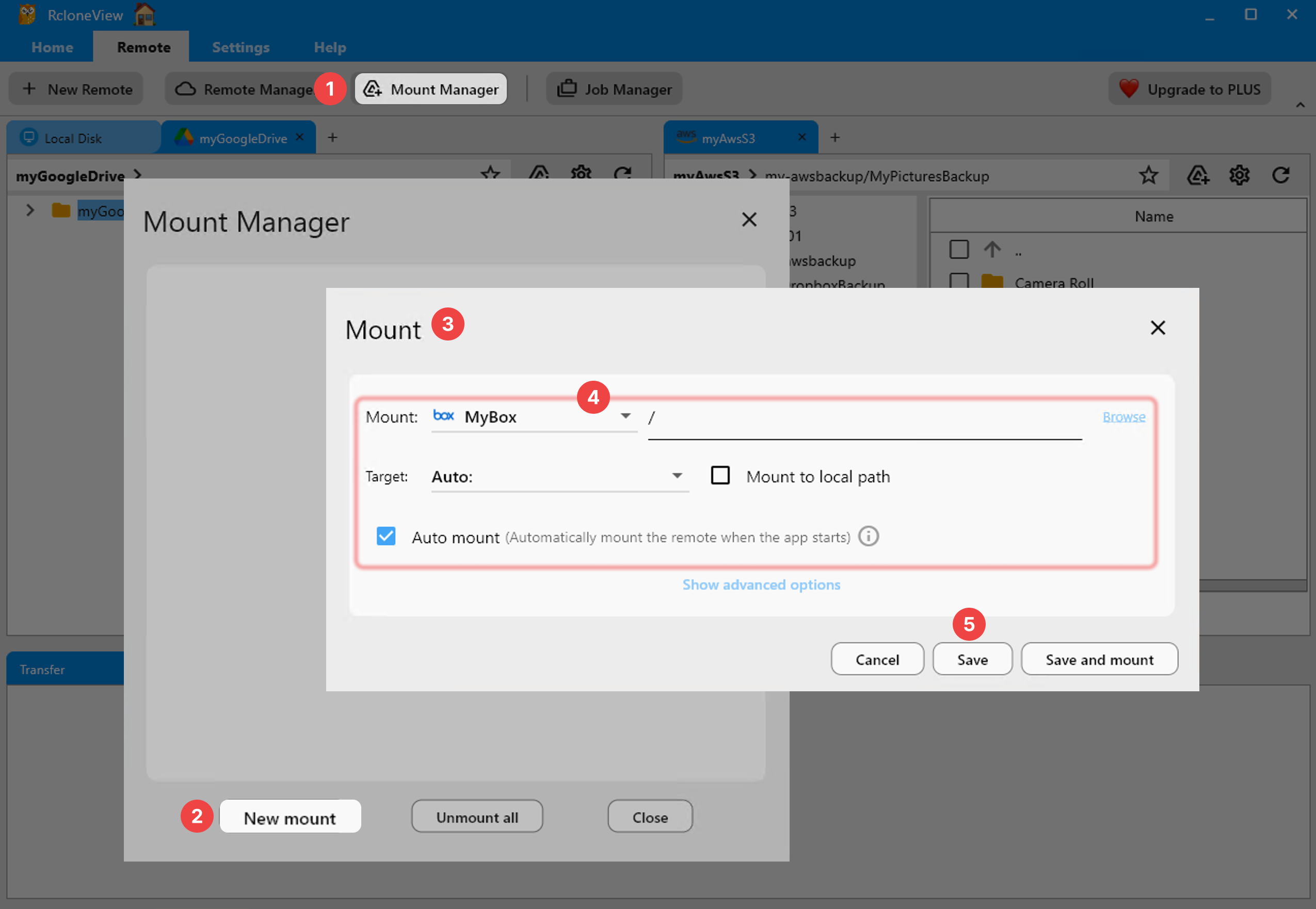
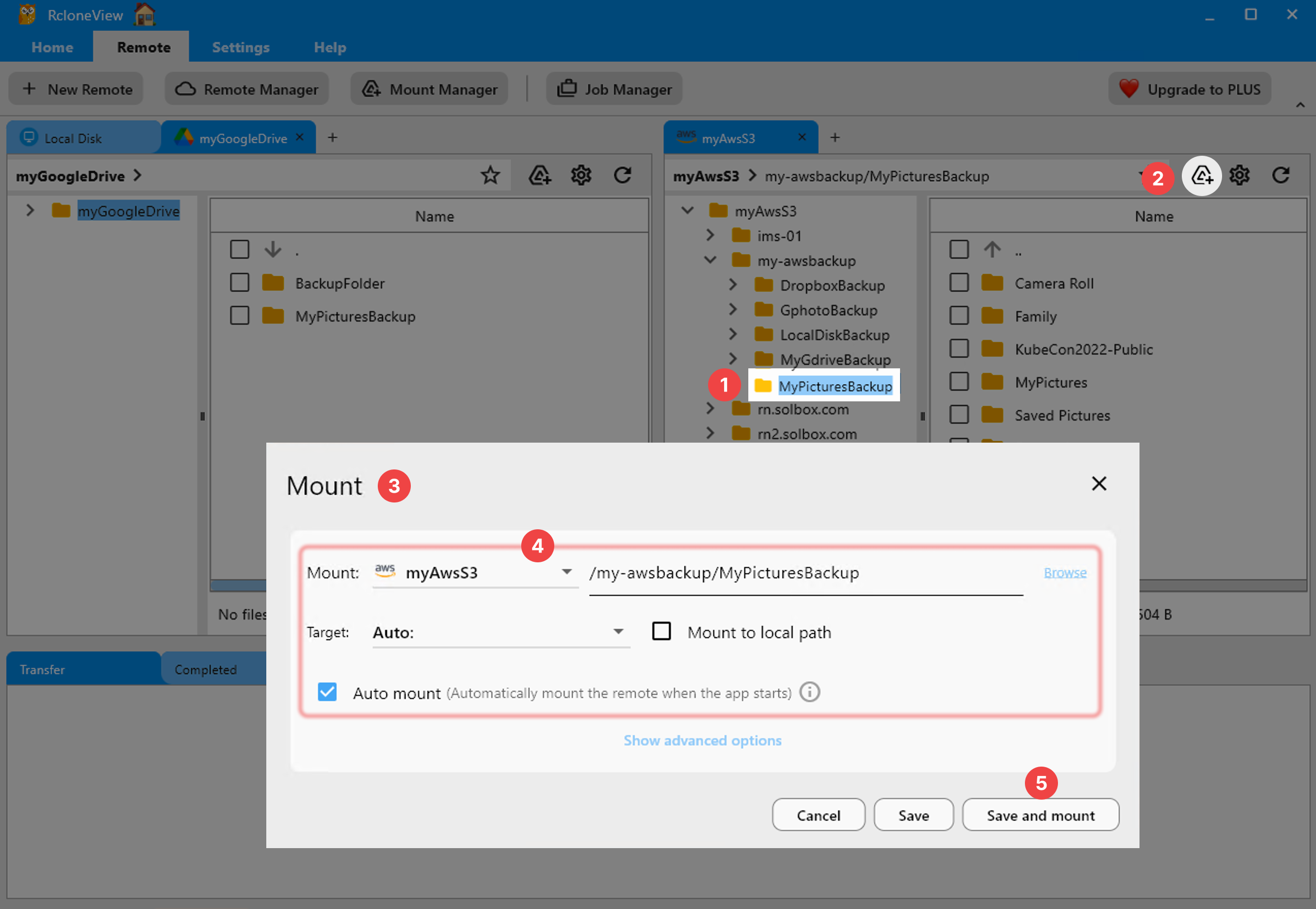
- Open the Mount Manager in RcloneView to configure and launch your first mount.
- Set VFS cache options appropriate for your storage and network speed.
Most mount errors come down to a missing or misconfigured FUSE driver. Install the right one for your platform, verify permissions, and you will have reliable cloud mounts running in minutes.
Related Guides:
Supported Cloud Providers