Cloud Sync Scheduling Best Practices — Cron Patterns, Retries, and Automation Tips for RcloneView
A sync job is only useful if it runs reliably. The difference between "I have backups" and "I think I have backups" comes down to how you schedule and monitor your jobs.
RcloneView's built-in job scheduler lets you automate any cloud sync, backup, or migration workflow. But setting a schedule is just the first step. Choosing the right frequency, handling failures, and monitoring results separates reliable automation from hopeful automation.
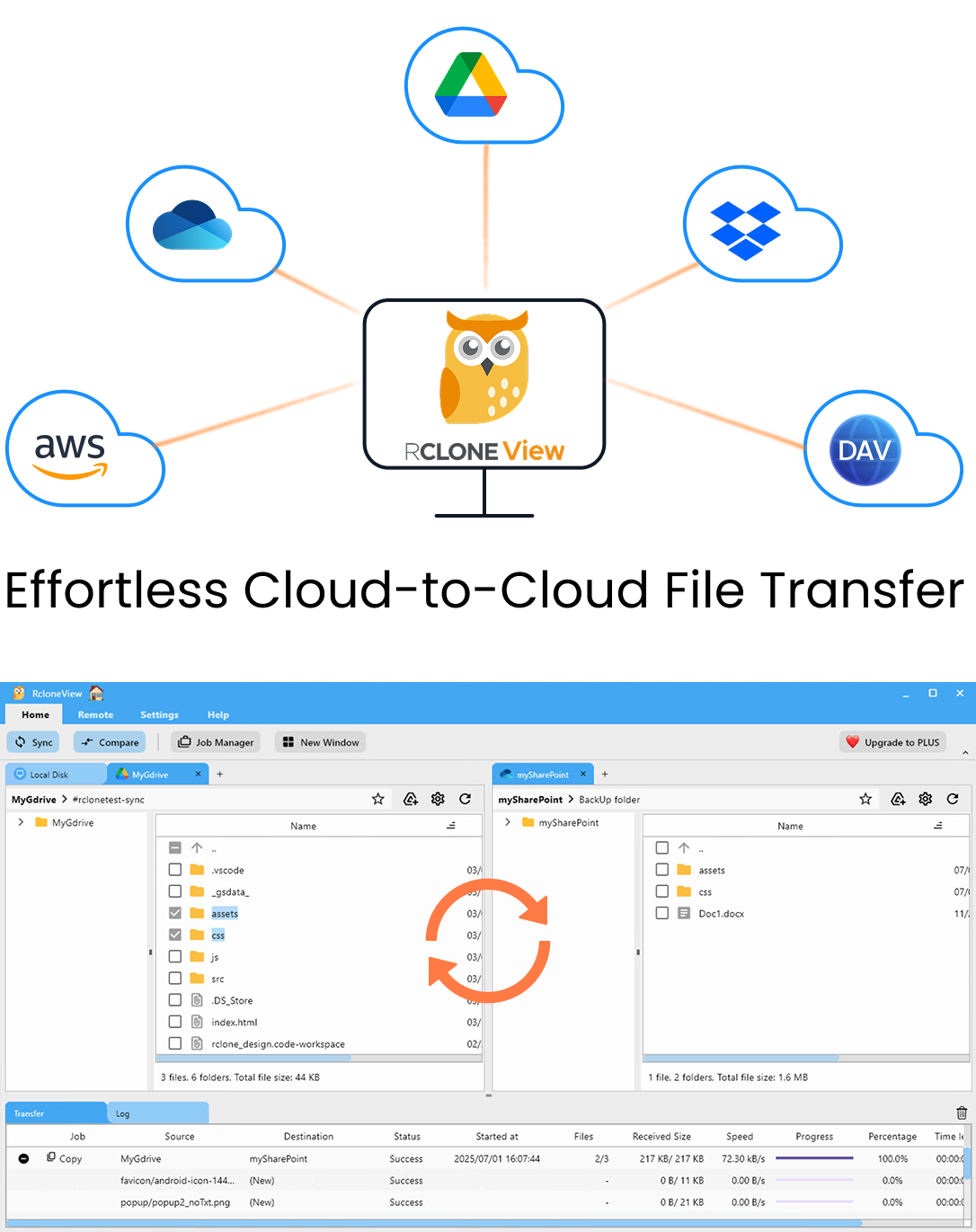
Manage & Sync All Clouds in One Place
RcloneView is a cross-platform GUI for rclone. Compare folders, transfer or sync files, and automate multi-cloud workflows with a clean, visual interface.
- One-click jobs: Copy · Sync · Compare
- Schedulers & history for reliable automation
- Works with Google Drive, OneDrive, Dropbox, S3, WebDAV, SFTP and more
Free core features. Plus automations available.
Scheduling Patterns
Daily backups
The most common pattern. Run critical backups every night when usage is low:
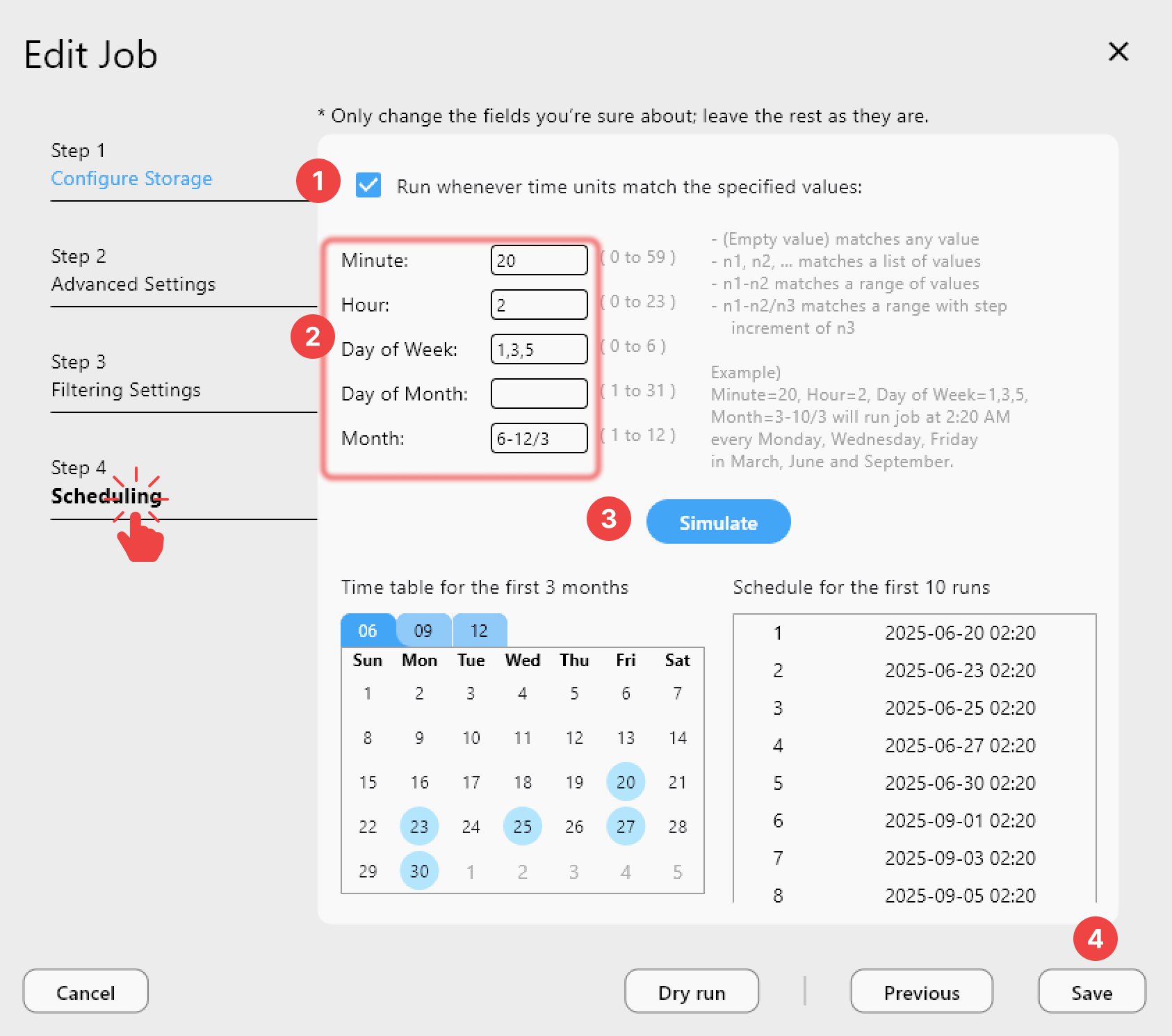
Hourly sync for active projects
For rapidly changing files, sync every hour to minimize data loss risk.
Weekly archive runs
Move completed projects to cold storage once a week. This keeps hot storage lean without constant overhead.
Multi-schedule strategies
Combine different frequencies for different data types:
| Data Type | Frequency | Time |
|---|---|---|
| Active documents | Every 4 hours | During work hours |
| Email archives | Daily | 2:00 AM |
| Media library | Daily | 3:00 AM |
| Full system backup | Weekly | Sunday 1:00 AM |
| Archive cleanup | Monthly | 1st of month |
Retry Strategies
Why transfers fail
Network interruptions, API rate limits, temporary provider outages, and file locks all cause intermittent failures. A single failure doesn't mean your backup is broken — it means you need a retry.
Schedule overlapping windows
If your nightly backup usually takes 2 hours, schedule it to run at both 2:00 AM and 5:00 AM. The second run catches anything the first one missed. If nothing was missed, the second run completes in seconds.
Use Sync mode, not Copy
Sync jobs are inherently resumable. They compare source and destination, then transfer only differences. A re-run after failure picks up exactly where it stopped.
Monitoring Your Schedules
Check job history regularly
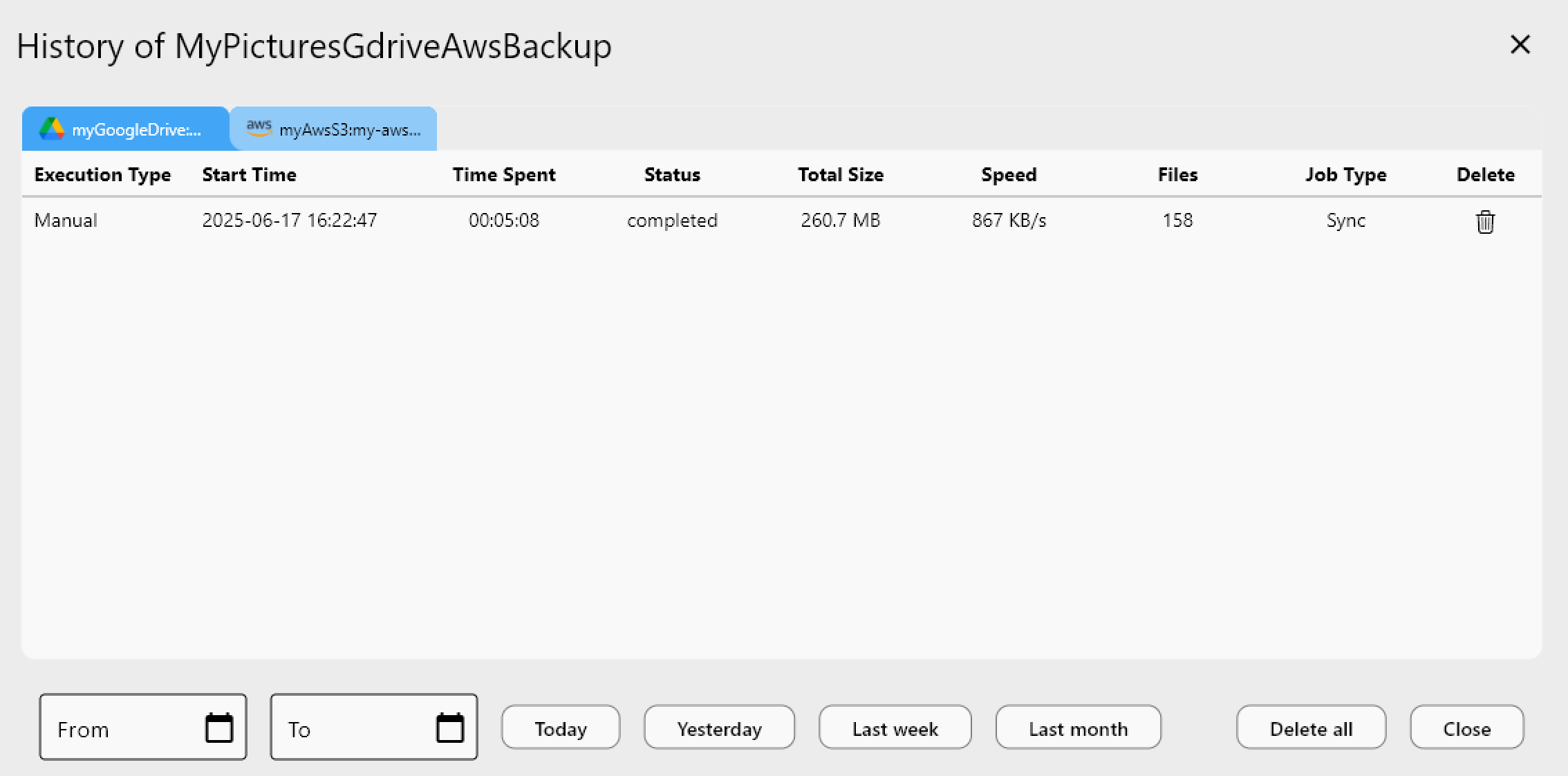
Job history shows when each job ran, whether it succeeded, how many files transferred, and how long it took. Make this a weekly check.
Set up notifications
Connect RcloneView to Slack, Discord, or Telegram to get alerts when jobs complete or fail. You don't need to check manually — the alerts come to you.
Watch for drift
If a job that normally takes 30 minutes suddenly takes 4 hours, something changed. Investigate before it becomes a problem.
Common Mistakes
- Scheduling too frequently — a sync that takes 3 hours scheduled every hour creates overlapping runs
- Ignoring failures — a job that fails silently for weeks means weeks of lost backups
- Not testing restores — backups are useless if you can't restore from them
- Single-destination backups — if your only backup is on the same provider, you're not protected against provider failures
Getting Started
- Download RcloneView from rcloneview.com.
- Create your sync jobs in the job manager.
- Set appropriate schedules based on data change frequency.
- Enable notifications for job status alerts.
- Review job history weekly.
Automation without monitoring is just delayed disappointment.
Related Guides:
Supported Cloud Providers