Serve Cloud Storage as WebDAV or HTTP with RcloneView
RcloneView can expose any cloud storage provider as a local WebDAV or HTTP server. Any app that supports WebDAV — file managers, DAM tools, creative apps, mobile clients — can then read and write cloud files directly.
Mounting a cloud drive with rclone's VFS layer is the most common way to expose cloud storage locally. But some scenarios call for a different approach: a WebDAV server that applications can connect to over the network, a plain HTTP server for serving files to a browser, or a lightweight way to access cloud storage from a device that can't mount FUSE drives. Rclone's serve command handles all of these — and RcloneView gives you access to it through the terminal and job interface.
Manage & Sync All Clouds in One Place
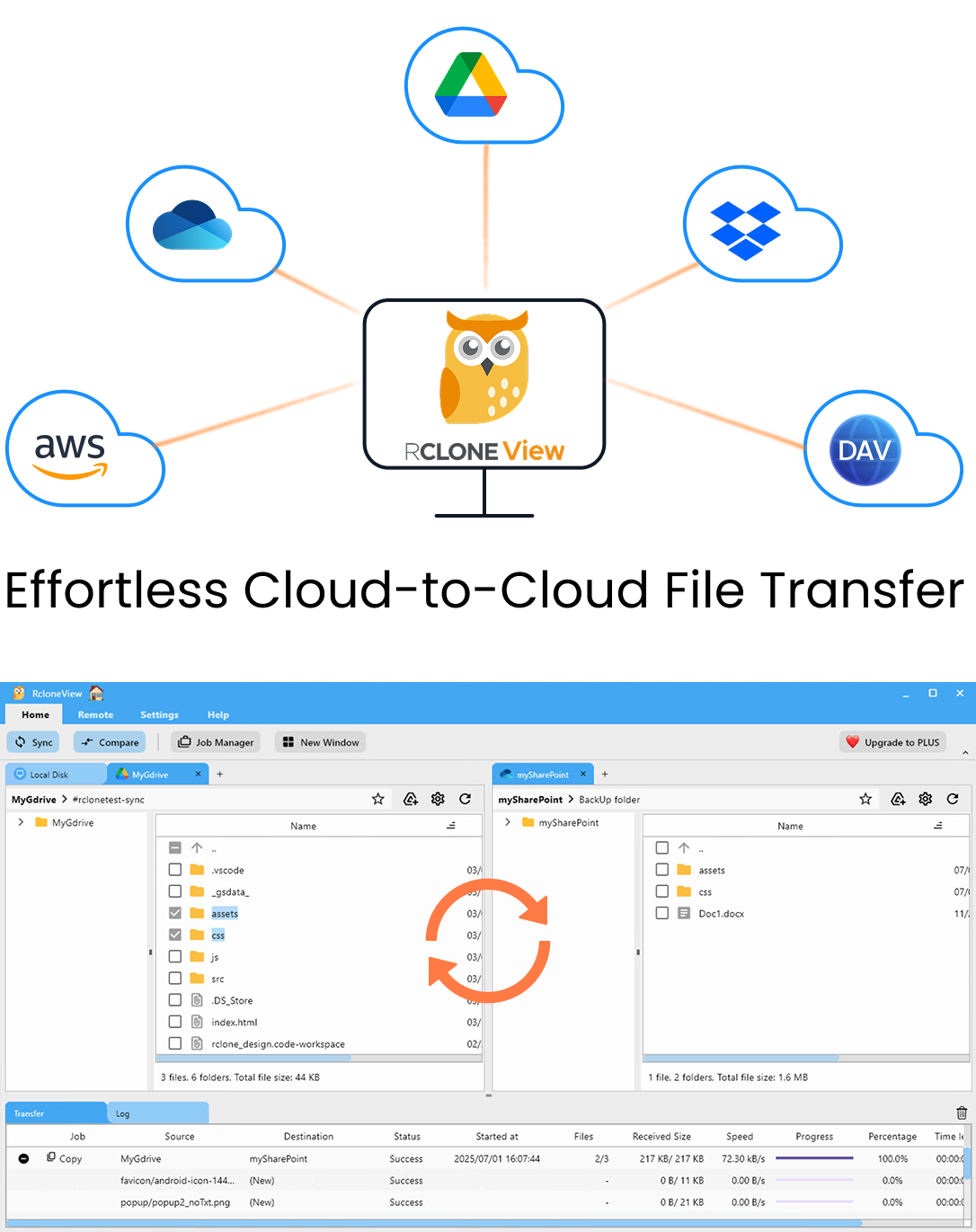
RcloneView is a cross-platform GUI for rclone. Compare folders, transfer or sync files, and automate multi-cloud workflows with a clean, visual interface.
- One-click jobs: Copy · Sync · Compare
- Schedulers & history for reliable automation
- Works with Google Drive, OneDrive, Dropbox, S3, WebDAV, SFTP and more
Free core features. Plus automations available.
What Rclone Can Serve
Rclone supports multiple server protocols via the rclone serve command:
| Protocol | Use Case |
|---|---|
webdav | File managers, DAM tools, apps with WebDAV support |
http | Read-only browser access to cloud files |
ftp | Legacy app compatibility |
sftp | Secure shell-based file access |
s3 | Expose any cloud as S3-compatible (use with S3 clients) |
dlna | Media streaming to DLNA-compatible devices |
This guide focuses on WebDAV and HTTP, the most widely useful for desktop workflows.
Use Case 1: WebDAV for App Integration
Many professional apps support WebDAV natively: Cyberduck, Finder (macOS), Adobe Bridge, DAM tools, project management tools, and more. Exposing your cloud storage as WebDAV makes it accessible to these apps without a drive mount.
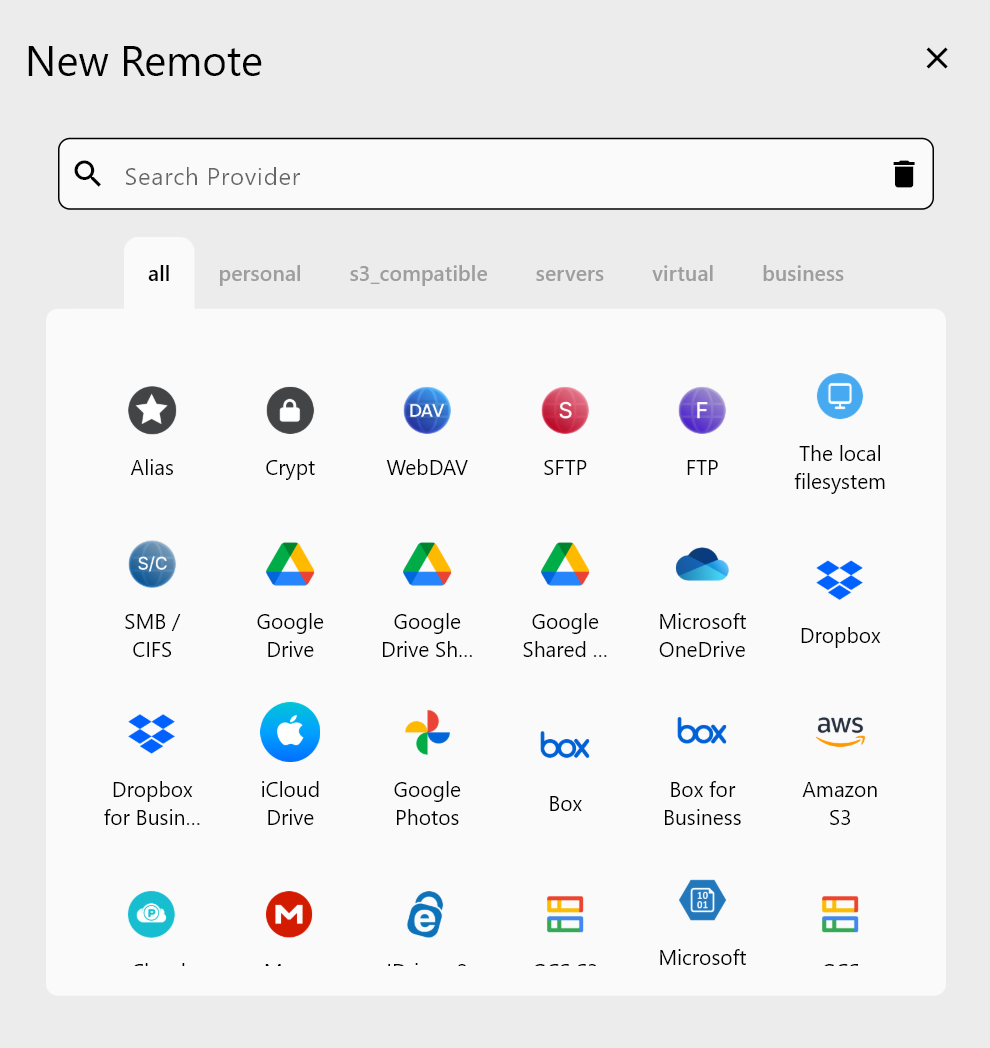
Start a WebDAV server from RcloneView
Open the Terminal panel in RcloneView and run:
rclone serve webdav gdrive:/Documents/ --addr 127.0.0.1:8888 --user myuser --pass mypassword
This starts a WebDAV server at http://127.0.0.1:8888 exposing your Google Drive /Documents/ folder.
Connect from an app
In any WebDAV-capable app, add a WebDAV connection:
- URL:
http://127.0.0.1:8888 - Username:
myuser - Password:
mypassword
The app will see your Google Drive Documents folder as a WebDAV share — browseable, readable, and writable.
Use Case 2: HTTP for Read-Only Browser Access
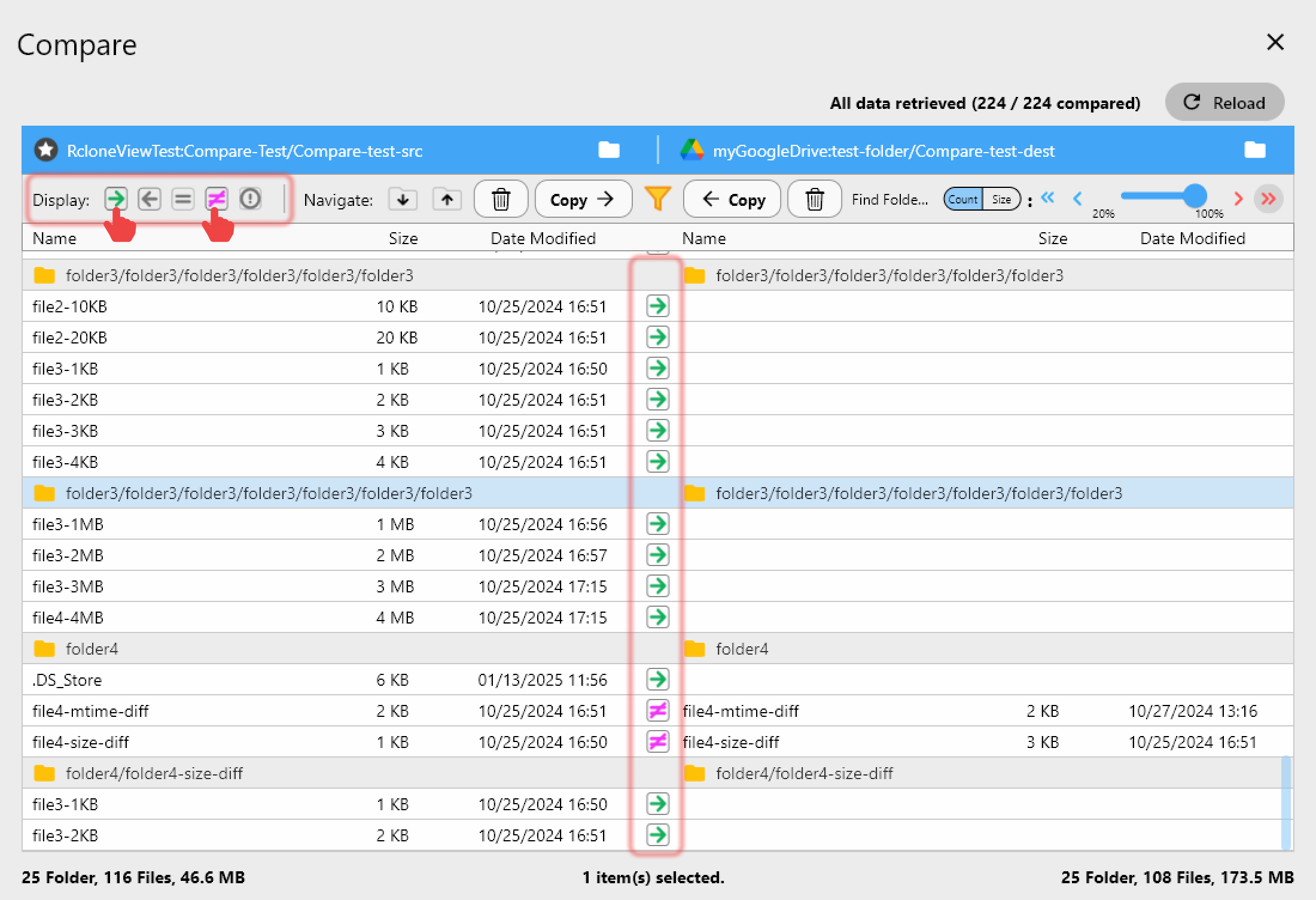
For sharing files with colleagues without granting them cloud account access, serve a folder as HTTP:
rclone serve http s3-remote:my-bucket/reports/ --addr 0.0.0.0:8080
Anyone on the network can open http://your-machine-ip:8080 in a browser and see a directory listing with download links — no cloud account required.
Use Case 3: Serve S3 for S3-Client Compatibility
A powerful technique: expose a non-S3 cloud (like Google Drive or Backblaze B2's native API) as an S3-compatible endpoint, so any S3 client can access it:
rclone serve s3 gdrive:/Backups/ --addr 127.0.0.1:9000 --auth-key ACCESSKEY,SECRETKEY
S3 clients (AWS CLI, s3cmd, any S3 SDK) can then connect to http://127.0.0.1:9000 and interact with Google Drive as if it were S3.
Creating a Persistent Serve Job
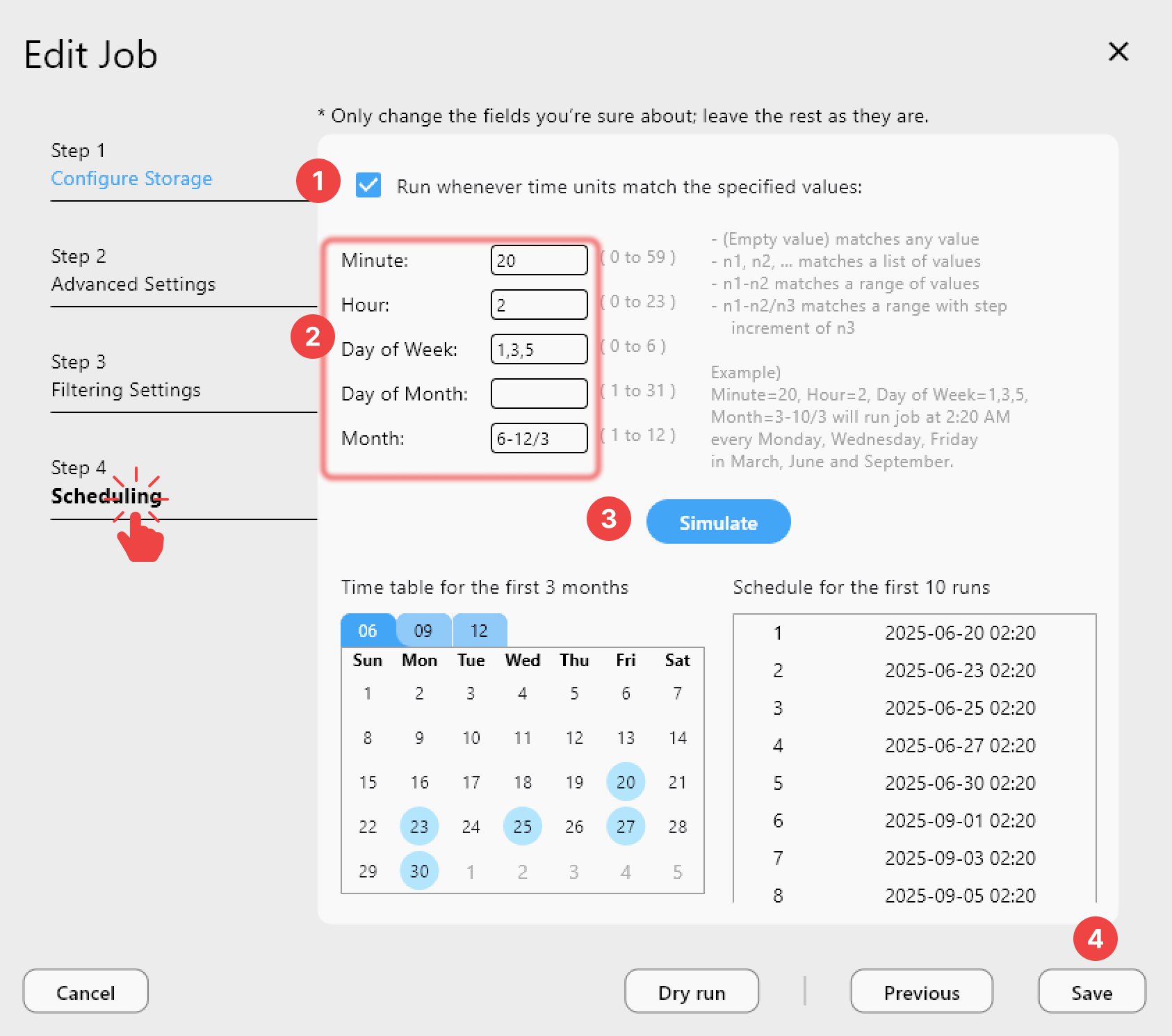
To run a serve command on startup or on a schedule:
- In RcloneView, create a new Job with Custom Command mode.
- Enter your
rclone serve webdavcommand with the desired flags. - Set it to start automatically when RcloneView launches, or schedule it as needed.
Security Considerations
| Scenario | Recommendation |
|---|---|
| Local use only | Bind to 127.0.0.1 — not accessible outside your machine |
| LAN sharing | Bind to your machine's local IP, add --user and --pass |
| Internet-facing | Use HTTPS (add --cert and --key flags) or put behind a reverse proxy |
| Public HTTP server | Use rclone serve http with read-only VFS: add --read-only |
Always set username/password for any server accessible beyond 127.0.0.1:
rclone serve webdav remote:path --addr 0.0.0.0:8888 --user admin --pass strongpassword --read-only
Useful Serve Flags
| Flag | Purpose |
|---|---|
--addr host:port | Bind address and port |
--user / --pass | HTTP Basic Auth |
--read-only | Prevent writes |
--vfs-cache-mode full | Cache files locally for better performance |
--no-modtime | Disable modtime reporting (useful for some apps) |
--htpasswd /path/file | Use htpasswd file for multiple users |
Getting Started
- Download RcloneView from rcloneview.com.
- Open the Terminal in RcloneView.
- Run
rclone serve webdav remote:path --addr 127.0.0.1:8888to start a WebDAV server. - Connect from your app using the WebDAV URL and credentials.
WebDAV unlocks cloud storage access for dozens of apps that wouldn't otherwise be able to read your cloud files. No mount required.
Related Guides:
- Mount Cloud Storage as a Local Drive
- Mount SFTP and SMB as Local Drives
- RcloneView Terminal: CLI Inside the GUI
Supported Cloud Providers