Fix Rclone Config Corruption and Recovery Issues in RcloneView
A corrupted rclone config file can make all your cloud remotes disappear. This guide explains why it happens, how to recover, and how to prevent it from happening again.
Your rclone configuration file (rclone.conf) stores every remote you have set up — cloud credentials, tokens, encryption keys, and connection settings. If this file becomes corrupted, you lose access to all configured remotes until you repair or recreate them. RcloneView reads and writes the same config file that the rclone CLI uses, so corruption affects both tools equally. Here is how to diagnose and fix the problem.
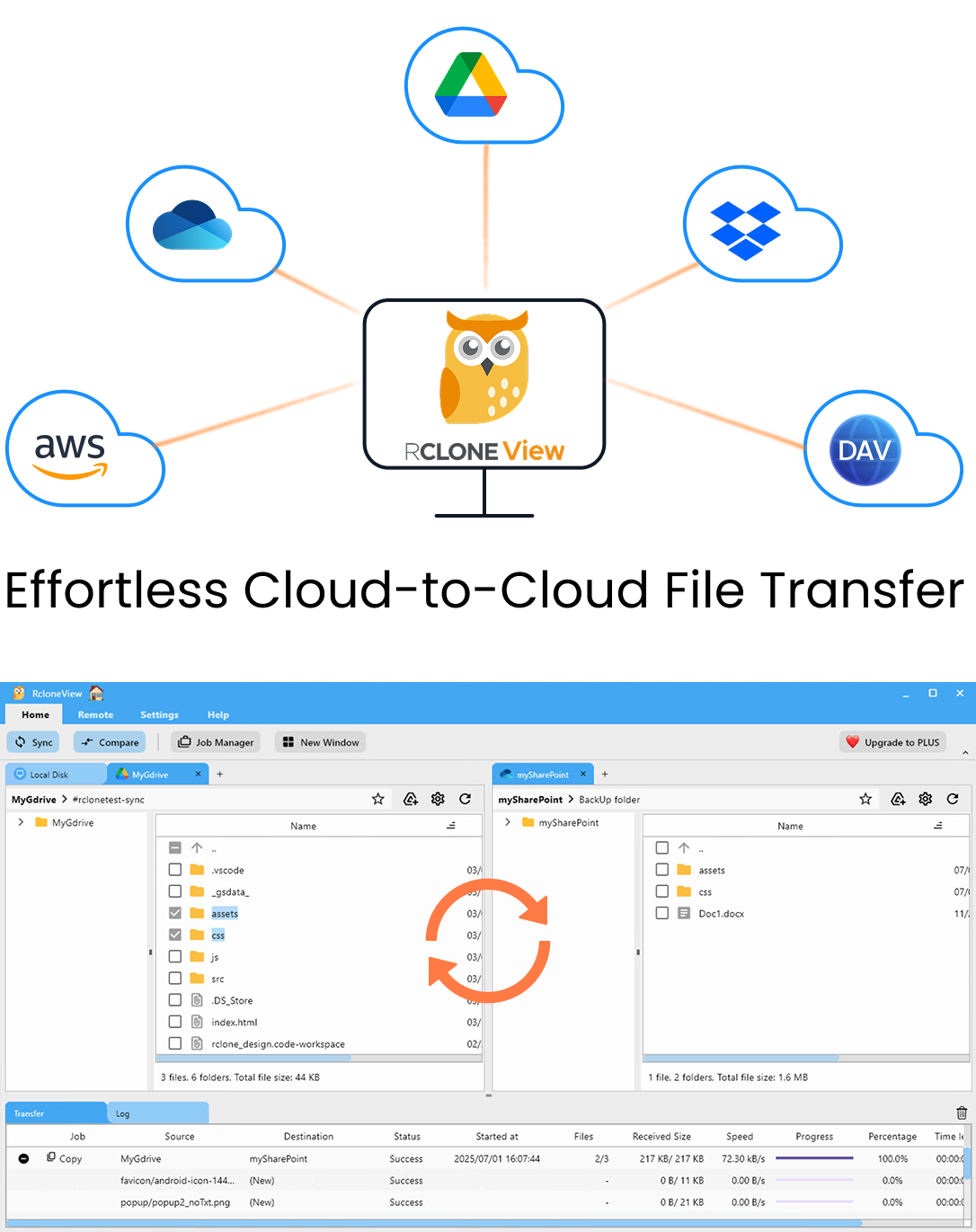
Manage & Sync All Clouds in One Place
RcloneView is a cross-platform GUI for rclone. Compare folders, transfer or sync files, and automate multi-cloud workflows with a clean, visual interface.
- One-click jobs: Copy · Sync · Compare
- Schedulers & history for reliable automation
- Works with Google Drive, OneDrive, Dropbox, S3, WebDAV, SFTP and more
Free core features. Plus automations available.
Symptoms of Config Corruption
You may have a corrupted config file if you experience any of the following:
- Remotes disappear from the RcloneView remote list or
rclone listremotesreturns nothing. - Parsing errors appear on startup, such as
Failed to load config fileorinvalid character. - Authentication fails for remotes that previously worked, with token errors or credential mismatches.
- Partial remote entries — some remotes load but others are missing or have incomplete settings.
- Garbled text when you open
rclone.confin a text editor — unreadable characters instead of INI-format sections.
Common Causes
Interrupted Config Saves
The most frequent cause is a write operation that was interrupted before completing. This can happen when:
- The system crashes or loses power while rclone is saving a token refresh.
- You force-quit RcloneView or rclone while it is updating the config.
- A disk write fails due to insufficient space or a filesystem error.
Disk and Filesystem Errors
Underlying storage problems can silently corrupt any file, including your config:
- Bad sectors on a hard drive.
- Filesystem corruption after an unclean shutdown.
- Network filesystem (NFS/SMB) latency causing partial writes.
Encryption Key Issues
If your config is encrypted with RCLONE_CONFIG_PASS, problems arise when:
- The password environment variable is not set or changes between sessions.
- The password was stored in a keychain entry that has been deleted or reset.
- You copied the config to another machine without also transferring the password.
Manual Editing Mistakes
Opening rclone.conf in a text editor and accidentally introducing syntax errors — missing brackets, broken INI section headers, or deleted lines — will corrupt the config for the parser.
Locating Your Config File
Before recovery, find your config file:
| OS | Default Location |
|---|---|
| Windows | %APPDATA%\rclone\rclone.conf |
| macOS | ~/.config/rclone/rclone.conf |
| Linux | ~/.config/rclone/rclone.conf |
You can also check the active config path by running rclone config file in a terminal. RcloneView uses this same file path.
Recovery Steps
Step 1: Check for Backup Copies
Before making any changes, look for automatic or manual backups:
- Some systems create
.bakfiles in the same directory. Check forrclone.conf.bak. - If you use a backup tool or cloud sync on your home directory, recover the file from a recent snapshot.
- Check your system's Recycle Bin or Trash — some editors create temporary copies.
Step 2: Validate the File Structure
Open rclone.conf in a plain text editor. A healthy config looks like this:
[my-gdrive]
type = drive
client_id = ...
client_secret = ...
token = {"access_token":"...","token_type":"Bearer",...}

[my-s3]
type = s3
provider = AWS
access_key_id = AKIA...
secret_access_key = ...
region = us-east-1
Look for: missing [section] headers, truncated lines, binary characters, or incomplete JSON token strings.
Step 3: Repair Partial Corruption
If only part of the file is damaged:
- Back up the corrupted file first — copy it to
rclone.conf.corrupt. - Remove the damaged section — delete the broken remote entry entirely.
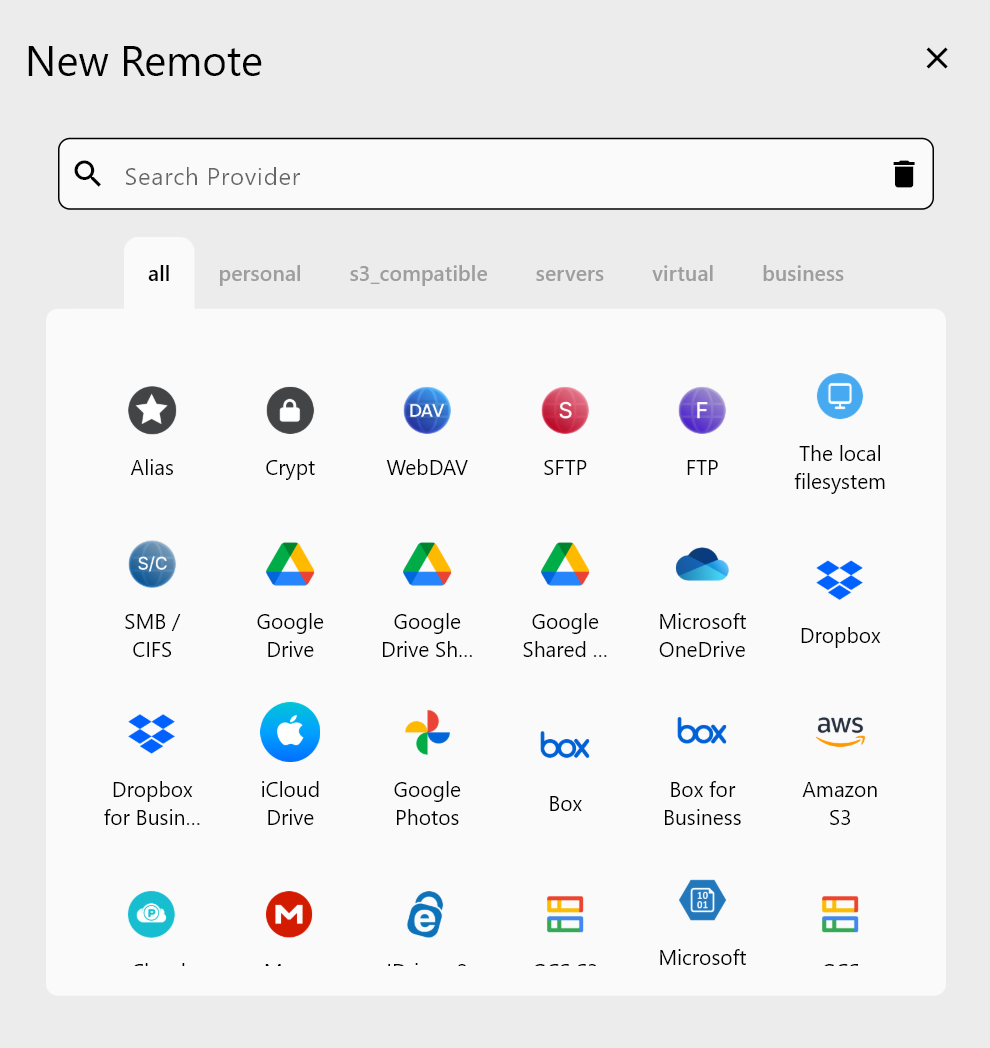
- Re-add the remote in RcloneView using the New Remote wizard.
Step 4: Rebuild from Scratch
If the file is completely unreadable:
- Rename the corrupted file to
rclone.conf.old. - Launch RcloneView — it will start with a fresh, empty config.
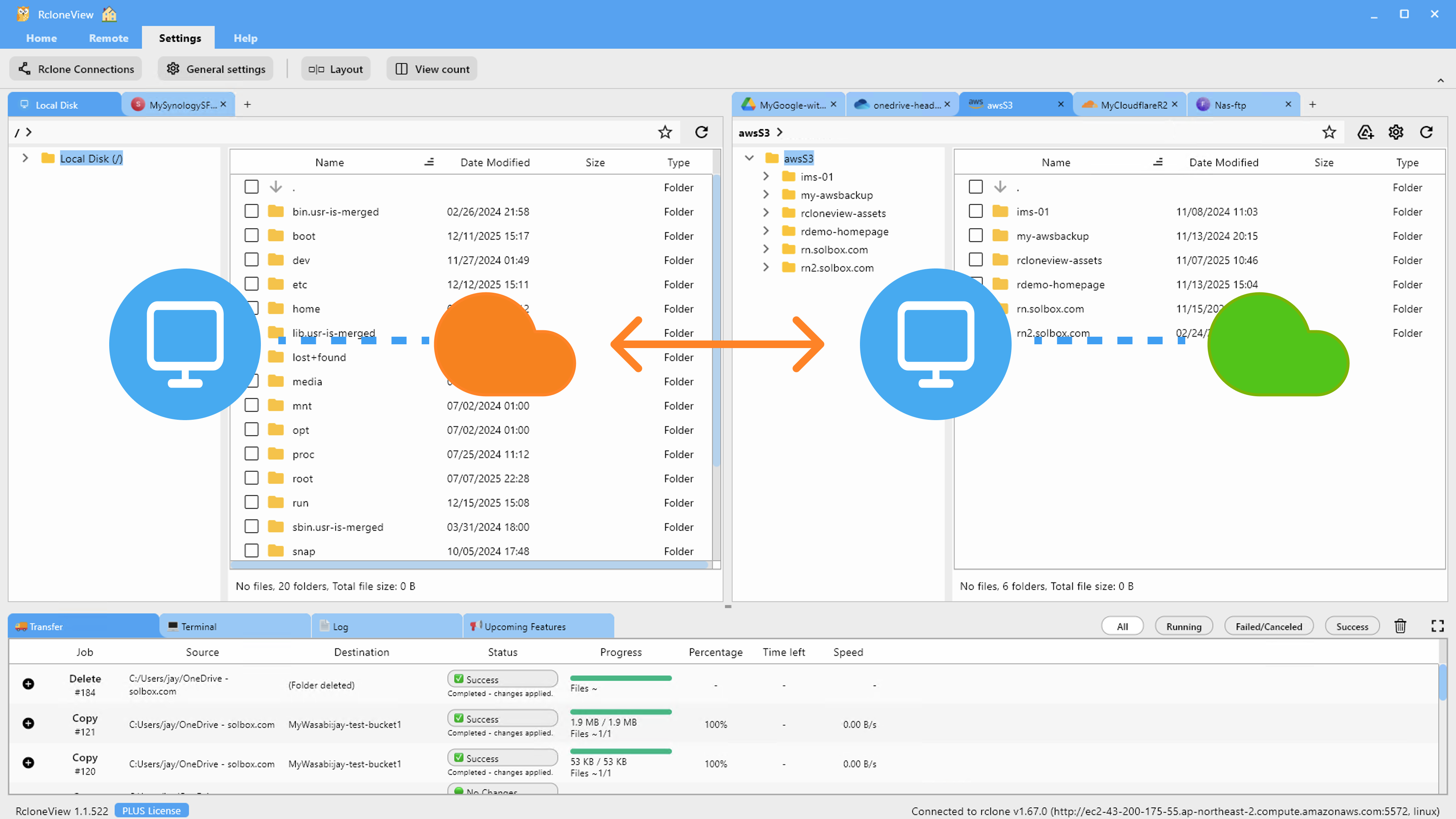
- Re-add each remote using the setup wizard. For OAuth-based remotes (Google Drive, OneDrive, Dropbox), you will need to re-authorize.
- For S3-compatible remotes, you will need your access keys and secret keys.
Step 5: Recover Encrypted Configs
If your config was encrypted and you have the password:
- Set
RCLONE_CONFIG_PASSin your environment. - Run
rclone config showto verify decryption works. - If it decrypts correctly, the config is not corrupted — the issue was a missing password.
If you have lost the encryption password, the config cannot be decrypted. You must recreate all remotes from scratch.
Prevention Tips
- Back up regularly — copy
rclone.confto a safe location after adding or changing remotes. A simplecp ~/.config/rclone/rclone.conf ~/.config/rclone/rclone.conf.backupis enough. - Store credentials separately — keep S3 keys, SFTP details, and your
RCLONE_CONFIG_PASSin a password manager. - Never force-quit RcloneView or rclone during a token refresh or config save.
- Ensure sufficient disk space on the drive where your config is stored.
- Use the GUI to manage remotes instead of editing
rclone.confmanually.
Getting Started
- Download RcloneView from rcloneview.com.
- Locate your config with
rclone config file. - Back up your config before making changes.
- Use the GUI to add and manage remotes safely.
A few minutes spent backing up your config can save hours of reconfiguration. Make it part of your routine.
Related Guides:
Supported Cloud Providers