Use Custom Rclone Flags and Advanced Options in RcloneView Jobs
RcloneView handles the common cases automatically, but rclone's real power is in its flags. Knowing which ones to add -- and where -- can cut transfer times in half or solve stubborn edge cases.
Rclone has hundreds of command-line flags that control everything from transfer parallelism to checksum behavior to retry logic. RcloneView provides a clean interface for the most common operations, but it also lets you inject custom flags into any job for situations where defaults are not enough. This guide covers the most useful flags, when to use them, and how to configure them in RcloneView.
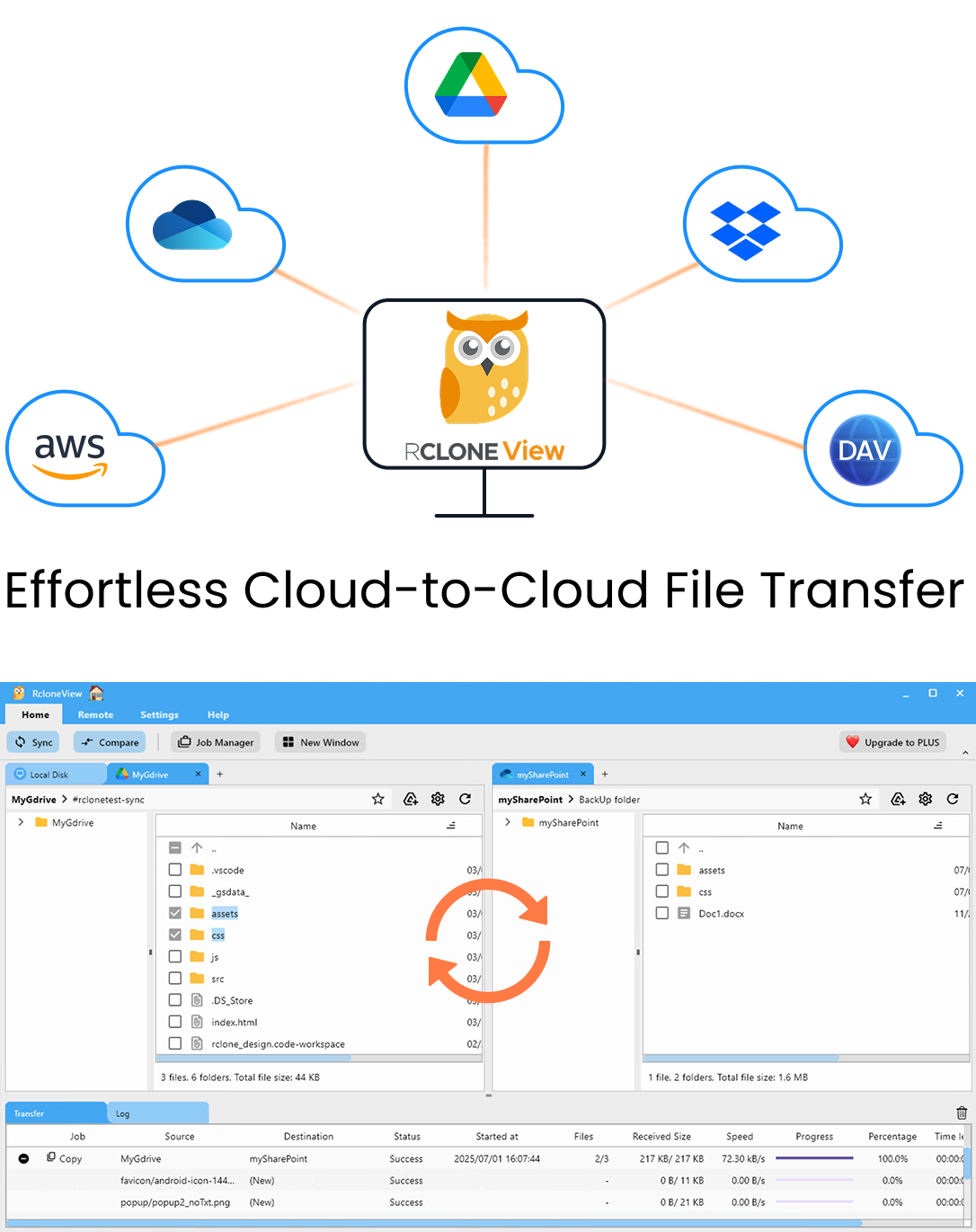
Manage & Sync All Clouds in One Place
RcloneView is a cross-platform GUI for rclone. Compare folders, transfer or sync files, and automate multi-cloud workflows with a clean, visual interface.
- One-click jobs: Copy · Sync · Compare
- Schedulers & history for reliable automation
- Works with Google Drive, OneDrive, Dropbox, S3, WebDAV, SFTP and more
Free core features. Plus automations available.
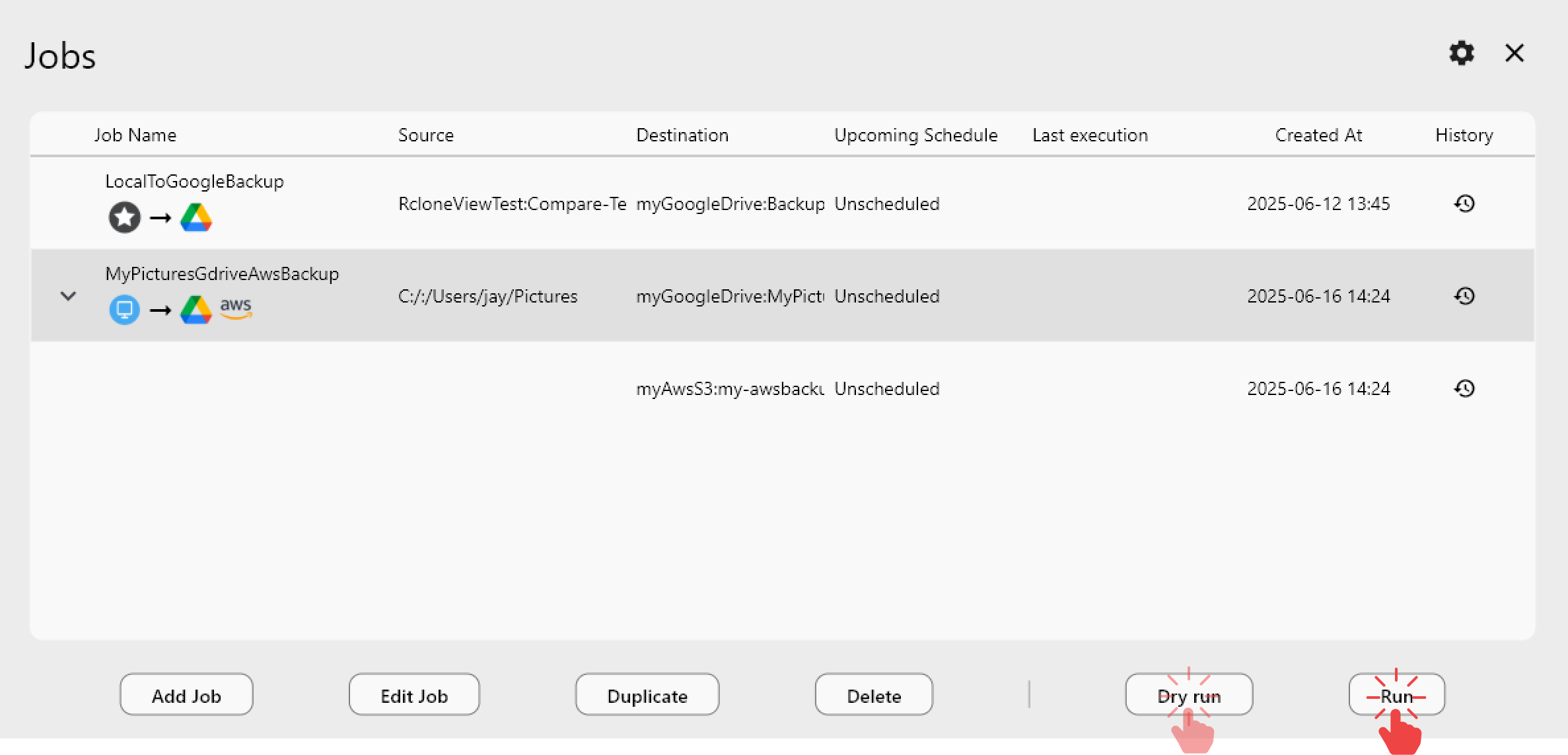
Where to Add Custom Flags in RcloneView
RcloneView supports custom flags in two places:
- Job Configuration -- when creating or editing a job (copy, sync, move), there is a field for additional flags. Enter them exactly as you would on the command line.
- Terminal -- for one-off commands, open the Terminal panel and type the full rclone command with any flags you need.
Flags added to a saved job persist across runs, so you configure them once and they apply every time the job executes -- including scheduled runs.
Performance Tuning Flags
These flags directly impact transfer speed and resource usage.
--transfers N
Controls how many files are transferred in parallel. Default is 4.
--transfers 16
Increase this for many small files or when the provider supports high concurrency. S3, B2, and Wasabi handle 16-32 parallel transfers well. Google Drive may throttle above 8-10.
--checkers N
Controls how many files are checked (compared) in parallel. Default is 8.
--checkers 32
Increase this when running sync or check operations on directories with many files. The checking phase is often the bottleneck, not the transfer.
--fast-list
Uses fewer API calls to list directories by requesting all objects in a single request. Dramatically faster for S3-compatible providers with large buckets.
--fast-list
Trade-off: uses more memory since the entire listing is held in memory. On buckets with millions of objects, this can consume several gigabytes of RAM.
--no-traverse
Skips listing the destination entirely. Useful when copying a few files into a destination with millions of existing files.
--no-traverse
Without this flag, rclone lists the entire destination to check for existing files. If you know the destination is mostly irrelevant (e.g., copying 10 new files into a bucket with 5 million objects), --no-traverse saves minutes of listing time.
--buffer-size
Controls the in-memory buffer per file transfer. Default is 16 MiB.
--buffer-size 64M
Increase for large files on high-bandwidth connections to reduce I/O stalls. Decrease if memory is constrained.
--multi-thread-streams N
Number of streams for multi-thread downloads of a single file. Default is 4.
--multi-thread-streams 8
Helps when downloading large individual files from providers that support byte-range requests.
Comparison and Behavior Flags
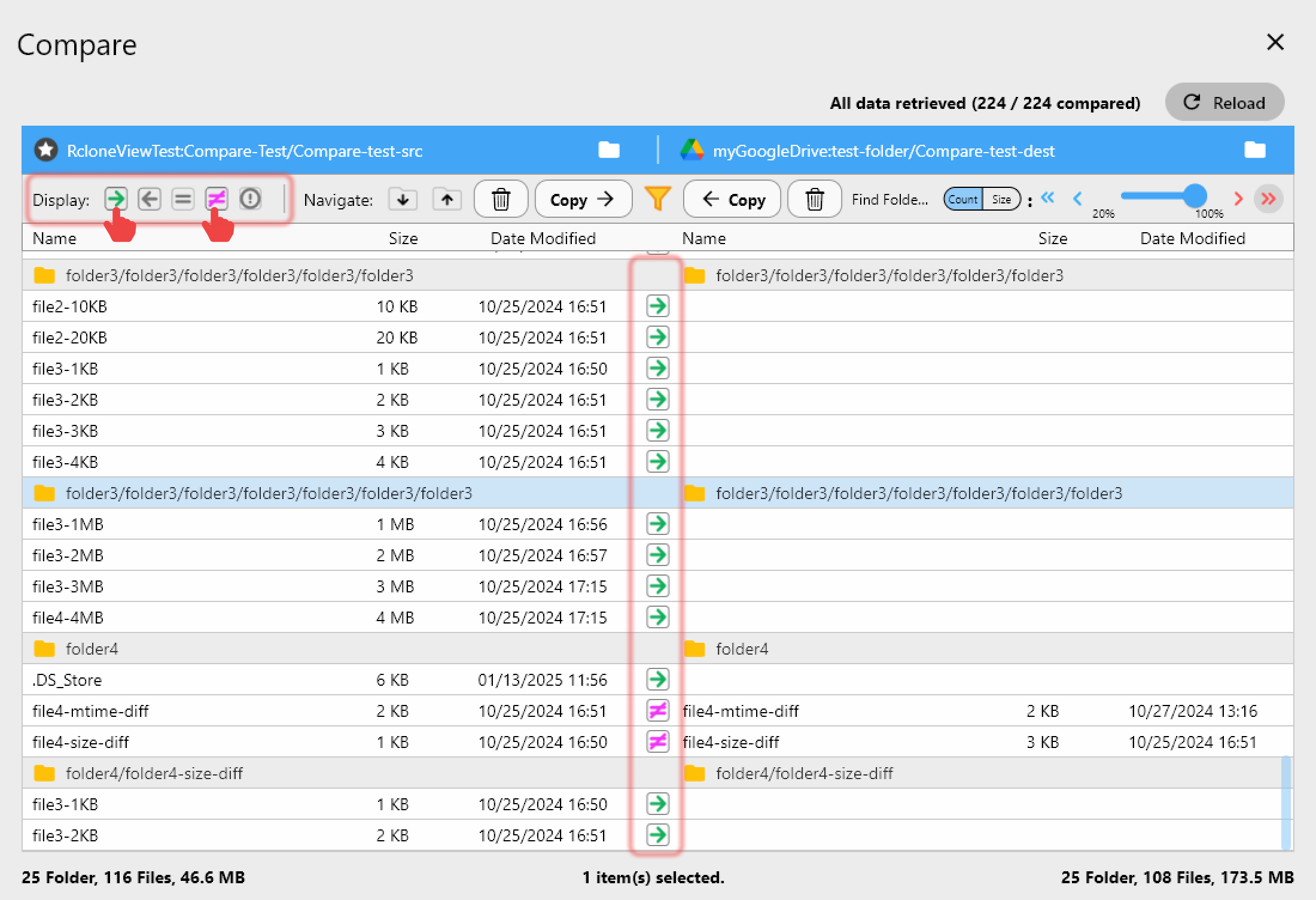
These flags change how rclone decides what to transfer.
--size-only
Compare files by size only, ignoring modification time and checksums.
--size-only
Use when timestamps are unreliable (common with some SFTP servers) or when you want the fastest possible comparison at the cost of missing same-size changes.
--ignore-existing
Skip files that already exist on the destination, regardless of size or date.
--ignore-existing
Ideal for incremental uploads where you never modify existing files -- only add new ones. Much faster than comparing every file.
--ignore-size
Compare files by modification time only, ignoring size.
--ignore-size
Rarely needed, but useful with providers that report incorrect sizes for certain file types.
--update
Skip files that are newer on the destination.
--update
Useful for bidirectional-style workflows where you want to copy only files that are older on the destination.
Retry and Reliability Flags
--retries N
Number of retries for failed operations. Default is 3.
--retries 10
Increase for unreliable networks or providers with intermittent errors.
--retries-sleep DURATION
Time to wait between retries. Default is 0.
--retries-sleep 5s
Adds a delay between retries, useful when rate-limited by the provider.
--low-level-retries N
Number of retries for low-level operations (HTTP requests). Default is 10.
--low-level-retries 20
--timeout DURATION
IO idle timeout. Default is 5m0s.
--timeout 10m
Increase for very slow connections or providers with high latency.
Debugging and Logging Flags
When a job fails or behaves unexpectedly, these flags help diagnose the problem.
-v / -vv
Verbose and very verbose output.
-v
Shows each file as it is transferred and basic progress information. Use -vv for detailed debug output including HTTP requests.
--log-file PATH
Write logs to a file instead of the console.
--log-file /tmp/rclone-debug.log
--log-level DEBUG
Set the log level explicitly.
--log-level DEBUG
Produces the most detailed output. Use when reporting issues or investigating unexpected behavior.
--dry-run
Simulate the operation without making any changes.
--dry-run
Always run this first when testing a new flag combination to confirm it does what you expect.
Per-Job Flag Configuration
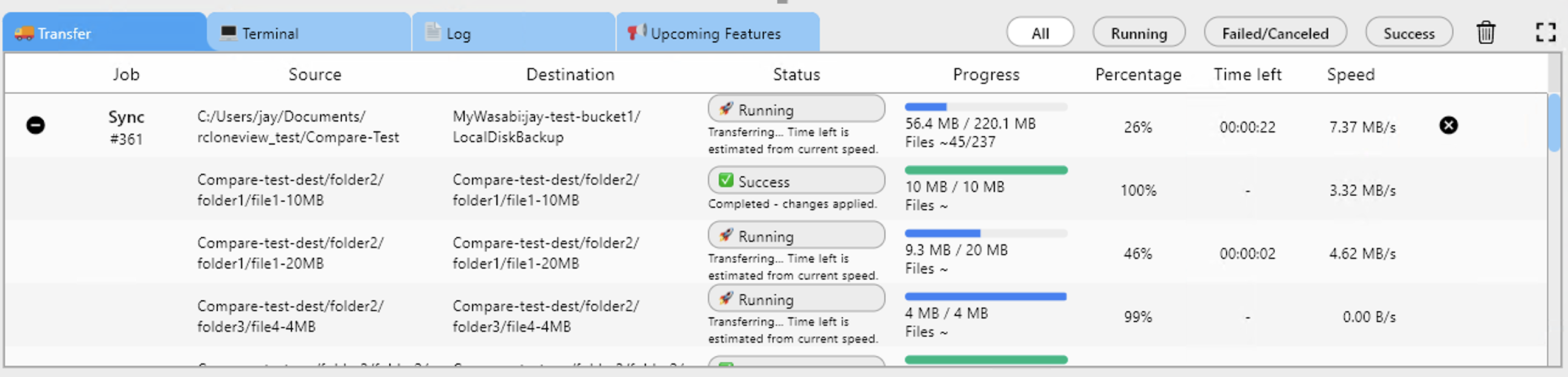
RcloneView lets you save different flag sets for different jobs. Some practical combinations:
Large file sync to S3:
--transfers 8 --checkers 16 --fast-list --buffer-size 64M
Incremental backup of small files:
--transfers 32 --checkers 64 --ignore-existing --fast-list
Careful sync with dry-run first:
--dry-run -v
Then remove --dry-run for the actual run.
Debug a failing transfer:
-vv --log-file /tmp/debug.log --retries 1
Flags to Avoid Unless You Know What You Are Doing
| Flag | Risk |
|---|---|
--delete-before | Deletes destination files before transferring -- dangerous if the transfer fails mid-way |
--max-delete N without testing | May prevent cleanup if set too low |
--no-check-certificate | Disables TLS verification -- security risk |
--ignore-checksum | Skips integrity verification -- defeats the purpose of checksums |
Best Practices
- Start with defaults -- rclone's defaults are sensible for most workloads. Only add flags when you have a specific problem or measurable bottleneck.
- Test with --dry-run before applying new flags to production jobs.
- Document your flags -- when saving a job with custom flags, note why each flag is there so future you (or teammates) understand the intent.
- Benchmark before and after -- measure transfer times with and without performance flags to confirm they actually help for your workload.
- Use -v for production jobs -- the slight overhead is worth the visibility into what happened during each run.
Related Guides:
- Verify Cloud File Integrity with Check and Compare
- Recover Interrupted and Failed Transfers
- Cloud-to-Cloud Transfers and Syncing
Supported Cloud Providers