Speed Up Cloud Transfers — Multi-Threaded Uploads and Parallel Streams in RcloneView
Uploading 500 GB to S3 one file at a time takes days. With parallel transfers and multi-threaded uploads, it takes hours. Here's how to configure RcloneView for maximum speed.
By default, cloud transfer tools process files sequentially and upload each file in a single stream. This barely scratches the surface of what your network and the cloud provider can handle. RcloneView, powered by rclone, supports both parallel file transfers (multiple files simultaneously) and multi-threaded uploads (splitting large files into concurrent streams). Configuring these properly can dramatically reduce transfer times.
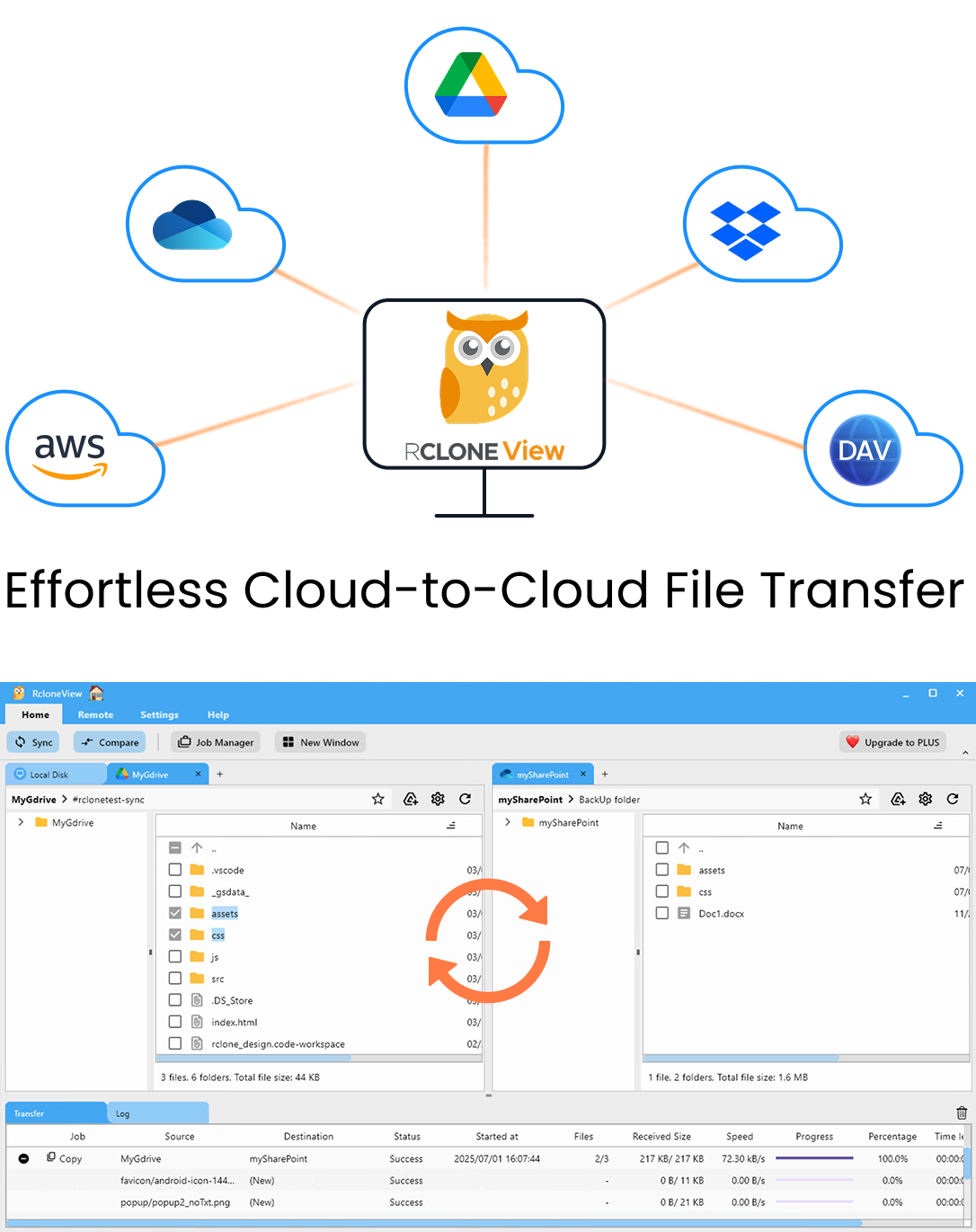
Manage & Sync All Clouds in One Place
RcloneView is a cross-platform GUI for rclone. Compare folders, transfer or sync files, and automate multi-cloud workflows with a clean, visual interface.
- One-click jobs: Copy · Sync · Compare
- Schedulers & history for reliable automation
- Works with Google Drive, OneDrive, Dropbox, S3, WebDAV, SFTP and more
Free core features. Plus automations available.
Two Types of Parallelism
Parallel file transfers
Transfer multiple files at the same time. Instead of uploading file 1, then file 2, then file 3 — upload all three simultaneously. This is controlled by the --transfers setting (default: 4).
Multi-threaded single-file uploads
Split one large file into multiple chunks and upload them concurrently. A 10 GB video file gets split into parts, each uploaded in parallel, then reassembled at the destination. This is controlled by --multi-thread-streams (default: 4).
How to Configure in RcloneView
Adjust parallel transfers
In your job settings or via RcloneView's terminal, set the number of concurrent file transfers:
- 4 transfers (default) — safe for most situations
- 8-16 transfers — good for fast connections with many small files
- 2-4 transfers — better for slow connections or providers with strict rate limits
Adjust multi-thread streams
For large file uploads, increase the stream count:
- 4 streams (default) — balanced performance
- 8-16 streams — optimal for large files on fast connections
- 1 stream — use for providers that don't support multi-part uploads
Monitor the Impact
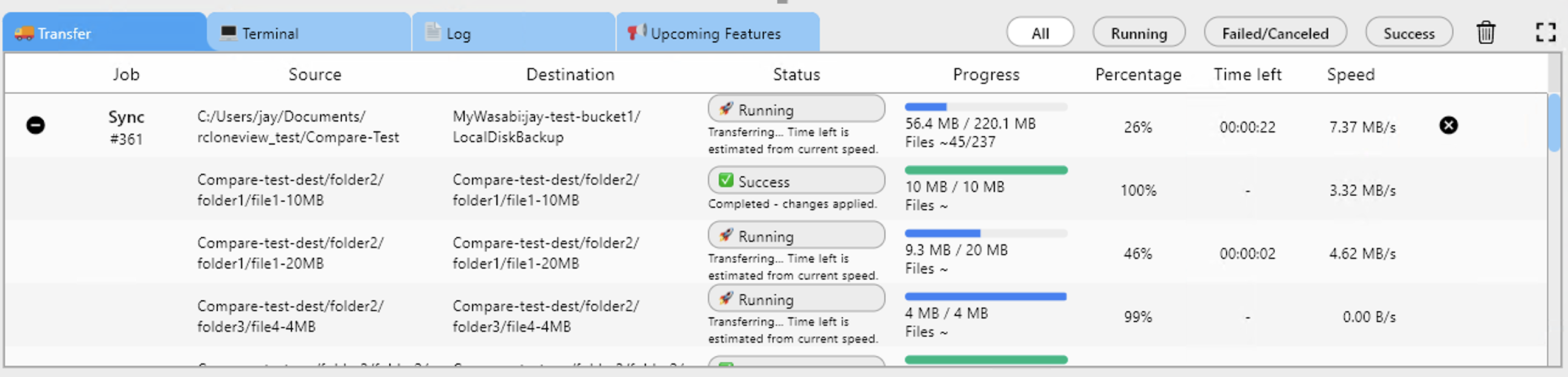
Watch transfer speed in real-time to see the effect of your changes:
Optimal Settings by Scenario
| Scenario | Transfers | Streams | Why |
|---|---|---|---|
| Many small files (photos, docs) | 16 | 1 | File overhead dominates; more parallel files helps |
| Few large files (videos, backups) | 2-4 | 8-16 | Single file speed matters; more streams helps |
| Mixed file sizes | 8 | 4 | Balanced approach |
| Slow network (< 50 Mbps) | 2-4 | 2-4 | Avoid overwhelming the connection |
| Fast network (> 500 Mbps) | 16+ | 8-16 | Use all available bandwidth |
| Provider with rate limits | 2-4 | 4 | Stay under API limits |
Provider-Specific Tips
Google Drive
Google imposes daily upload limits (750 GB) and per-second API limits. Keep transfers moderate (4-8) and use --tpslimit to stay under rate limits.
S3 / S3-Compatible
S3 handles high parallelism well. Push transfers to 16+ and streams to 8-16 for maximum throughput.
OneDrive
OneDrive can be sensitive to high concurrency. Start with 4 transfers and increase gradually.
Backblaze B2
B2 handles multi-part uploads well. Use 4-8 transfers with 4-8 streams.
Using RcloneView's Terminal for Fine-Tuning
For advanced tuning, use the built-in terminal to run rclone commands with specific flags. Test different configurations and measure results with real-time monitoring.
Check Job History for Results
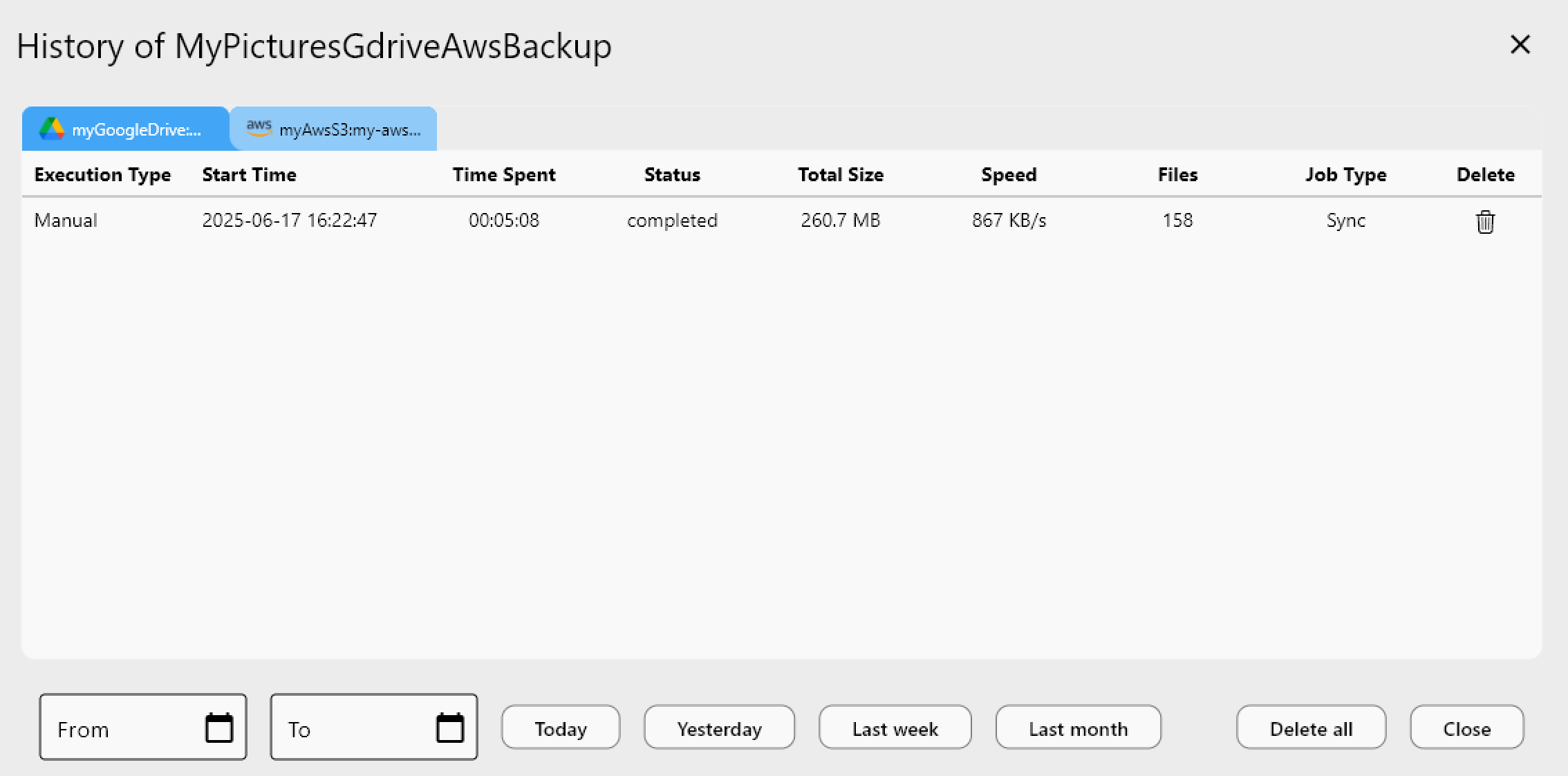
Compare job durations before and after optimization. Job history shows total time, files transferred, and average speed.
Getting Started
- Download RcloneView from rcloneview.com.
- Start with defaults (4 transfers, 4 streams).
- Monitor speed during transfers.
- Increase gradually based on your network and provider.
- Compare job history to measure improvement.
More parallelism means faster transfers — up to the limits of your network and provider.
Related Guides:
Supported Cloud Providers