Migrate Dropbox to Azure Blob Storage with RcloneView
Teams consolidating onto Microsoft Azure often need to move their existing Dropbox data into Azure Blob Storage. RcloneView makes this migration visual, resumable, and verifiable — no scripting required.
Organizations that standardize on the Microsoft cloud stack frequently find Dropbox outside their governance perimeter. Azure Blob Storage offers tighter Azure AD integration, RBAC, and compliance controls that enterprise IT teams require. Whether you're migrating a team's shared Dropbox to Azure Blob containers or consolidating personal drives into managed storage, RcloneView handles the transfer with full progress tracking and checksum verification.
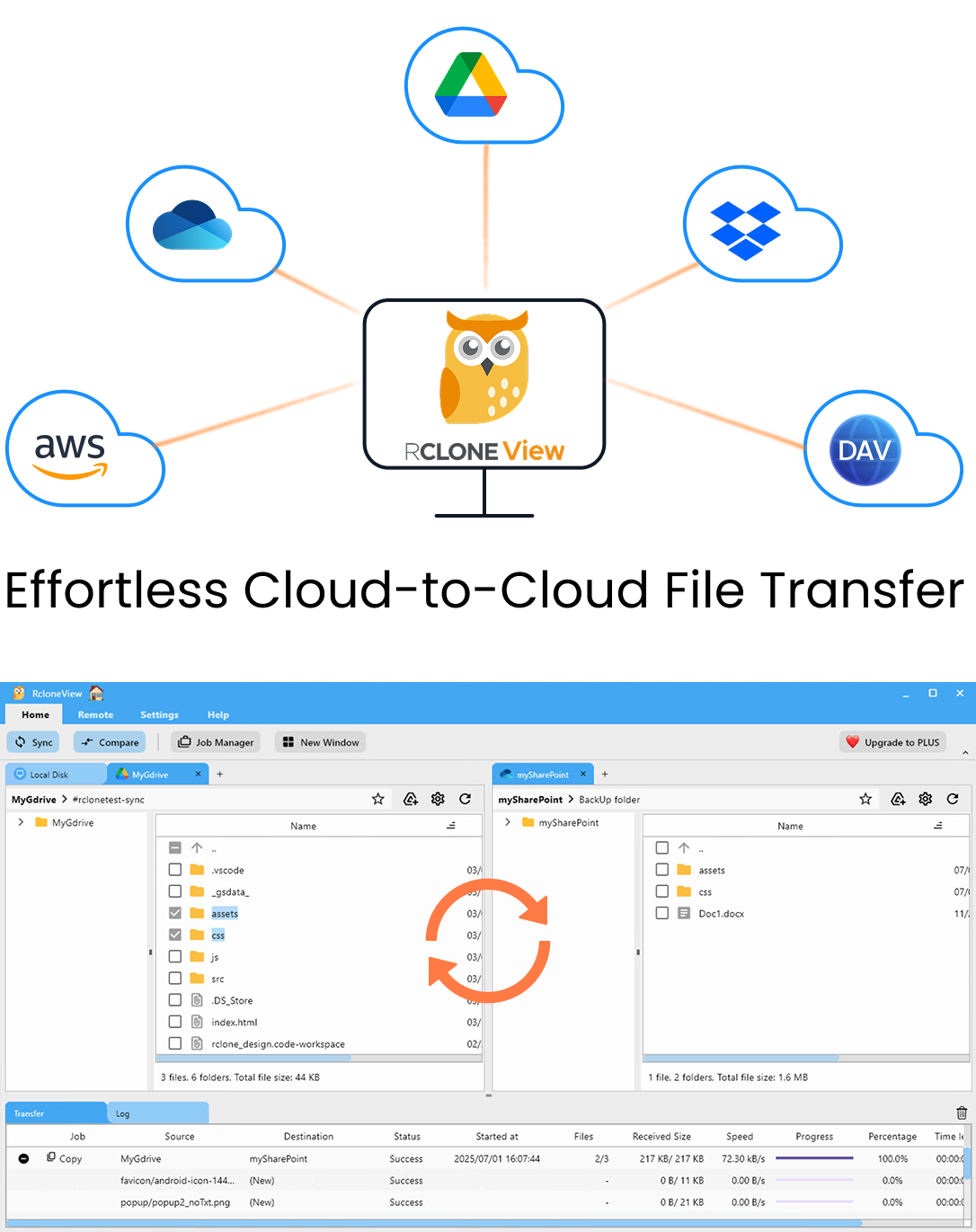
Manage & Sync All Clouds in One Place
RcloneView is a cross-platform GUI for rclone. Compare folders, transfer or sync files, and automate multi-cloud workflows with a clean, visual interface.
- One-click jobs: Copy · Sync · Compare
- Schedulers & history for reliable automation
- Works with Google Drive, OneDrive, Dropbox, S3, WebDAV, SFTP and more
Free core features. Plus automations available.
Before You Start
Gather the following before beginning the migration:
| Item | Where to get it |
|---|---|
| Dropbox access | OAuth via RcloneView (browser flow) |
| Azure Storage Account name | Azure Portal → Storage accounts |
| Azure Storage Account key | Storage account → Access keys |
| Target container name | Create in Azure Portal beforehand |
Step 1 — Connect Dropbox in RcloneView
Open RcloneView and add a new remote:
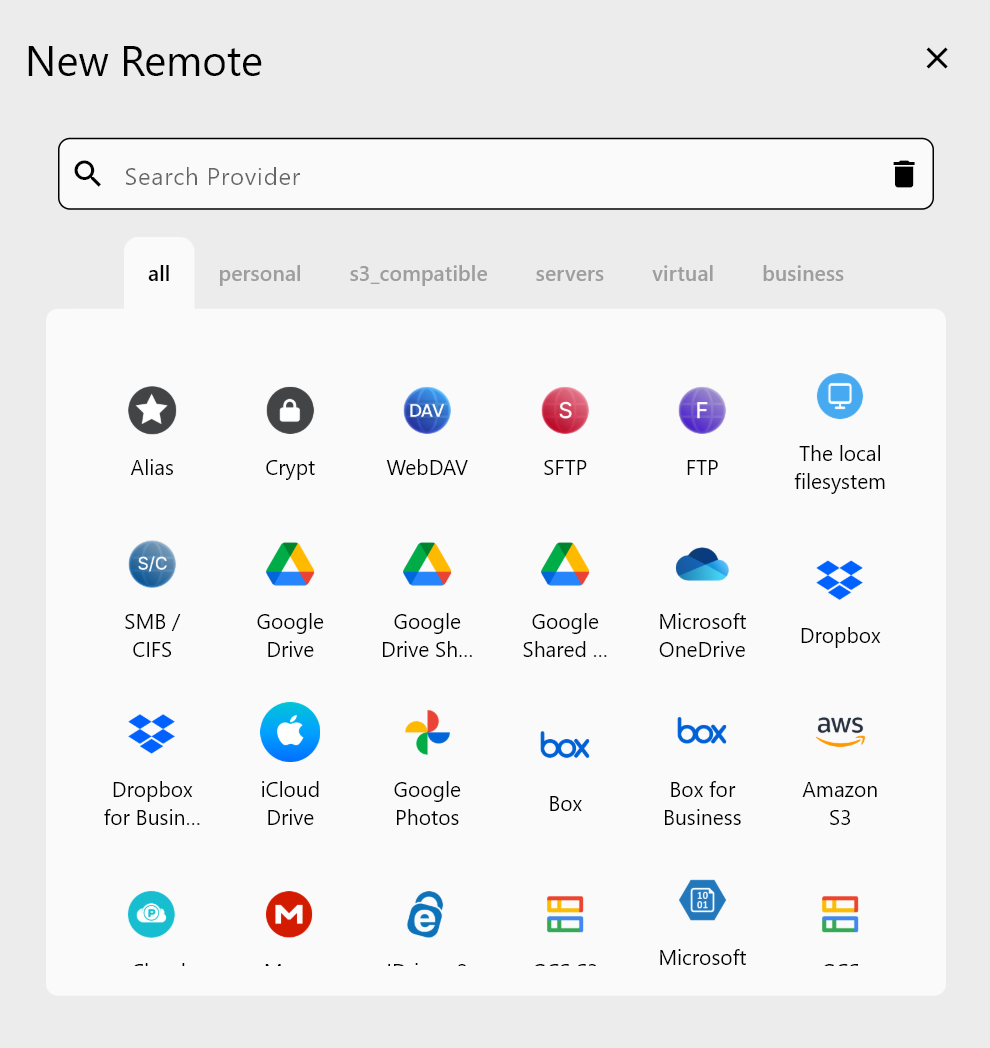
- Select Dropbox as the remote type.
- Click Authorize — a browser window opens for OAuth authentication.
- Log in to Dropbox and grant access.
- Name the remote
dropbox-oldand save.
Step 2 — Connect Azure Blob Storage in RcloneView
Add a second remote:
- Select Microsoft Azure Blob Storage as the remote type.
- Enter your Storage Account Name and Storage Account Key.
- Name the remote
azure-bloband save.
After connecting both remotes, you'll see them side by side in RcloneView's dual-pane interface — Dropbox on the left, Azure Blob on the right.
Step 3 — Browse and Plan the Migration
Before copying, use RcloneView's Folder Comparison to see what's in Dropbox versus what's already in your Azure container:
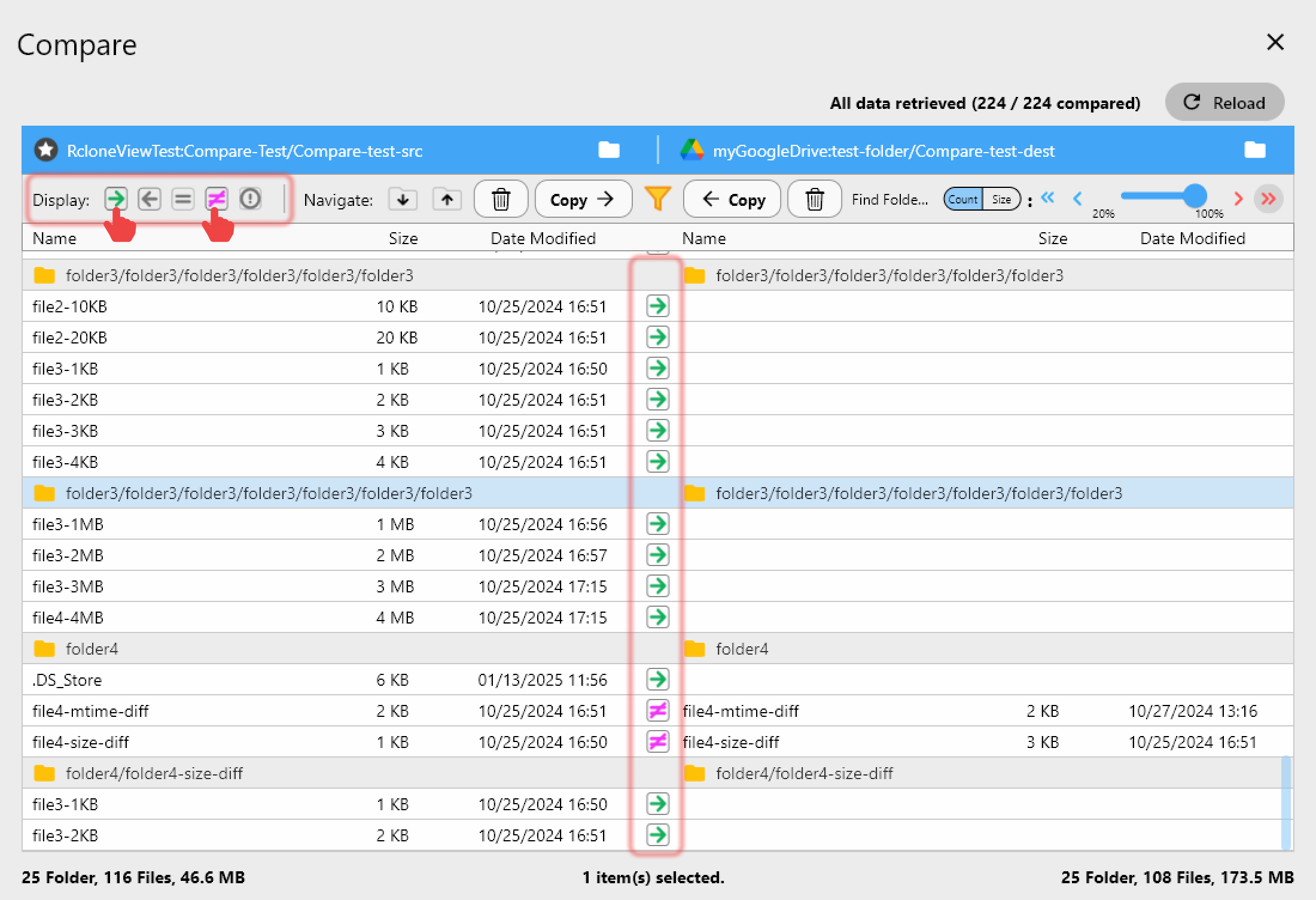
This is especially useful for partial migrations or when you've already moved some files manually.
Step 4 — Run the Migration Job
- Open Jobs in RcloneView.
- Set Source to your Dropbox path (e.g.,
dropbox-old:/Team Files/). - Set Destination to your Azure container path (e.g.,
azure-blob:migration-container/team-files/). - Select Copy mode to transfer all files without deleting the source.
- Enable Checksum verification for data integrity.
- Click Run and watch the live progress panel.
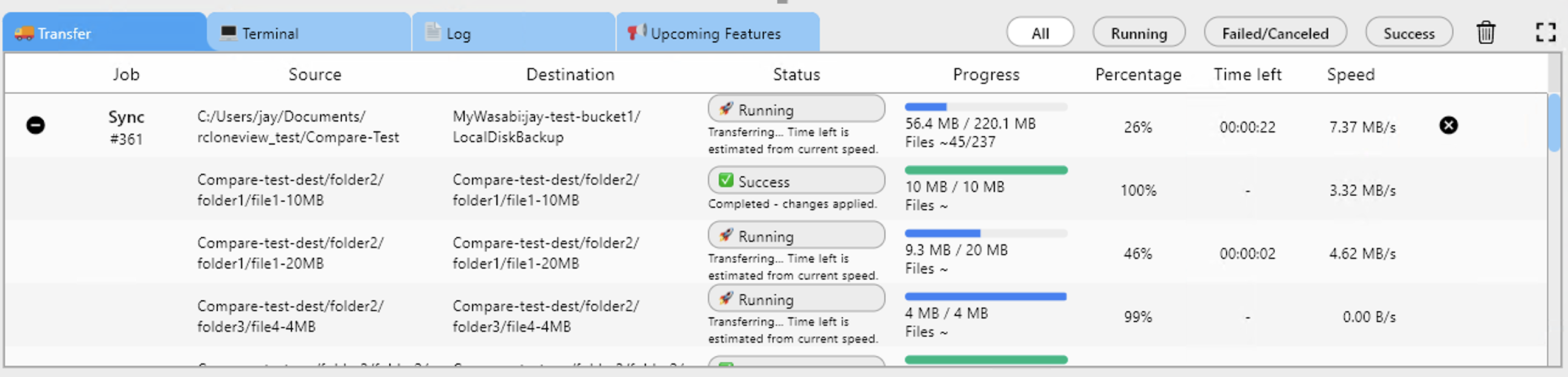
Step 5 — Handle Large Dropbox Accounts
For Dropbox accounts with tens of thousands of files:
- Split into folders — run separate jobs per Dropbox subfolder to keep transfers manageable and restartable.
- Use concurrent transfers — increase the transfer count in RcloneView's settings to saturate your bandwidth.
- Schedule overnight — large migrations benefit from running during off-peak hours.
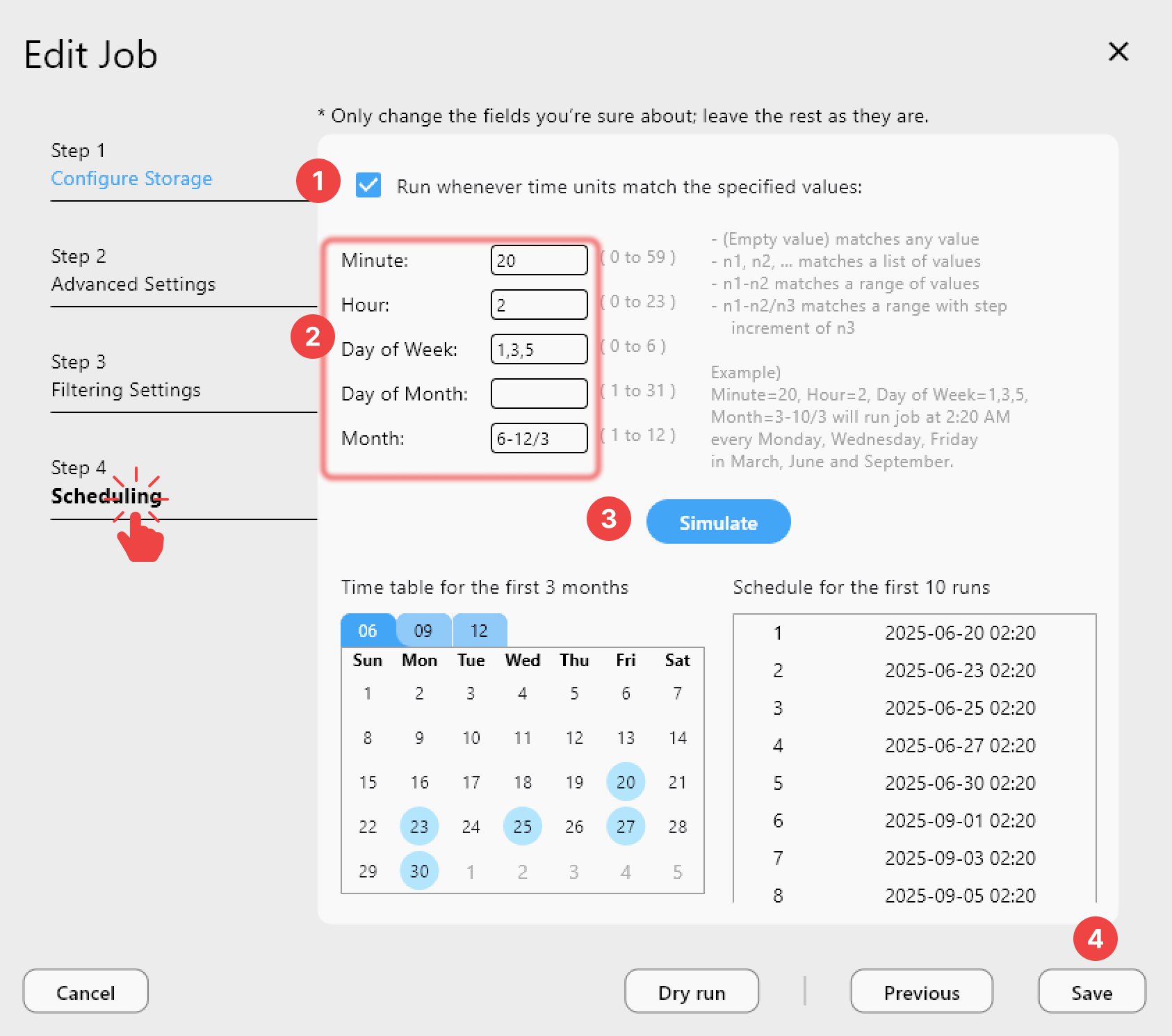
Step 6 — Verify the Migration
After the transfer completes, run a Folder Comparison between the Dropbox source and the Azure destination. RcloneView will flag any missing or mismatched files:
- Green — file exists in both locations ✓
- Red/missing — file needs to be re-transferred
Re-run the Copy job for any failed files. Rclone's intelligent retry logic handles transient errors automatically.
Step 7 — Decommission Dropbox
Once you've confirmed all files are in Azure:
- Notify team members of the new Azure storage location.
- Update any application integrations pointing to Dropbox.
- Export Dropbox's activity log for compliance records.
- Cancel or downgrade the Dropbox subscription.
Dropbox to Azure: What Changes
| Feature | Dropbox | Azure Blob Storage |
|---|---|---|
| Access control | Dropbox sharing | Azure RBAC + SAS tokens |
| Authentication | Dropbox OAuth | Azure AD / Service Principals |
| Versioning | Dropbox version history | Azure Blob versioning (optional) |
| Compliance | Dropbox Business compliance | Azure compliance certifications |
| Pricing | Per user/month | Per GB stored + egress |
Getting Started
- Download RcloneView from rcloneview.com.
- Add both remotes — Dropbox (OAuth) and Azure Blob (storage key).
- Compare, copy, and verify with RcloneView's dual-pane and folder comparison tools.
- Decommission Dropbox once all data is confirmed in Azure.
Migrating off Dropbox and into Azure Blob Storage doesn't require a migration project — just RcloneView and an afternoon.
Related Guides:
- Migrate Dropbox to OneDrive
- Migrate Dropbox to Backblaze B2
- Mount Azure Blob Storage as a Local Drive
Supported Cloud Providers