Set Up Notifications and Alerts for Cloud Sync in RcloneView
Large cloud transfers can run for hours, and you should not have to sit and watch them. RcloneView provides notification and alerting capabilities so you know immediately when a sync completes, fails, or needs your attention.
Cloud sync operations often involve gigabytes or even terabytes of data. A migration from Google Drive to S3 might take an entire afternoon. A nightly backup job runs while you sleep. A scheduled sync between two remotes fires while you are in a meeting. In all of these situations, you need a reliable way to know when the job finishes and whether it succeeded.
Manually checking transfer status is inefficient and error-prone. You might forget to check, or check too early and assume the job is still running when it actually failed an hour ago. Notifications solve this problem by pushing status updates to you, rather than requiring you to pull them.
RcloneView supports multiple notification channels, from desktop alerts for local monitoring to remote integrations with Slack and Discord for teams and mobile-friendly alerting. This guide walks through each option and helps you build a notification workflow that fits your needs.
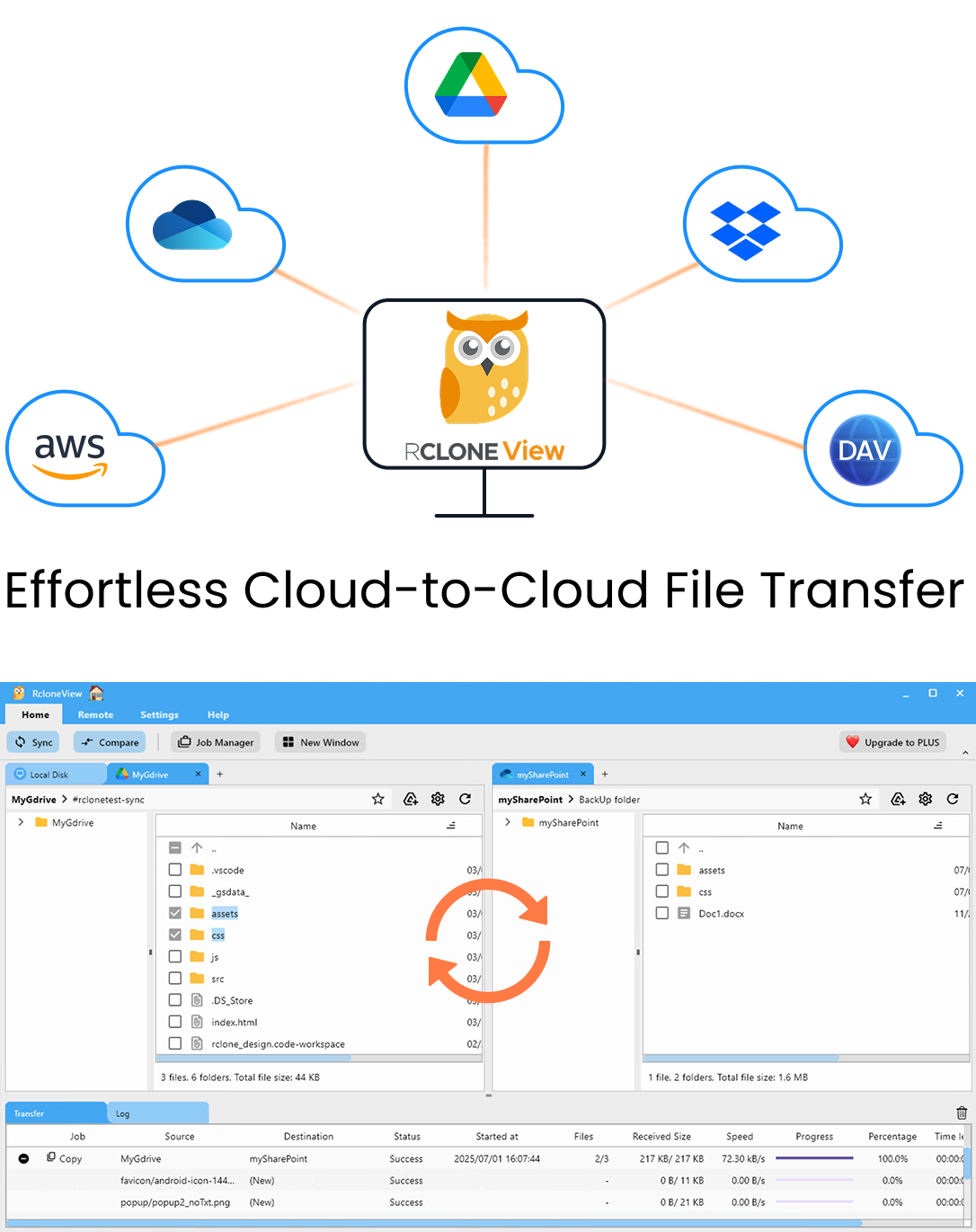
Manage & Sync All Clouds in One Place
RcloneView is a cross-platform GUI for rclone. Compare folders, transfer or sync files, and automate multi-cloud workflows with a clean, visual interface.
- One-click jobs: Copy · Sync · Compare
- Schedulers & history for reliable automation
- Works with Google Drive, OneDrive, Dropbox, S3, WebDAV, SFTP and more
Free core features. Plus automations available.
Why Notifications Matter for Cloud Sync
Unattended transfers are one of the primary use cases for cloud sync tools. You configure a job, start it, and move on to other work. But without notifications, you have no way of knowing:
- When the job completed so you can proceed with the next step in your workflow.
- Whether the job succeeded or encountered errors that require intervention.
- How long the job took, which helps you plan future transfers and schedule windows.
- If the job stalled due to network issues, API rate limits, or authentication expiration.
Notifications transform cloud sync from a task that demands your attention into a background process that only interrupts you when necessary.
Desktop Notifications on Job Completion
RcloneView can display native desktop notifications when a sync job finishes. These notifications use your operating system's built-in notification system, so they appear alongside your other alerts:
- On Windows, notifications appear in the Action Center and as toast popups.
- On macOS, they show up in Notification Center.
- On Linux, they use your desktop environment's notification daemon.
Desktop notifications are ideal for jobs you start manually and want to monitor locally. You can continue working in other applications, and the notification pops up when the job is done.
The notification includes key details: the job name, whether it completed successfully, and a summary of files transferred. If the job failed, the notification indicates an error so you can investigate immediately.
Integrating with Slack for Remote Alerts
For teams or for users who want mobile notifications, RcloneView can send alerts to Slack channels. This is especially valuable when:
- You start a large transfer at the office and want to know when it finishes after you leave.
- Multiple team members need visibility into shared sync jobs.
- You want a searchable log of all sync completions and failures in a dedicated channel.
RcloneView's Slack integration uses webhooks or the built-in remote control features. You configure a Slack incoming webhook URL, and RcloneView posts a message to your chosen channel whenever a job completes or fails.
The Slack message typically includes the job name, status (success or failure), number of files transferred, total data size, and duration. Failed jobs include error details to help you diagnose the issue without opening RcloneView.
Integrating with Discord for Alerts
Discord integration works similarly to Slack and is popular with individual users and smaller teams. RcloneView can post sync status messages to a Discord channel via webhook:
- Create a webhook in your Discord server settings for the target channel.
- Configure RcloneView's remote control settings with the Discord webhook URL.
- Specify which job events should trigger a Discord message (completion, failure, or both).
Discord notifications are particularly useful for home lab setups, personal NAS-to-cloud backups, and any scenario where you want mobile push notifications without paying for a Slack workspace.
Monitoring Job History for Failures
Even with real-time notifications, it is important to review job history periodically. RcloneView's Job History panel provides a complete record of all past job executions:
- Success/failure status for each run, with timestamps.
- Transfer statistics including files transferred, skipped, and errored.
- Error details for failed jobs, with enough context to diagnose the root cause.
- Duration trends that help you identify performance degradation over time.
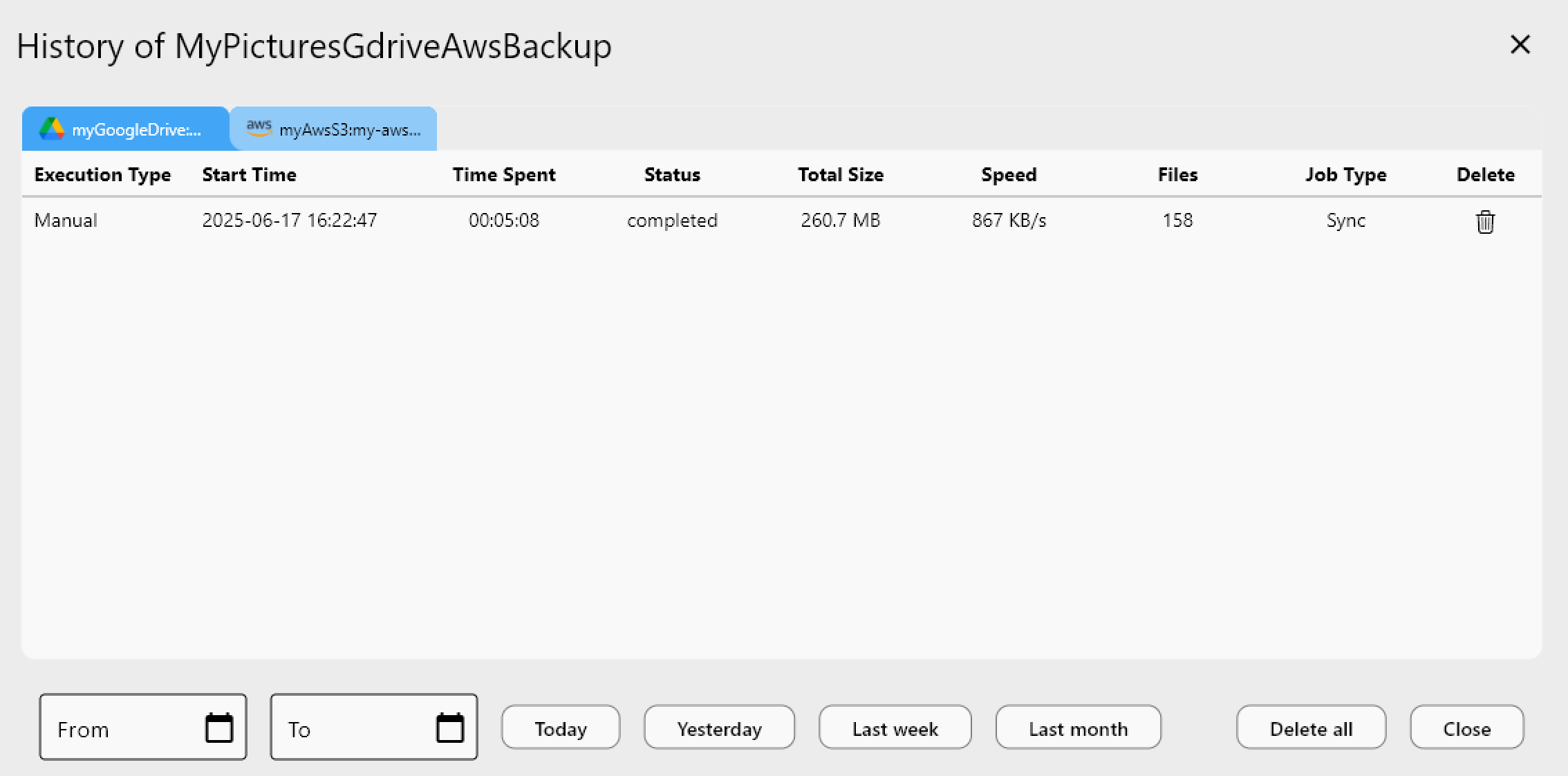
Reviewing job history on a weekly basis catches intermittent failures that might not be obvious from individual notifications. A job that succeeds 90% of the time but silently fails every few days can go unnoticed if you only react to individual alerts.
Setting Up Alert Workflows
A robust notification workflow combines multiple channels for different scenarios:
For immediate attention (job failures):
- Enable desktop notifications for all job failures.
- Send failure alerts to a dedicated Slack or Discord channel.
- This ensures you see failures quickly regardless of whether you are at your computer.
For informational awareness (job completions):
- Send completion summaries to Slack or Discord.
- Use desktop notifications only for manually triggered jobs.
- This prevents notification fatigue from routine scheduled syncs.
For weekly review:
- Check the Job History panel to review all executions from the past week.
- Look for patterns: jobs that take longer than expected, jobs with partial failures, or jobs that were skipped.
Combining Notifications with Job Scheduling
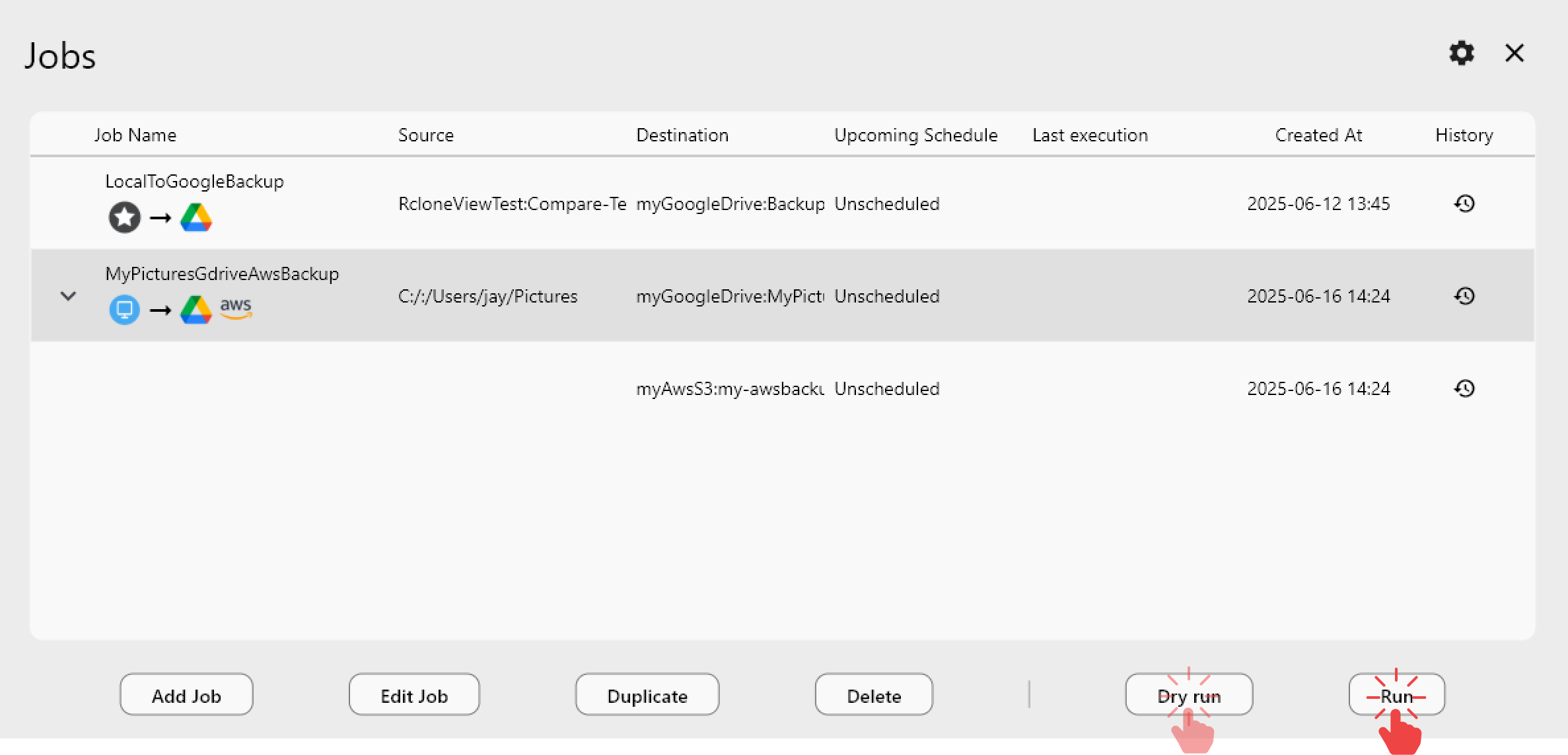
Notifications become most powerful when paired with scheduled jobs. RcloneView's job scheduling feature lets you run sync operations automatically at specified intervals:
- Create a sync job with the desired source, destination, and configuration.
- Set a schedule (daily, weekly, or custom cron expression).
- Enable notifications for that job.
- Let the system run unattended, and receive alerts only when you need to act.
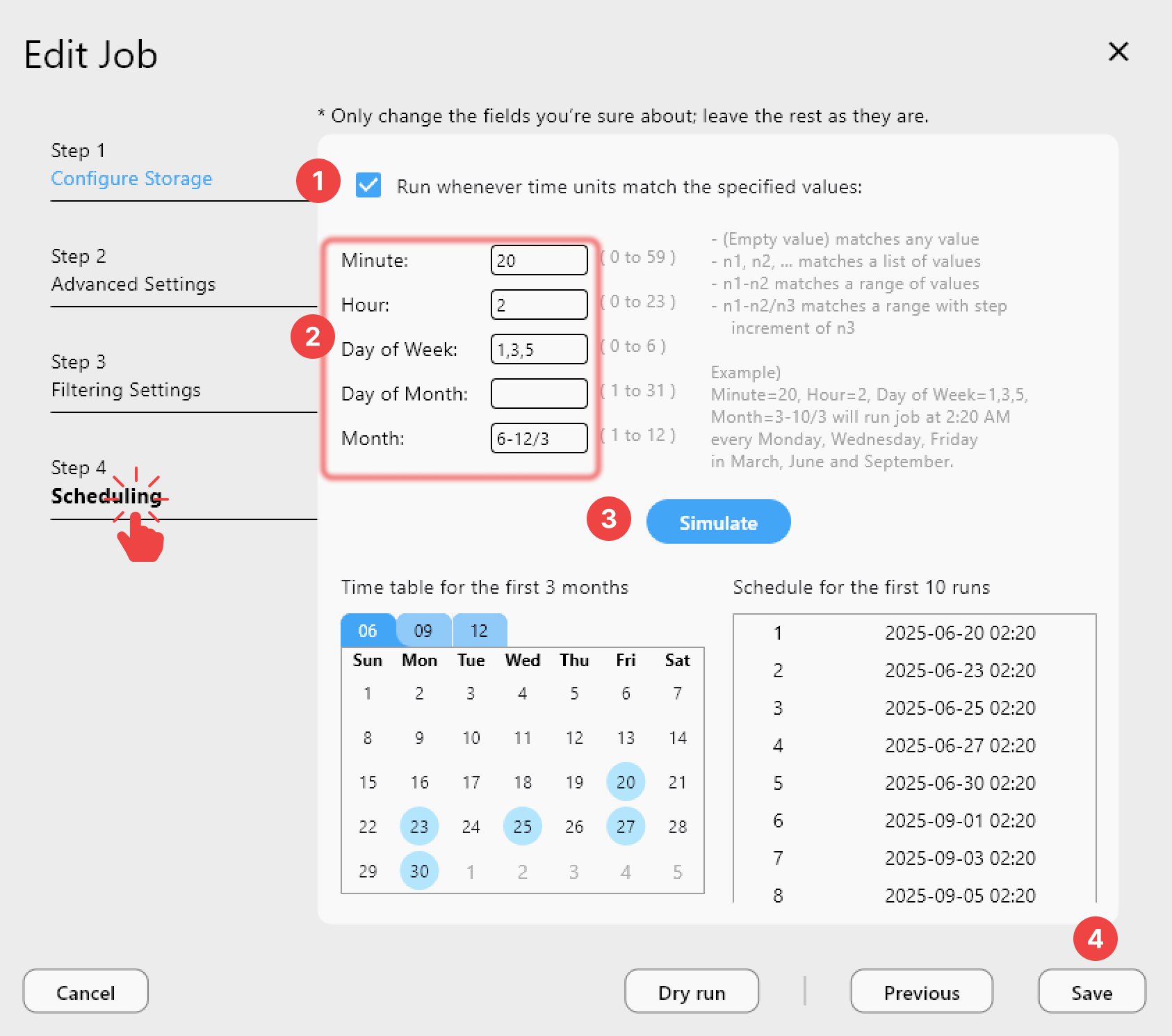
This combination creates a fully automated cloud sync pipeline. Data moves on schedule, you get notified if anything goes wrong, and you can review the complete history at your convenience. It is the difference between managing cloud storage and having cloud storage manage itself.
Troubleshooting Notification Issues
If notifications are not appearing as expected, check these common issues:
- Desktop notifications disabled at the OS level: Verify that your operating system allows notifications from RcloneView.
- Webhook URL errors: Double-check that your Slack or Discord webhook URL is correct and the webhook has not been revoked.
- Firewall blocking outbound requests: Ensure RcloneView can reach the Slack or Discord API endpoints.
- Job not configured for notifications: Verify that the specific job has notifications enabled in its settings.
Getting Started
- Download RcloneView from rcloneview.com.
- Create a sync job and enable desktop notifications in the job settings.
- For remote alerts, configure a Slack or Discord webhook and connect it to RcloneView.
- Run a test job to verify notifications are delivered correctly.
With notifications configured, you can start long-running cloud syncs with confidence, knowing you will be alerted the moment they finish or if anything goes wrong.
Related Guides:
Supported Cloud Providers