Fix Cloud Mount Disconnects — Stable Virtual Drives with RcloneView
A virtual drive that vanishes mid-workflow can corrupt open files and break automated pipelines.
Mounting cloud storage as a local drive letter is one of the most powerful features in any cloud management tool, but disconnects turn that convenience into a liability. When a mounted Google Drive or S3 bucket drops unexpectedly, applications lose access to open files, save operations fail silently, and scheduled scripts halt. RcloneView's mount manager and VFS cache settings give you the controls needed to maintain stable, persistent cloud mounts even on unreliable connections.
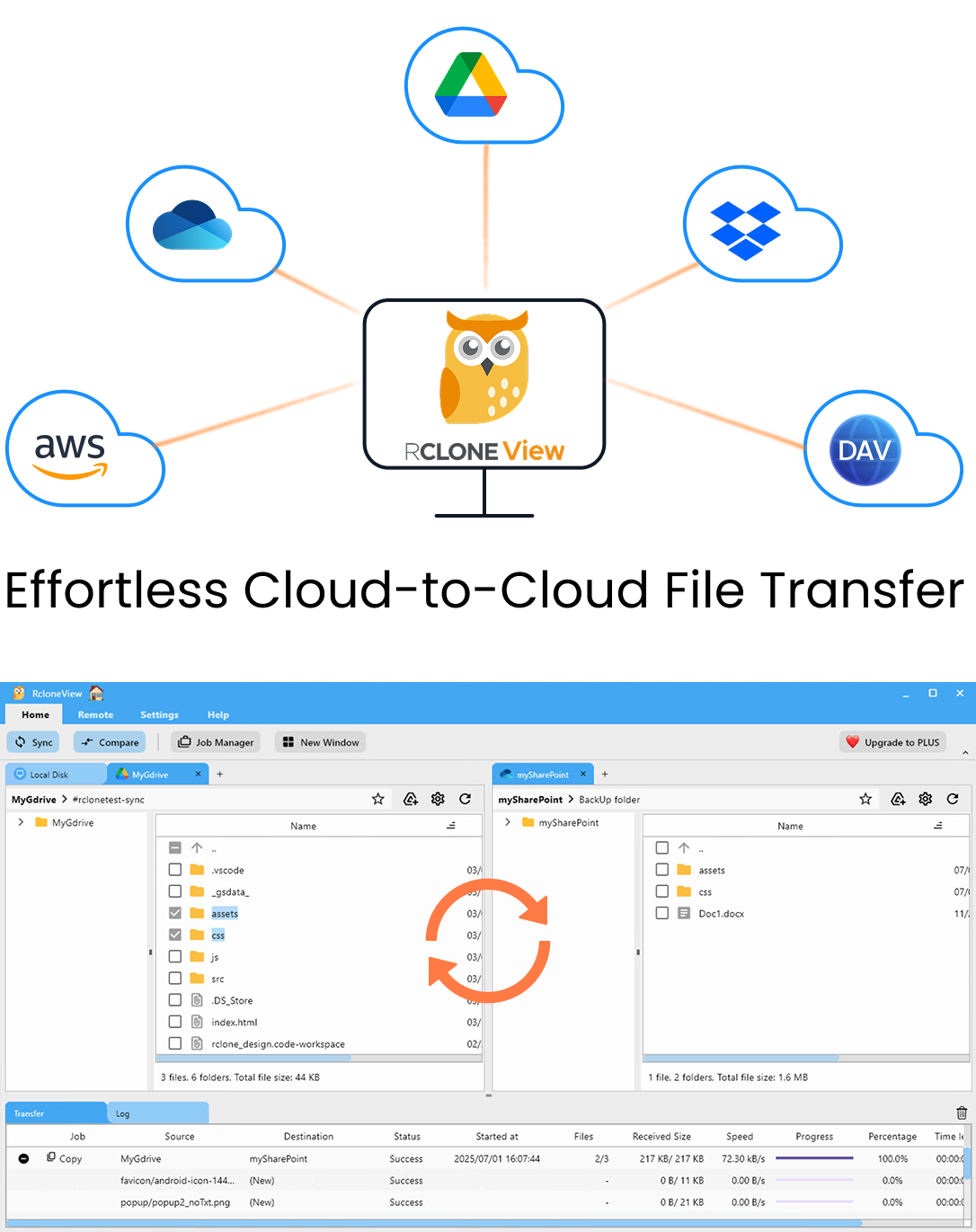
Manage & Sync All Clouds in One Place
RcloneView is a cross-platform GUI for rclone. Compare folders, transfer or sync files, and automate multi-cloud workflows with a clean, visual interface.
- One-click jobs: Copy · Sync · Compare
- Schedulers & history for reliable automation
- Works with Google Drive, OneDrive, Dropbox, S3, WebDAV, SFTP and more
Free core features. Plus automations available.
Common Causes of Mount Disconnects
Cloud mount disconnects typically stem from three sources: network interruptions, expired authentication tokens, and VFS cache exhaustion. A brief Wi-Fi dropout that lasts only seconds can cause the FUSE or WinFsp layer to report the mount as unavailable, and many applications will not automatically retry the read or write operation.
OAuth token expiration is another frequent culprit. Google Drive tokens expire after one hour by default, and if the refresh token exchange fails — due to a network blip at exactly the wrong moment — the mount loses authorization. The drive letter remains visible in Explorer, but every file operation returns an access denied or I/O error.
VFS cache pressure causes a subtler form of disconnect. When the local cache partition fills up, new read and write requests cannot be buffered, and the mount effectively stalls. RcloneView logs these cache-full events so you can trace the root cause rather than blaming the network.
Configuring VFS Cache for Stability
The VFS cache is the buffer between your local applications and the cloud API. Setting --vfs-cache-mode full ensures that all read and write operations go through the local cache, insulating applications from transient network issues. Files are read from cache and written back to the cloud asynchronously.
Key parameters to tune include --vfs-cache-max-size (set this to at least 10 GB if disk space permits), --vfs-cache-max-age (24h is a good default for active workflows), and --vfs-write-back (5s to 30s depending on how frequently files are saved). These settings let the mount absorb short network outages without exposing errors to applications.
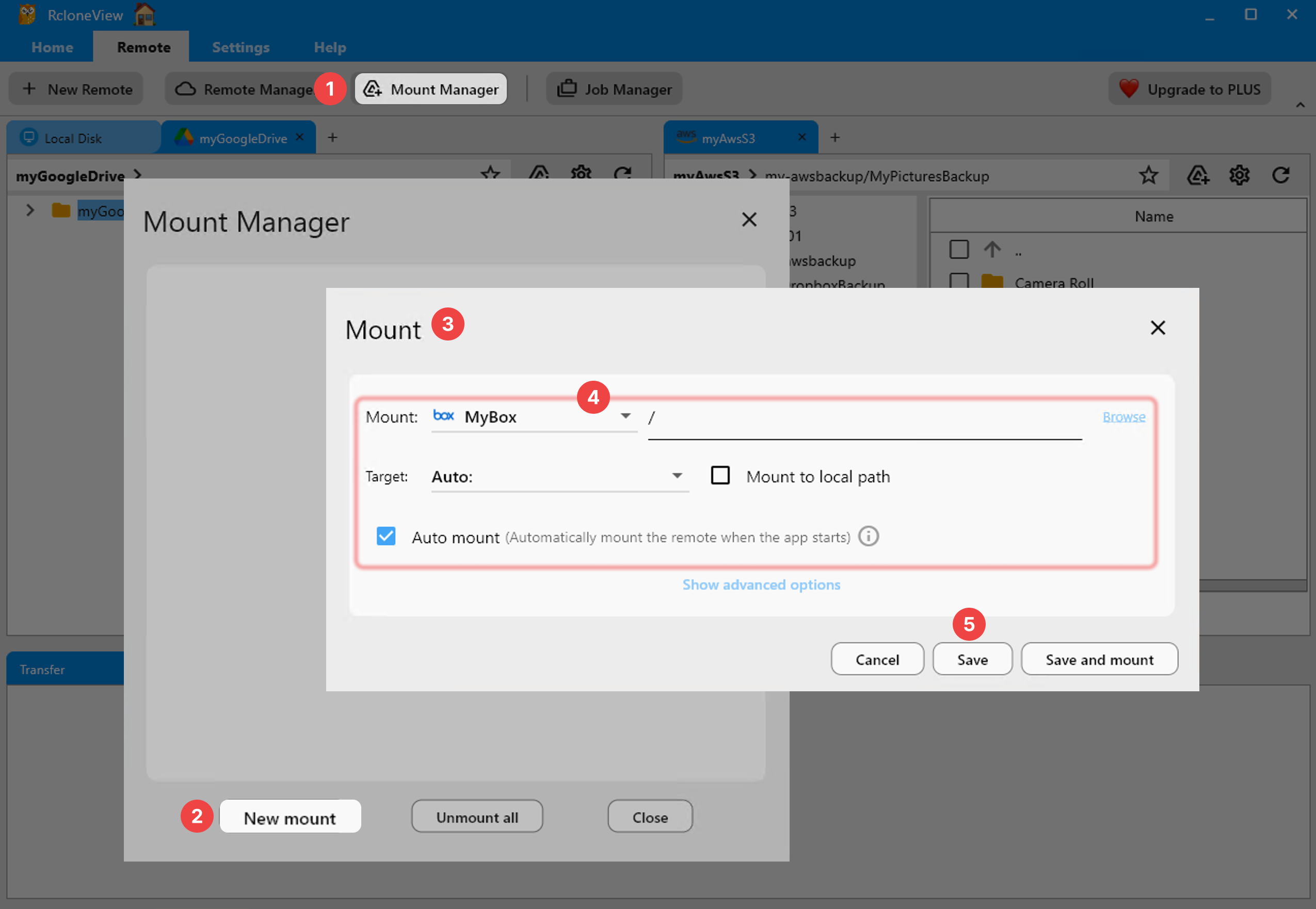
RcloneView's mount configuration panel exposes these options in a straightforward interface, and you can save profiles for different use cases — a large cache for video editing, a smaller one for document access.
Handling Network Interruptions Gracefully
The --low-level-retries and --retries flags control how aggressively the mount retries failed API calls. Increasing --low-level-retries to 20 and --retries to 10 gives the mount time to recover from brief outages without surfacing errors to the user.
Setting --contimeout 30s and --timeout 5m prevents premature connection drops when the provider is slow to respond. For users on VPN connections or satellite links with high latency, these longer timeouts are essential for mount stability.
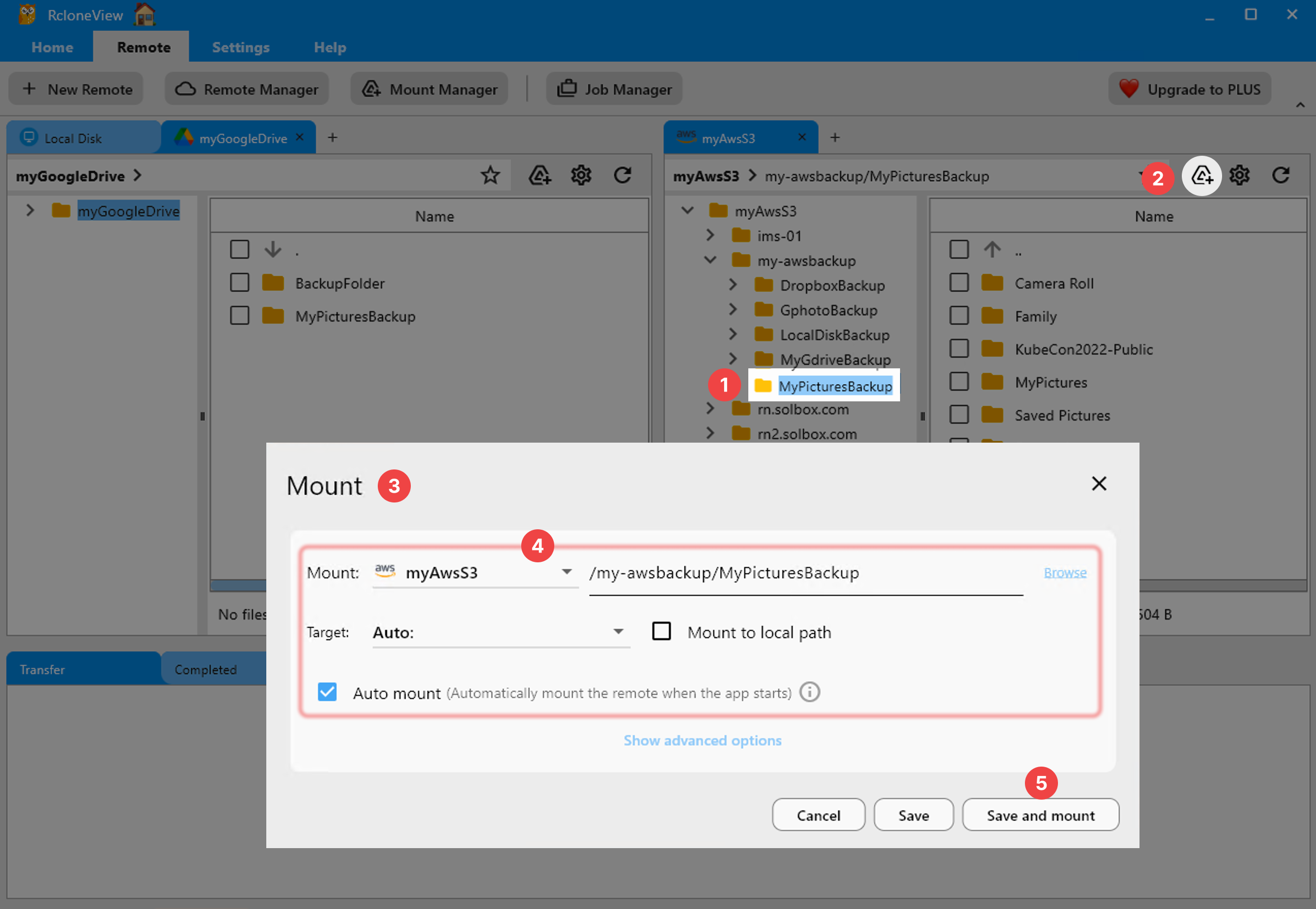
RcloneView can also be configured to automatically remount a drive if the process exits unexpectedly. The mount manager detects when a mount drops and can restart it within seconds, minimizing the window of disruption.
Preventing Token Expiration Issues
For OAuth-based providers like Google Drive and OneDrive, token refresh failures are a silent mount killer. RcloneView stores tokens securely and handles the refresh cycle automatically. If a refresh fails, the mount manager logs the event and retries before declaring the mount unavailable.
Running rclone config reconnect periodically through RcloneView's interface ensures your refresh tokens stay valid, especially for Google accounts with strict session policies.
Getting Started
- Download RcloneView from rcloneview.com.
- Enable full VFS cache mode and set
--vfs-cache-max-sizeto at least 10 GB for stable read/write operations. - Increase retry and timeout values to absorb transient network issues without dropping the mount.
- Use the mount manager to configure automatic remount on unexpected disconnections.
A properly configured cloud mount should be as reliable as a local drive — RcloneView makes that achievable.
Related Guides:
- VFS Cache and Mount Performance — Optimize Virtual Drives with RcloneView
- Mount Google Drive as a Local Drive with RcloneView
- Fix OAuth Token Expired Errors — Reconnect Cloud Sync with RcloneView
Supported Cloud Providers