Track Cloud Transfers with Job History and Logs — Monitor Every Sync and Backup in RcloneView
You scheduled a backup last week. Did it actually run? Did it complete successfully? How many files were transferred? Without job history, you're guessing. With RcloneView, every job leaves a trail.
Setting up cloud sync is the first step. Knowing it works reliably is the second — and arguably more important. RcloneView's job history tracks every execution: when it ran, how long it took, how many files transferred, and whether errors occurred.
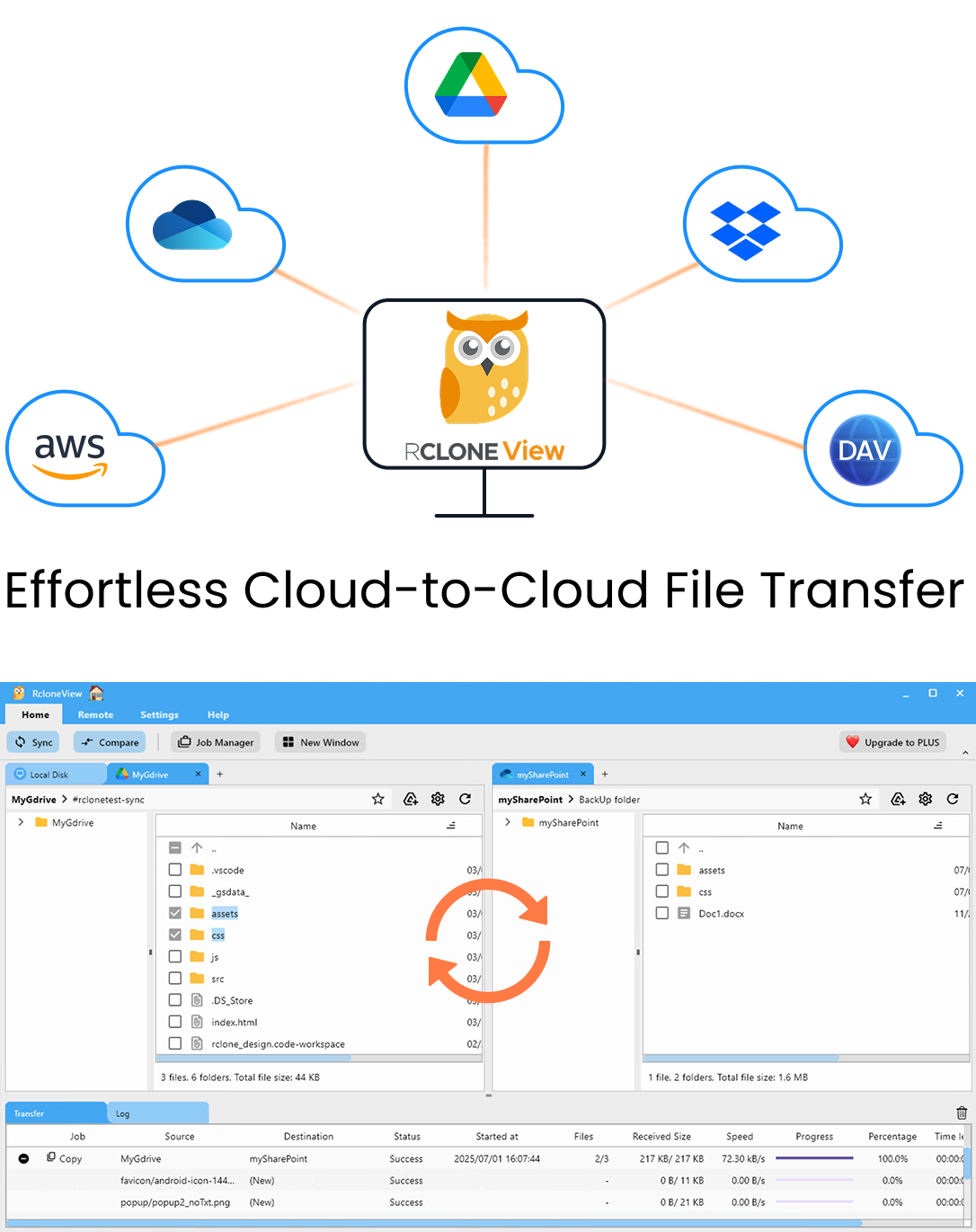
Manage & Sync All Clouds in One Place
RcloneView is a cross-platform GUI for rclone. Compare folders, transfer or sync files, and automate multi-cloud workflows with a clean, visual interface.
- One-click jobs: Copy · Sync · Compare
- Schedulers & history for reliable automation
- Works with Google Drive, OneDrive, Dropbox, S3, WebDAV, SFTP and more
Free core features. Plus automations available.
Why Job History Matters
Silent failures
The worst backup failure is one you don't know about. Common silent issues:
- OAuth token expired — Cloud provider revoked access, jobs fail silently.
- Disk full — Destination ran out of space mid-transfer.
- Rate limited — Provider throttled transfers, some files skipped.
- Network timeout — Intermittent connectivity caused partial transfers.
Without job history, these issues go unnoticed until you need to restore — and discover your "backup" is months old.
Compliance and auditing
Some industries require documented proof that backups occurred. Job history provides:
- Timestamps for every job execution.
- File counts and transfer volumes.
- Success/failure status.
- Error details for troubleshooting.
Job History in RcloneView
View past executions
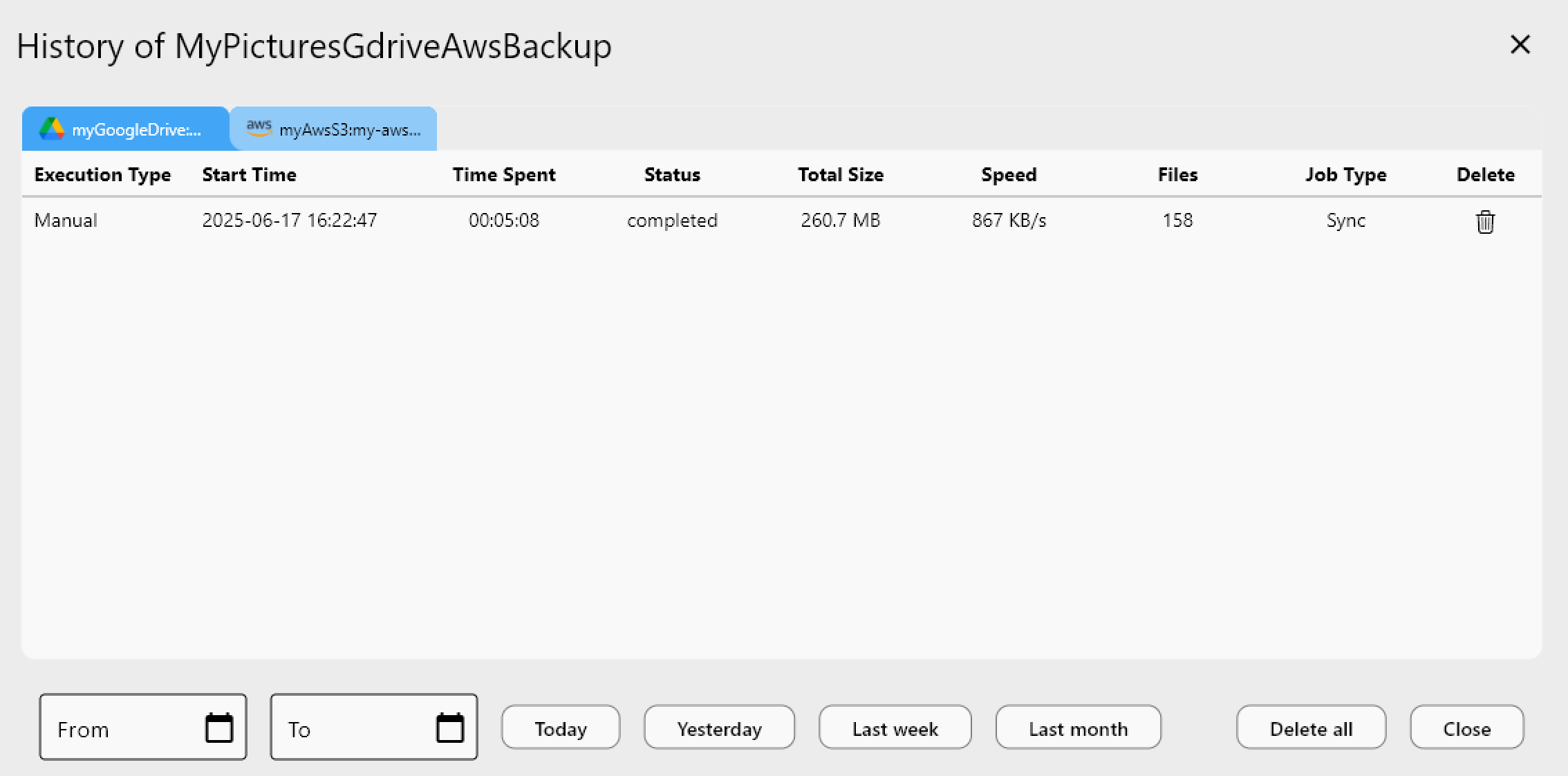
Each entry shows:
- Job name — Which sync/copy/move job ran.
- Start time — When execution began.
- Duration — How long it took.
- Status — Success, partial, or failed.
- Files transferred — Count of files moved.
- Data volume — Total bytes transferred.
- Errors — Number of errors (if any).
Spot trends
Over time, job history reveals patterns:
- Increasing duration — Your dataset is growing or performance is degrading.
- Intermittent failures — Network or provider issues on specific days.
- Zero transfers — Nothing changed (expected for incremental syncs) or the job isn't working.
- Error spikes — Rate limits, permission issues, or storage full.
Real-Time Transfer Monitoring
While a job is running, monitor progress live:
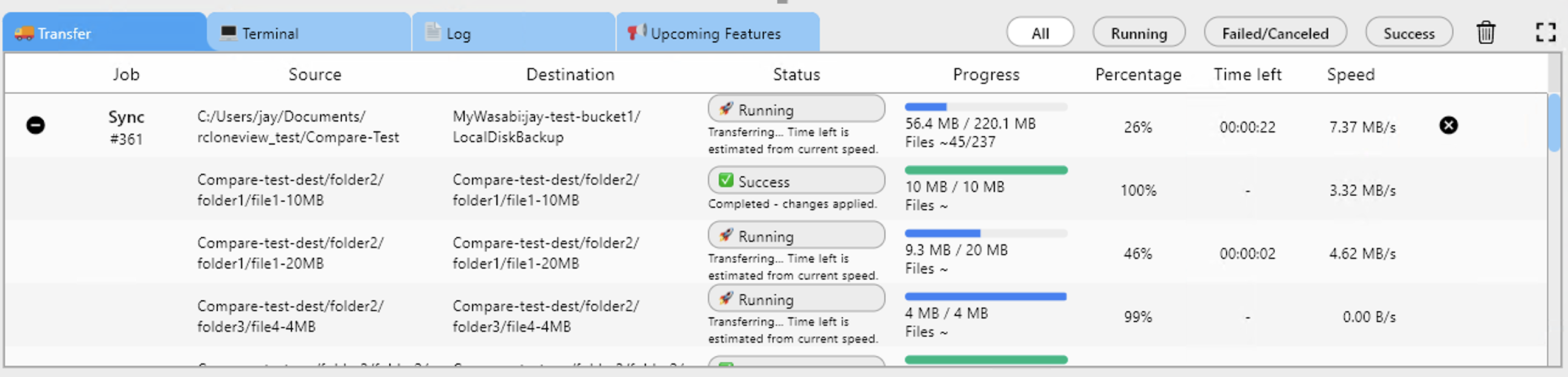
Live monitoring shows:
- Current speed — MB/s or GB/s.
- Active transfers — Number of parallel file operations.
- Progress — Percentage complete.
- ETA — Estimated time remaining.
- Errors — Real-time error counts.
Notifications for Failures
v1.3 adds Slack, Discord, and Telegram notifications. Configure alerts so you know immediately when:
- A scheduled job fails.
- A job completes with errors.
- A job finishes successfully (optional confirmation).
This is the difference between "my backup probably ran" and "my backup definitely ran — I got the Slack message."
Troubleshooting with Logs
When a job fails, the transfer log tells you exactly why:
- 403 Forbidden — Rate limit or permission issue.
- 404 Not Found — Source file deleted during transfer.
- 429 Too Many Requests — Provider throttling.
- Timeout — Network connectivity issue.
- Disk full — Destination out of space.
Best Practices
Review job history weekly
Spend 2 minutes every Monday reviewing the past week's job executions. Catch issues before they become crises.
Set up failure alerts
Don't rely on manual checks. Configure Slack or Discord notifications for job failures.
Verify after errors
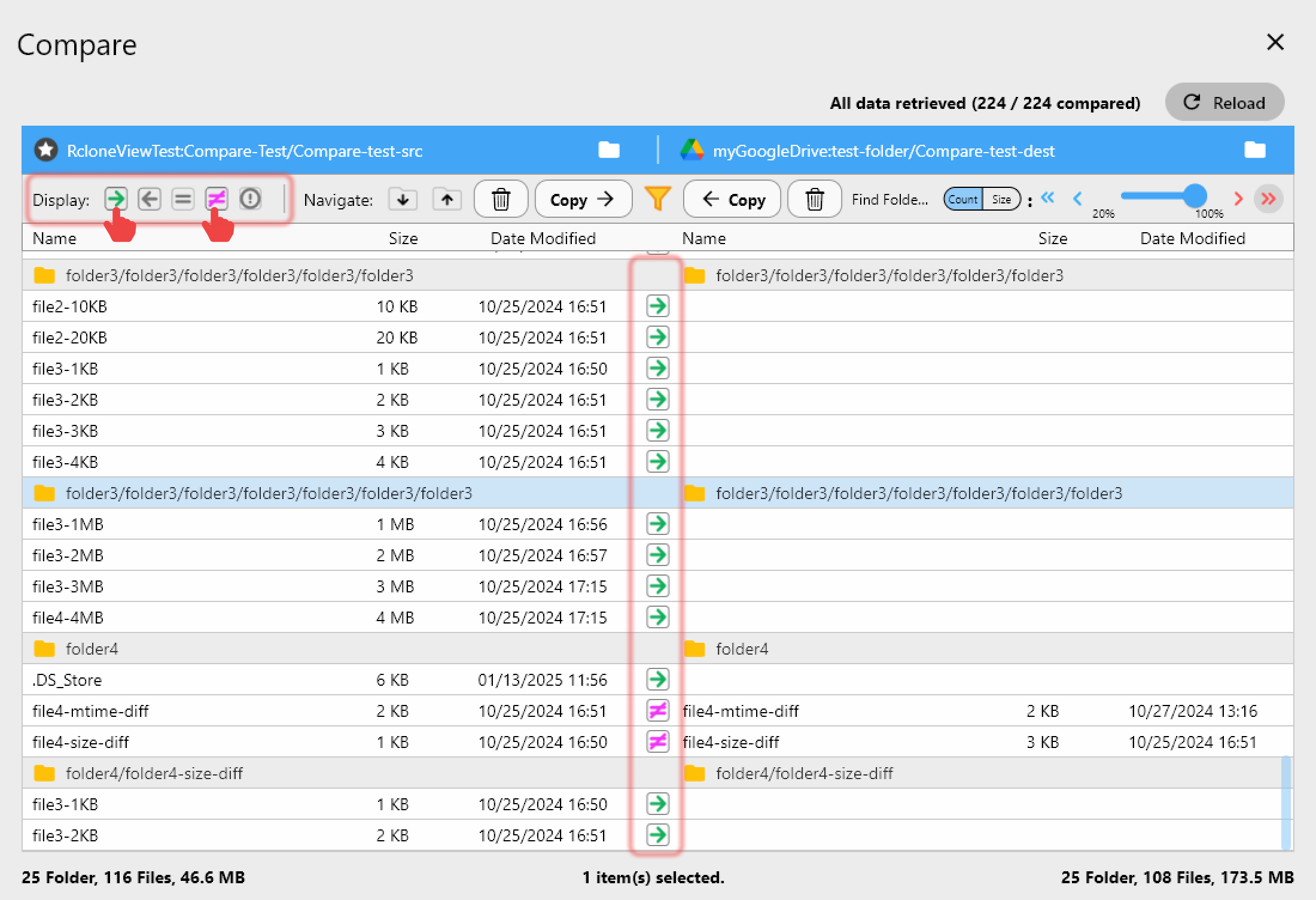
When a job reports errors, follow up with Folder Comparison to identify exactly which files are missing or different:
Retry failed transfers
v1.3's retry feature can automatically re-run failed file transfers. For persistent failures, investigate the root cause using the logs.
Getting Started
- Download RcloneView from rcloneview.com.
- Create and schedule your sync/backup jobs.
- Monitor execution via job history.
- Set up notifications for failure alerts.
- Review weekly — trust but verify.
A backup you don't monitor is a backup you can't trust.
Related Guides:
Supported Cloud Providers