Clean Up Cloud Storage: Empty Trash and Remove Old Versions with RcloneView
Deleted files and old versions silently consume your cloud quota. RcloneView makes it easy to clean them out and reclaim storage you are already paying for.
Every time you delete a file on Google Drive, it goes to trash. Every time OneDrive overwrites a document, it keeps the old version. Every time an S3 bucket with versioning enabled receives an update, the previous object stays. These invisible copies accumulate over months and years, consuming quota and inflating storage bills. Rclone's cleanup command removes this hidden bloat, and RcloneView lets you run it with a few clicks.
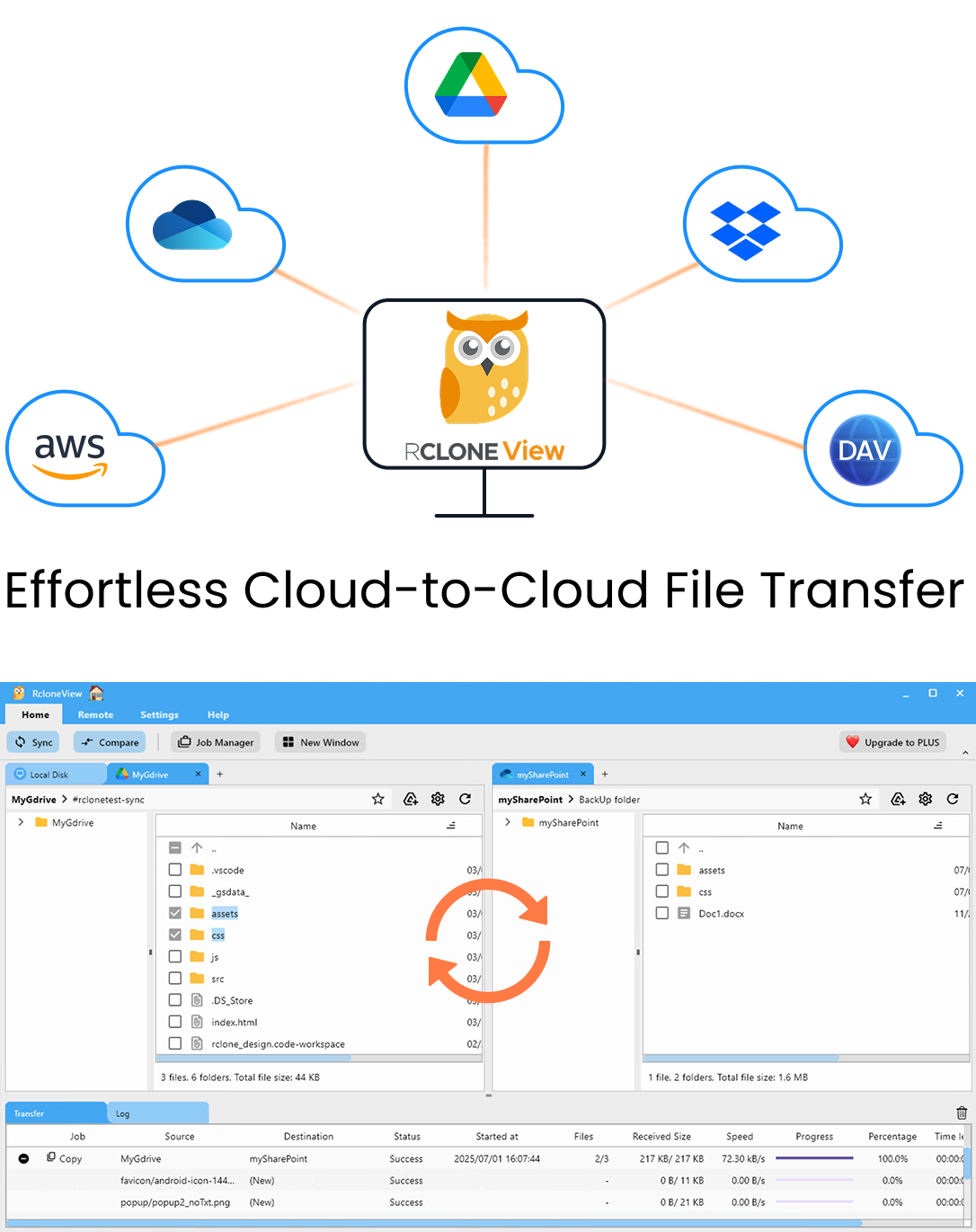
Manage & Sync All Clouds in One Place
RcloneView is a cross-platform GUI for rclone. Compare folders, transfer or sync files, and automate multi-cloud workflows with a clean, visual interface.
- One-click jobs: Copy · Sync · Compare
- Schedulers & history for reliable automation
- Works with Google Drive, OneDrive, Dropbox, S3, WebDAV, SFTP and more
Free core features. Plus automations available.
How Trashed and Versioned Files Waste Quota
Most cloud providers count trashed and versioned files against your storage quota. The impact is often larger than expected:
| Provider | What Counts Against Quota | Auto-Purge Policy |
|---|---|---|
| Google Drive | Trashed files, all file versions | Trash auto-deletes after 30 days |
| OneDrive | Recycle bin items, version history | Recycle bin auto-purges after 93 days |
| Dropbox | Deleted files and previous versions | Kept for 30 days (Basic) or 180 days (Professional) |
| Amazon S3 | All object versions (if versioning enabled) | No auto-purge; lifecycle rules required |
| Backblaze B2 | All file versions | No auto-purge without lifecycle rules |
| Google Cloud Storage | Non-current object versions | Configurable via lifecycle policies |
A Google Drive account at 90% capacity may have 5-10% of its usage sitting in trash alone. On S3 buckets with versioning, old versions can double or triple actual storage consumption over time.
Running Cleanup Per Provider
Google Drive Trash
Google Drive's trash is the most common source of hidden usage. To empty it:
rclone cleanup gdrive:
This permanently deletes all files in the Google Drive trash. There is no undo -- make sure you do not need anything in the trash before running this.
In RcloneView, you can trigger cleanup from the UI without opening the terminal. Navigate to your Google Drive remote and use the cleanup action.
OneDrive Recycle Bin
OneDrive keeps deleted files in the recycle bin for up to 93 days:
rclone cleanup onedrive:
This empties the recycle bin. For OneDrive Business accounts with large recycle bins, this can free significant space immediately.
S3 Versioned Objects
S3 buckets with versioning enabled accumulate old object versions. Rclone's cleanup removes non-current versions:
rclone cleanup s3-remote:my-bucket
For buckets with thousands of versioned objects, this operation may take time. You can target specific prefixes to clean up selectively:
rclone cleanup s3-remote:my-bucket/logs/
Dropbox and Other Providers
Dropbox does not support the cleanup command directly through rclone. For Dropbox, manage deleted files and versions through the Dropbox web interface or API. Other providers like pCloud and Backblaze B2 support cleanup similarly to the examples above.
Checking How Much Space Trash Consumes
Before running cleanup, check how much space you stand to reclaim:
rclone about gdrive:
The output includes a Trashed line showing exactly how much space is used by deleted files:
Total:   15 GiB
Used:    12.3 GiB
Free:    2.7 GiB
Trashed: 3.8 GiB
In this example, emptying the trash would instantly free 3.8 GiB -- more than doubling the available space.
Removing Old File Versions Selectively
Some workflows require keeping the latest version but removing anything older. Rclone supports this with backend-specific commands:
For S3 with versioning:
rclone backend cleanup-hidden s3-remote:my-bucket
This removes only the hidden (non-current) versions while keeping the current version of every object intact.
For Google Drive, you can use --drive-keep-revision-forever=false in your remote configuration to prevent unlimited version retention going forward.
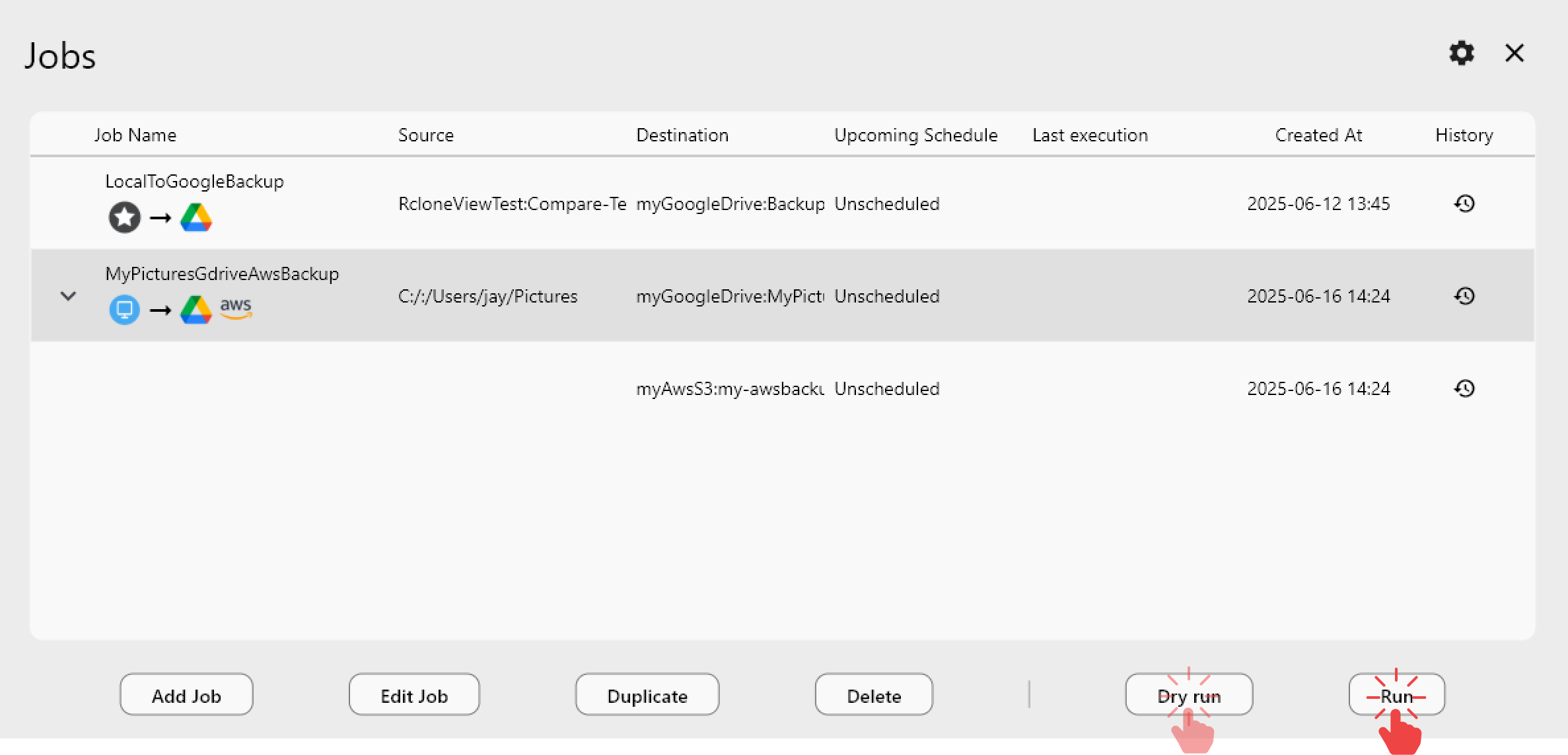
Automating Cleanup with Scheduled Jobs
Manual cleanup works, but scheduled cleanup prevents the problem from recurring:
- In RcloneView, create a new Job with the cleanup command for each remote.
- Open the Job Scheduler and set a recurring schedule -- monthly is sufficient for most accounts.
- Review the Job History after each run to confirm successful cleanup.
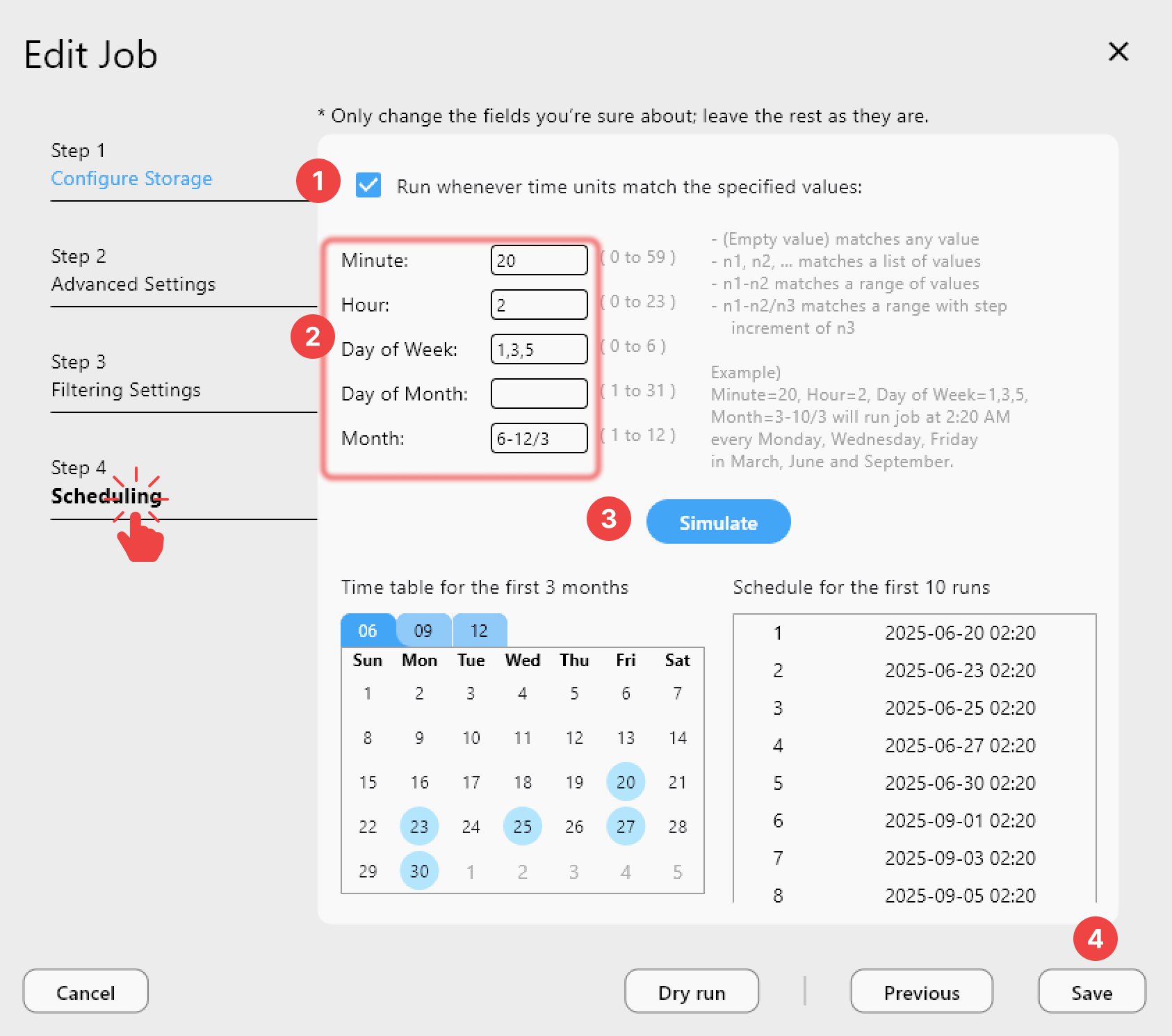
A monthly cleanup schedule ensures trash and old versions never accumulate enough to cause quota issues or inflated bills.
Safety Considerations
- Cleanup is permanent -- trashed files cannot be recovered after running
rclone cleanup. - Audit trash first -- browse your provider's trash through their web interface before purging.
- S3 versioning serves a purpose -- if you rely on versions for rollback, do not clean up indiscriminately. Consider lifecycle rules that keep the last N versions instead.
- Test on a non-critical remote first -- confirm the behavior matches your expectations before running cleanup on production data.
- Dry run is not available for cleanup -- unlike sync or copy, there is no
--dry-runmode. Proceed with confidence only after reviewing what is in your trash.
The Cost Impact
For pay-per-use providers, cleanup directly reduces your bill:
| Provider | Storage Cost | 100 GB of Old Versions/Trash |
|---|---|---|
| Amazon S3 Standard | $0.023/GB/mo | $2.30/month saved |
| Backblaze B2 | $0.006/GB/mo | $0.60/month saved |
| Google Cloud Standard | $0.020/GB/mo | $2.00/month saved |
| Wasabi | $0.0069/GB/mo | $0.69/month saved |
For quota-based providers, cleanup avoids hitting limits that break syncs and backups.
Related Guides:
- Analyze Cloud Storage Usage and Quotas
- Wasabi vs Backblaze B2 vs IDrive e2 Comparison
- Cloud-to-Cloud Transfers and Syncing
Supported Cloud Providers