Fix Cloud Sync Conflicts from Multiple Devices — Resolve File Version Clashes in RcloneView
You edited a file on your laptop. Your colleague edited the same file on their desktop. The sync runs and now you have two versions. Which one wins? How do you prevent this?
Sync conflicts are an inevitable part of multi-device, multi-user cloud workflows. When the same file is modified in two places between sync runs, the sync tool must decide which version to keep. Understanding how RcloneView handles conflicts — and how to prevent them — saves hours of confusion and lost work.
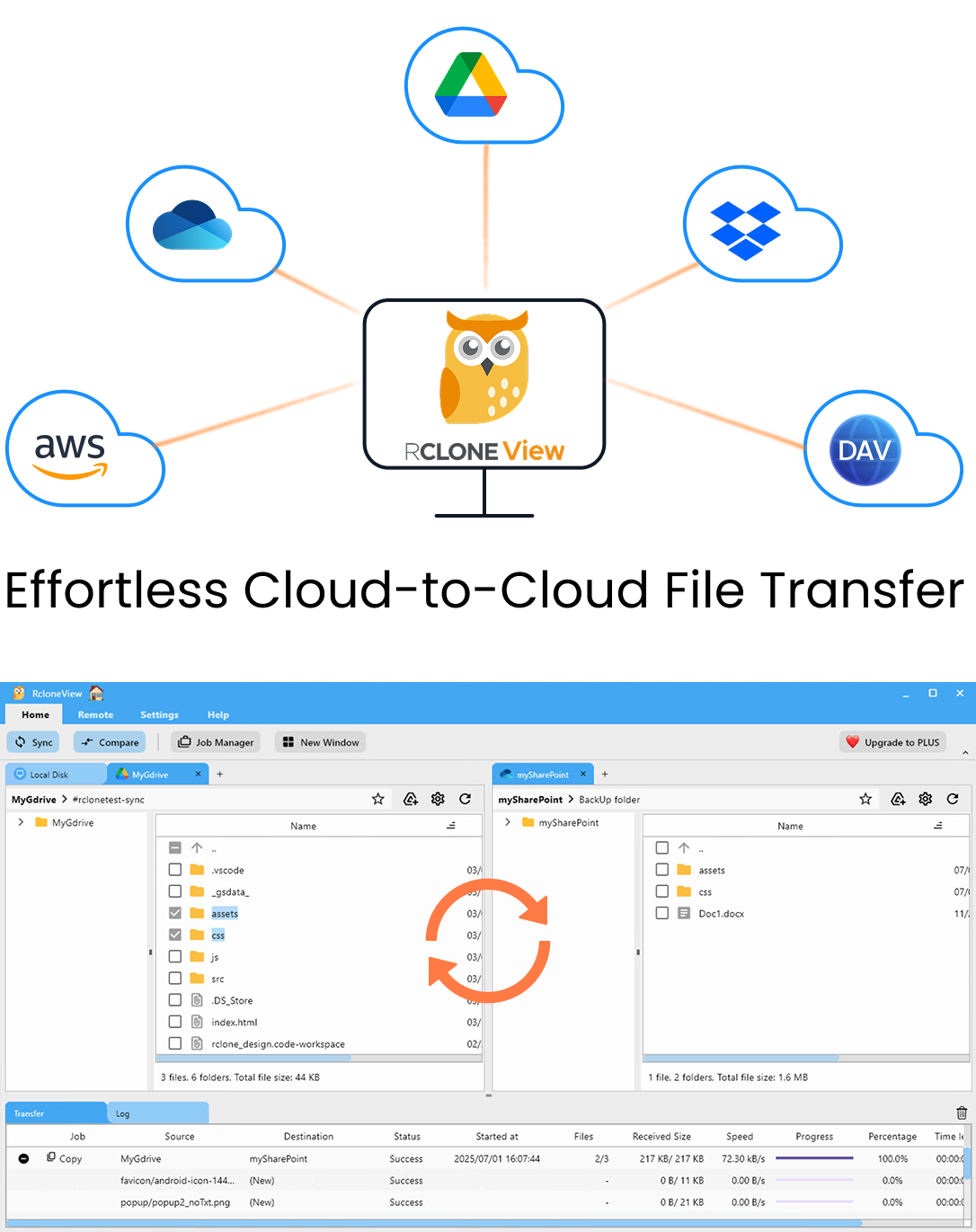
Manage & Sync All Clouds in One Place
RcloneView is a cross-platform GUI for rclone. Compare folders, transfer or sync files, and automate multi-cloud workflows with a clean, visual interface.
- One-click jobs: Copy · Sync · Compare
- Schedulers & history for reliable automation
- Works with Google Drive, OneDrive, Dropbox, S3, WebDAV, SFTP and more
Free core features. Plus automations available.
What Causes Sync Conflicts
Simultaneous edits
Two people (or two devices) modify the same file between sync cycles. When the sync runs, both versions have changed.
Offline edits
You edit files while offline. The cloud version also changes. When you reconnect, the versions diverge.
Overlapping sync schedules
Sync job A is still running when sync job B starts, creating race conditions on shared files.
How RcloneView Handles Conflicts
Rclone uses a last-modified-time wins strategy by default. The file with the newer modification time overwrites the older version. This is predictable but means the older edit is lost.
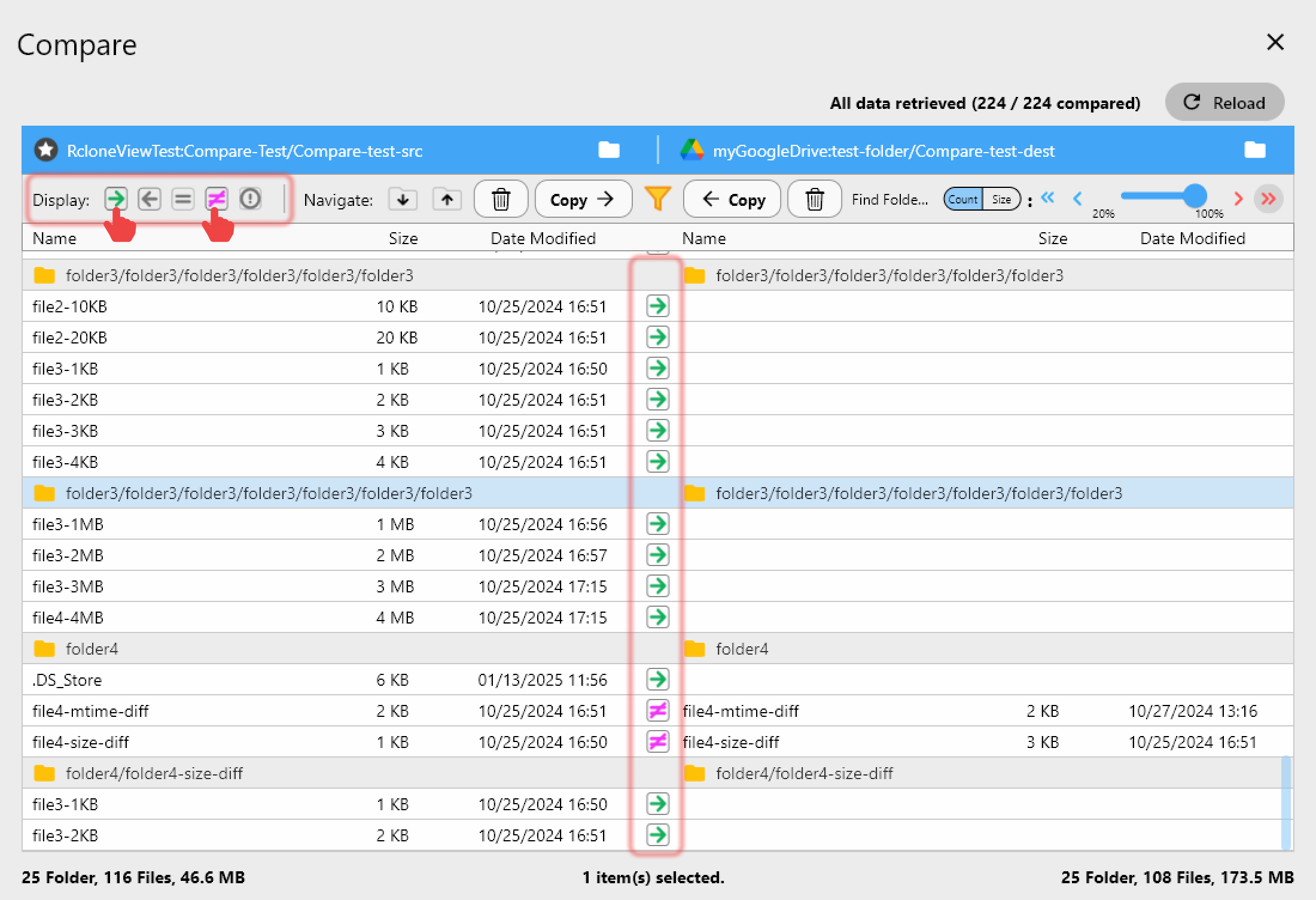
Detection with Folder Comparison
Use Folder Comparison before syncing to identify files that differ between source and destination:
Prevention Strategies
1) Increase sync frequency
The shorter the gap between syncs, the less time for conflicts to develop. Hourly syncs have fewer conflicts than daily syncs.
2) Use dedicated folders per user/device
Instead of syncing one shared folder, give each user or device their own folder. Merge centrally.
3) Compare before syncing
Always run Folder Comparison before a manual sync. If unexpected differences appear, investigate before overwriting.
4) Use Copy instead of Sync for safety
Copy only adds files — it never overwrites. Use it as a safe first step, then manually resolve differences.
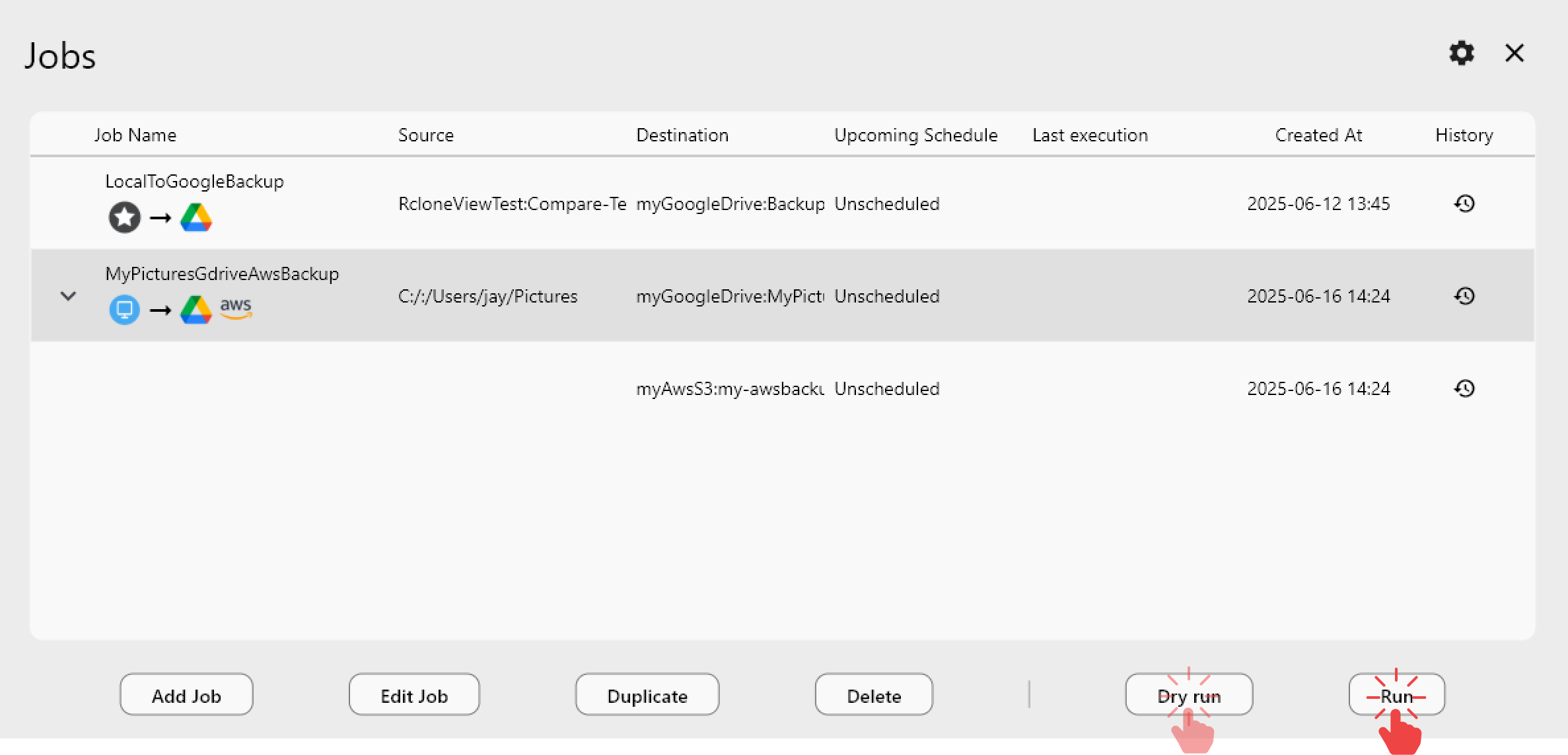
5) Keep backup copies
Before running a sync that might overwrite files, back up the destination:
Resolving Existing Conflicts
- Compare source and destination with Folder Comparison
- Identify which version is correct
- Copy the correct version to a safe location
- Run the sync knowing which version will be kept
- Verify the result
Getting Started
- Download RcloneView from rcloneview.com.
- Compare before syncing to detect conflicts.
- Increase sync frequency to reduce conflict windows.
- Use dedicated folders per device when possible.
Prevention is always cheaper than recovery.
Related Guides:
Supported Cloud Providers