How to Backup, Migrate, and Manage Your Rclone Config with RcloneView
Your rclone config file contains all your cloud remote configurations — connection details, authentication tokens, encryption keys, and custom settings. Losing it means reconfiguring every remote from scratch. Here's how to back it up, migrate it, and keep it portable.
After spending time configuring dozens of cloud remotes in RcloneView — OAuth flows, API keys, encryption passphrases, custom endpoints — the last thing you want is to lose that work to a disk failure, OS reinstall, or machine upgrade. The rclone config file is a single text file that encodes all of that setup. Understanding where it lives and how to protect it is essential maintenance for any serious RcloneView user.
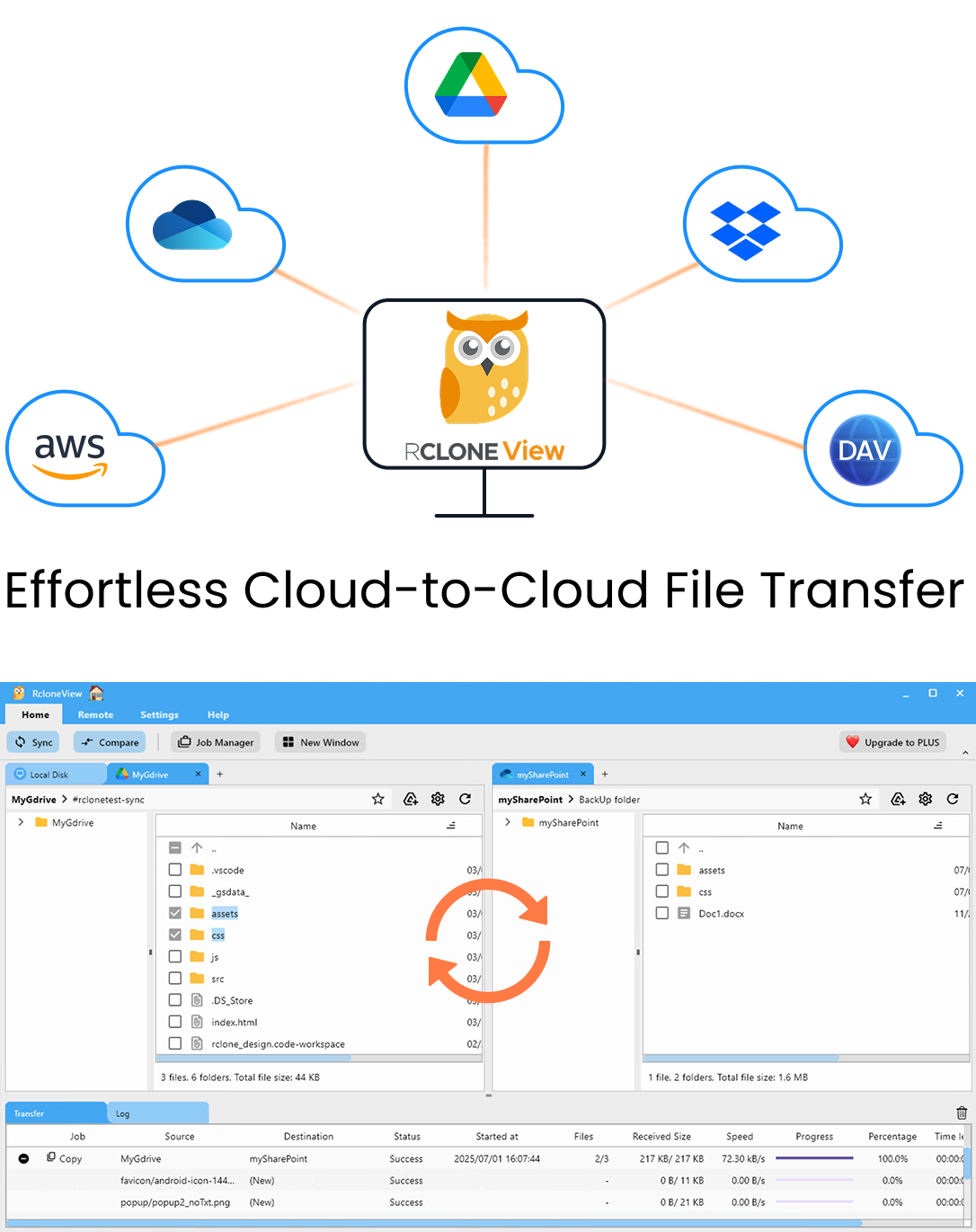
Manage & Sync All Clouds in One Place
RcloneView is a cross-platform GUI for rclone. Compare folders, transfer or sync files, and automate multi-cloud workflows with a clean, visual interface.
- One-click jobs: Copy · Sync · Compare
- Schedulers & history for reliable automation
- Works with Google Drive, OneDrive, Dropbox, S3, WebDAV, SFTP and more
Free core features. Plus automations available.
Where Is the Rclone Config File?
The config file location depends on your operating system:
| OS | Default Location |
|---|---|
| Windows | %APPDATA%\rclone\rclone.conf |
| macOS | ~/.config/rclone/rclone.conf |
| Linux | ~/.config/rclone/rclone.conf |
You can verify the location in RcloneView's Terminal:
rclone config file
This prints the exact path being used on your system.
What's Inside the Config File
The config file is a plain text INI-format file. Each section represents one remote:
[my-google-drive]
type = drive
client_id =
client_secret =
token = {"access_token":"ya29...","expiry":"2026-05-01T..."}

[s3-backup]
type = s3
provider = AWS
access_key_id = AKIA...
secret_access_key = abc123...
region = us-east-1

[encrypted-drive]
type = crypt
remote = my-google-drive:encrypted/
password = *** ENCRYPTED ***
password2 = *** ENCRYPTED ***
Important: OAuth tokens (for Google Drive, OneDrive, Dropbox) are stored in the config file. These tokens expire and get refreshed automatically during use. Back up the config regularly to capture the latest valid tokens.
Backing Up the Config File
Manual backup
Copy the config file to a secure location:
Windows:
copy %APPDATA%\rclone\rclone.conf C:\Backups\rclone-config-backup.conf
macOS/Linux:
cp ~/.config/rclone/rclone.conf ~/backups/rclone-config-$(date +%Y%m%d).conf
Automated backup with RcloneView
Set up a job in RcloneView to back up the config file itself to cloud storage:
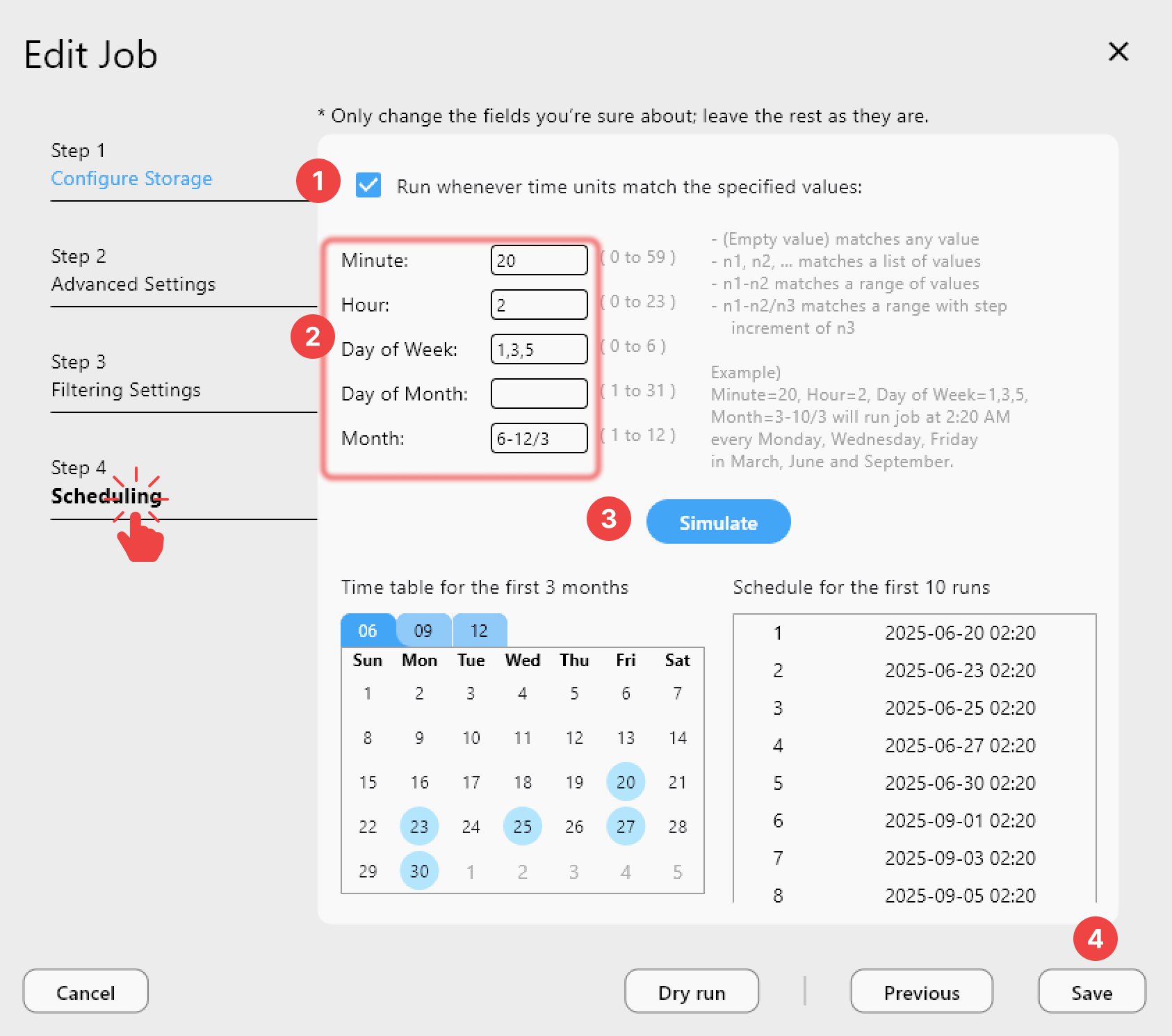
- Create a new Copy job.
- Source: the config file location (
~/.config/rclone/) - Destination: a cloud folder (
s3-backup:system-configs/rclone/) - Schedule: weekly or after major changes.
Security note: The config file contains credentials. Only back it up to encrypted storage or an encrypted cloud folder (e.g., a Crypt remote).
Encrypting the Config File at Rest
Rclone can encrypt the entire config file with a password. Enable this from RcloneView's terminal:
rclone config
# Choose: s - Set configuration password
After setting a password, the config file is encrypted on disk. You'll need the password each time RcloneView starts or when running rclone commands. This protects credentials even if the config file is stolen.
Migrating to a New Machine
Method 1 — Direct copy
The simplest migration:
- Copy
rclone.conffrom your old machine to the same path on the new machine. - Install RcloneView on the new machine.
- Open RcloneView — all your remotes appear immediately.
No re-authentication needed for most remotes (S3, WebDAV, FTP, etc.). OAuth remotes (Google Drive, OneDrive, Dropbox) will use the stored tokens, which are valid until they expire (typically 60–90 days from last use).
Method 2 — Re-authenticate OAuth remotes
If OAuth tokens have expired, re-authorize each affected remote:
- Open Remotes in RcloneView.
- Select the remote and choose Edit.
- Click Re-authorize to generate fresh tokens.
Only remotes with expired OAuth tokens need this step.
Method 3 — Use the --config flag
If you keep the config in a non-standard location (e.g., Dropbox for portability), use:
rclone --config /path/to/rclone.conf <command>
Or set the RCLONE_CONFIG environment variable to make this the default for all rclone operations on that machine.
Viewing and Editing the Config in RcloneView
RcloneView's remote management interface provides a GUI for adding and editing remotes — but for power users who prefer direct access, the config file is always a valid way to make changes. After manually editing the config file, restart RcloneView to pick up the changes.
Best Practices
| Practice | Why |
|---|---|
| Back up config weekly | OAuth tokens get refreshed; capture the latest valid state |
| Encrypt backup location | Config contains credentials and tokens |
| Use a config password for sensitive installs | Extra protection if the machine is compromised |
| Don't commit config to public Git repos | Access keys and tokens would be exposed |
| Test restore periodically | Verify your backup is actually usable |
Getting Started
- Download RcloneView from rcloneview.com.
- Find your config file using
rclone config filein RcloneView's terminal. - Set up an automated backup job to copy the config to encrypted cloud storage.
- Store the config password (if set) in a password manager — losing it means losing access to the config.
Your rclone config is the single most important file in your RcloneView setup. Protect it accordingly.
Related Guides:
- Encrypt Cloud Backups with Crypt Remote
- RcloneView Terminal: CLI Inside the GUI
- Secure RcloneView with App Lock
Supported Cloud Providers