Bisync: True Bidirectional Cloud Sync with RcloneView
Standard rclone Sync is one-directional — it makes the destination match the source. Bisync goes further: changes in either location propagate to the other. If you add a file to Location A, it appears in Location B, and vice versa. Here's how to configure it in RcloneView.
Most cloud sync scenarios are one-way: a local machine backs up to the cloud, or a primary cloud mirrors to a backup cloud. But some workflows require true bidirectional synchronization — a shared folder that two people edit, a work machine and a home machine that must stay in sync, or two cloud accounts that act as equals. Rclone's bisync command provides this, and RcloneView makes it configurable without the command line.
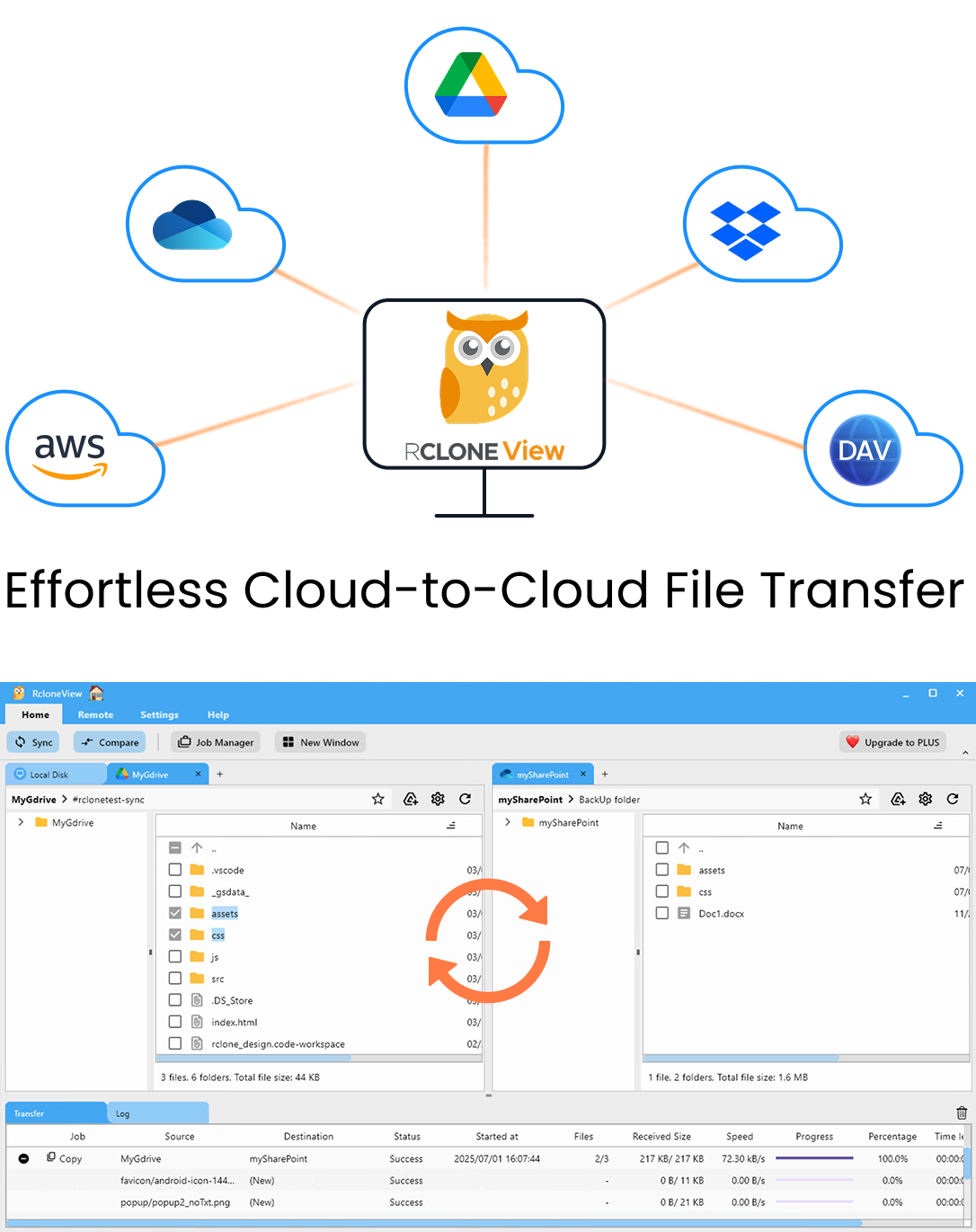
Manage & Sync All Clouds in One Place
RcloneView is a cross-platform GUI for rclone. Compare folders, transfer or sync files, and automate multi-cloud workflows with a clean, visual interface.
- One-click jobs: Copy · Sync · Compare
- Schedulers & history for reliable automation
- Works with Google Drive, OneDrive, Dropbox, S3, WebDAV, SFTP and more
Free core features. Plus automations available.
Sync vs Bisync: What's the Difference?
| Behavior | rclone sync | rclone bisync |
|---|---|---|
| Direction | One-way (source → destination) | Two-way (both directions) |
| Deletions | Deletes from destination if missing in source | Propagates deletions in both directions |
| Conflicts | Source always wins | Explicit conflict handling required |
| Risk of data loss | Possible if direction is wrong | Lower risk; both sides checked |
| Complexity | Simple | More complex; requires careful setup |
When to Use Bisync
Use bisync when:
- Two people or systems contribute changes to the same folder.
- You edit files on multiple devices that can't always be online simultaneously.
- You're keeping two cloud accounts as active mirrors with changes from both sides.
Use regular Sync when:
- You have a clear primary (source) and secondary (backup/destination).
- Only one side creates new files — the other is read-only.
- Simplicity and predictability are priorities.
Setting Up Bisync in RcloneView
Bisync requires a one-time initialization (resync) to establish baseline state before any subsequent runs can track changes.
Step 1 — Add your two remotes
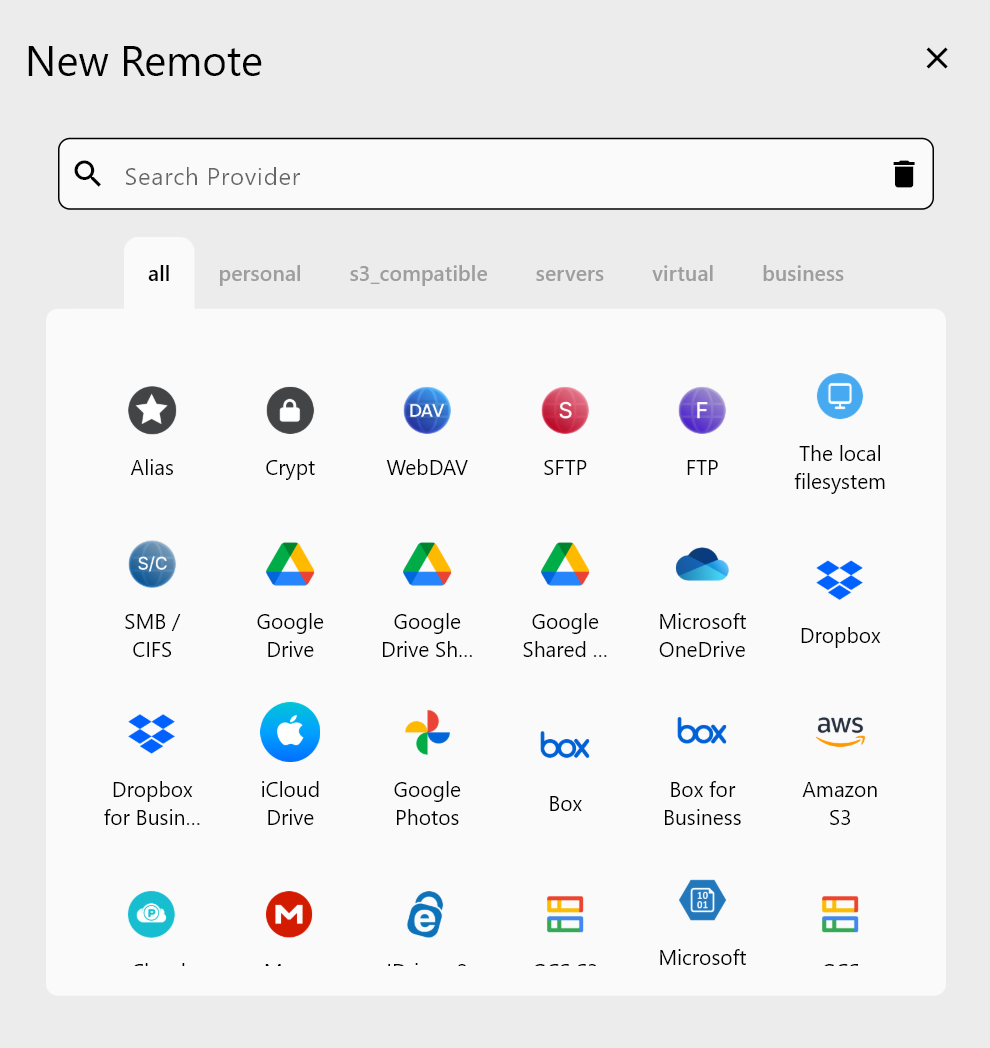
Ensure both locations are configured as remotes in RcloneView. For example:
gdrive-work:/Projects/Active/(Google Drive work account)onedrive-home:/Projects/Active/(OneDrive home account)
Step 2 — Run the initial resync
The first bisync run must use --resync to establish the baseline. In RcloneView's Terminal:
rclone bisync gdrive-work:/Projects/Active/ onedrive-home:/Projects/Active/ --resync --verbose
This creates the baseline state files (stored in ~/.cache/rclone/bisync/) that bisync uses to detect changes on subsequent runs. The resync makes both sides identical by copying newer files to each side.
Step 3 — Create a Bisync job in RcloneView
- Open Jobs in RcloneView.
- Select Custom Command or use the Terminal panel.
- Enter the bisync command for ongoing runs:
rclone bisync gdrive-work:/Projects/Active/ onedrive-home:/Projects/Active/ --verbose --log-file /tmp/bisync.log
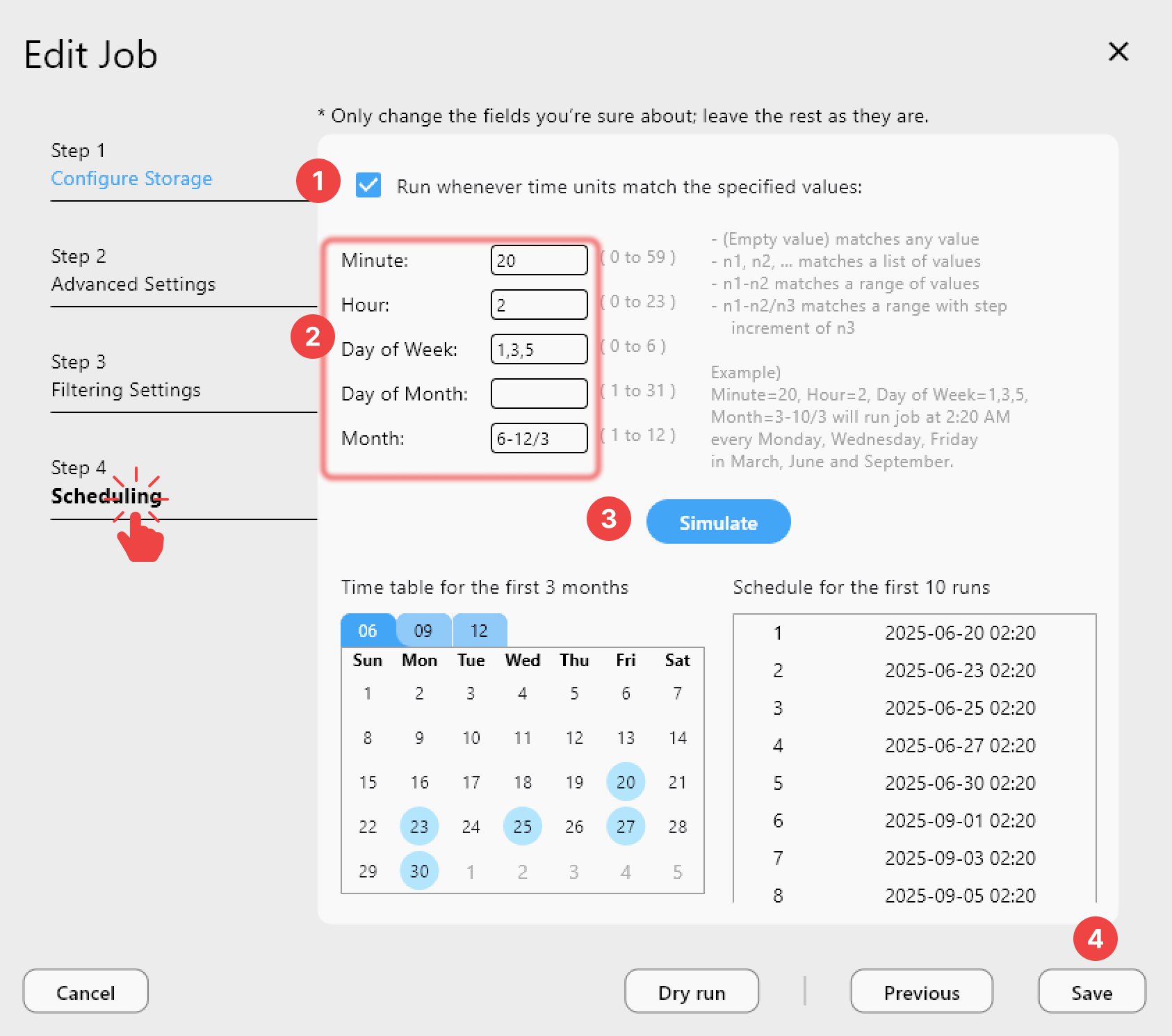
- Save as a job and schedule it to run every hour or daily.
Conflict Handling
Bisync detects conflicts when a file is modified in both locations between runs. By default, rclone bisync flags these conflicts and does not overwrite either version.
Add --conflict-resolve newer to automatically prefer the newer file:
rclone bisync path1 path2 --conflict-resolve newer
Or --conflict-resolve larger to prefer the larger file (useful for document growth scenarios).
Conflicting files that aren't automatically resolved are renamed with a .conflict suffix so both versions are preserved.
Common Bisync Flags
| Flag | Purpose |
|---|---|
--resync | Initialize or re-establish baseline (use once) |
--conflict-resolve newer | Auto-resolve conflicts by preferring newer file |
--filters-file /path/to/filters | Apply include/exclude rules |
--max-delete 10 | Abort if more than 10 files would be deleted (safety) |
--dry-run | Preview what would be changed without doing anything |
--verbose | Detailed output for debugging |
The --max-delete flag is especially important — it prevents bisync from accidentally deleting large numbers of files due to a misconfiguration.
Monitoring Bisync Runs
Check bisync output in RcloneView's Job History after each run:
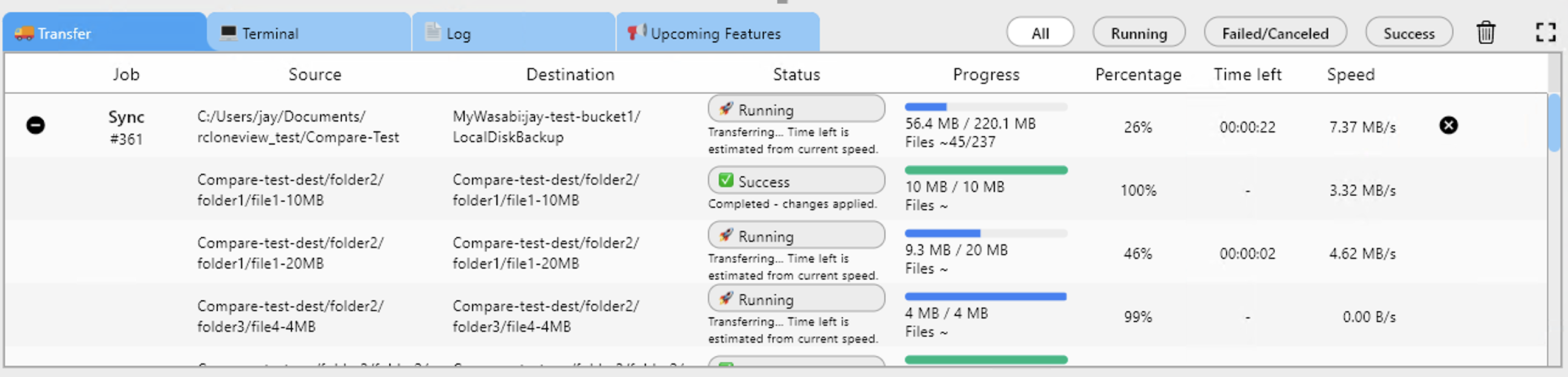
A healthy bisync run shows:
- Files copied from path1 to path2
- Files copied from path2 to path1
- Any conflicts detected and how they were resolved
- Total time and transfer stats
Limitations of Bisync
- Not suitable for simultaneous edits to the same file — bisync compares between runs, not in real time.
- Deletion propagation can be dangerous — a file deleted on one side will be deleted on the other after the next run.
- Requires stable state between runs — if a run fails mid-way, re-run with
--resyncto rebuild baseline. - Large paths are slower — the baseline comparison scans both locations fully on each run.
Getting Started
- Download RcloneView from rcloneview.com.
- Configure both remotes in RcloneView.
- Run the initial
--resyncfrom RcloneView's terminal to establish baseline. - Schedule regular bisync runs for ongoing synchronization.
Bisync brings genuine two-way sync to any pair of rclone-supported remotes — local disks, cloud providers, NAS shares, and more.
Related Guides:
- Sync, Copy, Move — Differences Explained
- Filter Rules and Selective Sync
- Avoid Data Loss from Wrong Sync Direction
Supported Cloud Providers