RcloneView on openSUSE Linux — Cloud Storage Sync and Backup
openSUSE users can manage cloud storage across 70+ providers with RcloneView's graphical interface — no terminal gymnastics required.
openSUSE, whether you run Tumbleweed (rolling release) or Leap (stable release), is a popular choice for professionals and developers who need a reliable Linux workstation. RcloneView brings full cloud storage management to openSUSE with a native desktop application that wraps rclone's powerful engine in an intuitive GUI. This guide walks through installation, configuration, and practical cloud sync workflows on openSUSE.
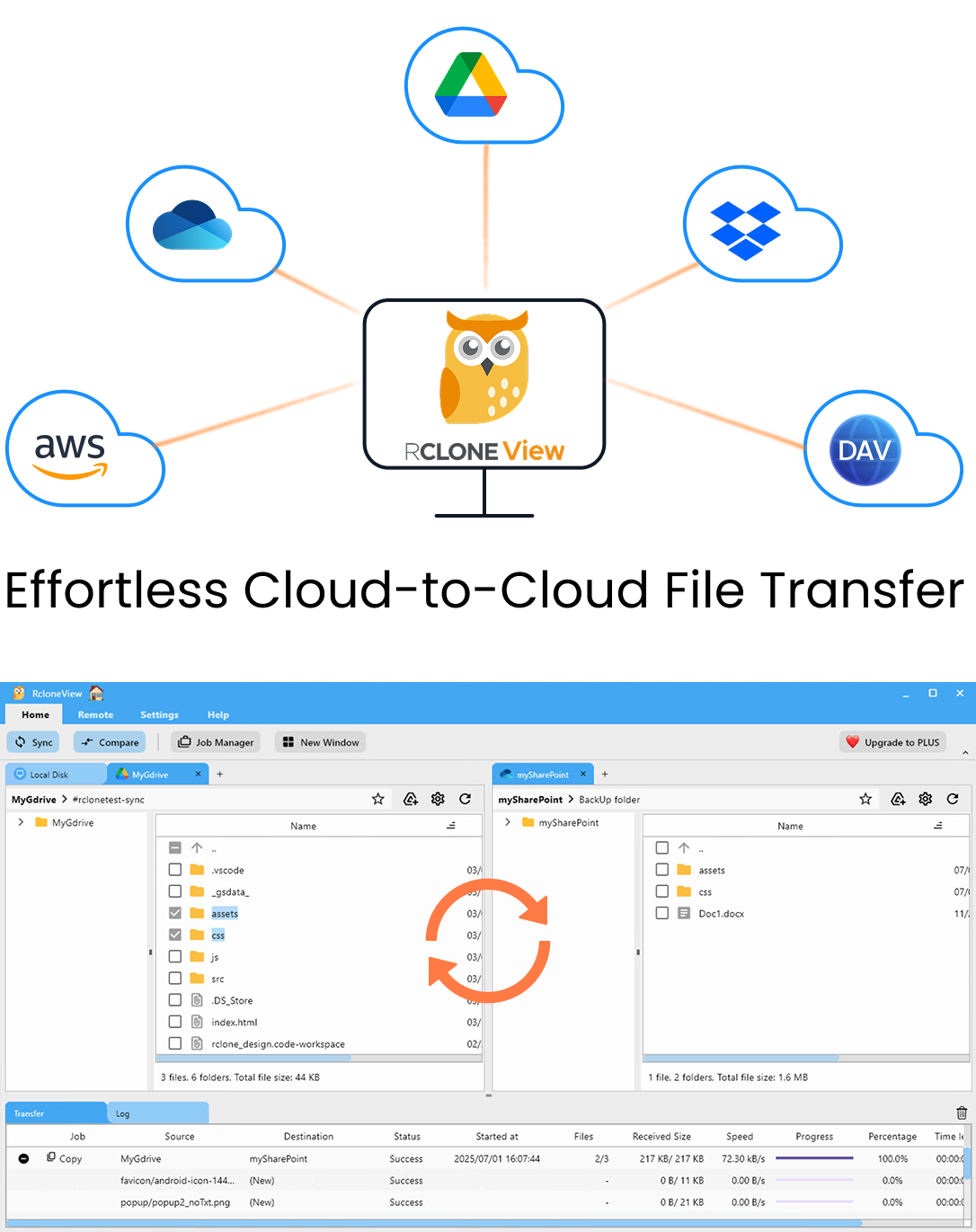
Manage & Sync All Clouds in One Place
RcloneView is a cross-platform GUI for rclone. Compare folders, transfer or sync files, and automate multi-cloud workflows with a clean, visual interface.
- One-click jobs: Copy · Sync · Compare
- Schedulers & history for reliable automation
- Works with Google Drive, OneDrive, Dropbox, S3, WebDAV, SFTP and more
Free core features. Plus automations available.
Installing RcloneView on openSUSE
RcloneView is distributed as an AppImage for Linux, which means it runs on openSUSE without requiring zypper packages or repository configuration. Download the latest AppImage from the official website, make it executable, and launch it directly.
To install, open a terminal and run: chmod +x RcloneView-*.AppImage followed by ./RcloneView-*.AppImage. The AppImage bundles rclone internally, so there is no need to install rclone separately through zypper or from source. If you already have a system-wide rclone installation with existing remotes, RcloneView will detect and import your existing configuration automatically.
For openSUSE Tumbleweed users who prefer system integration, you can extract the AppImage contents and create a desktop entry manually. This allows RcloneView to appear in your application menu alongside native KDE or GNOME applications. On Leap, the AppImage approach avoids potential dependency conflicts with the stable package base.
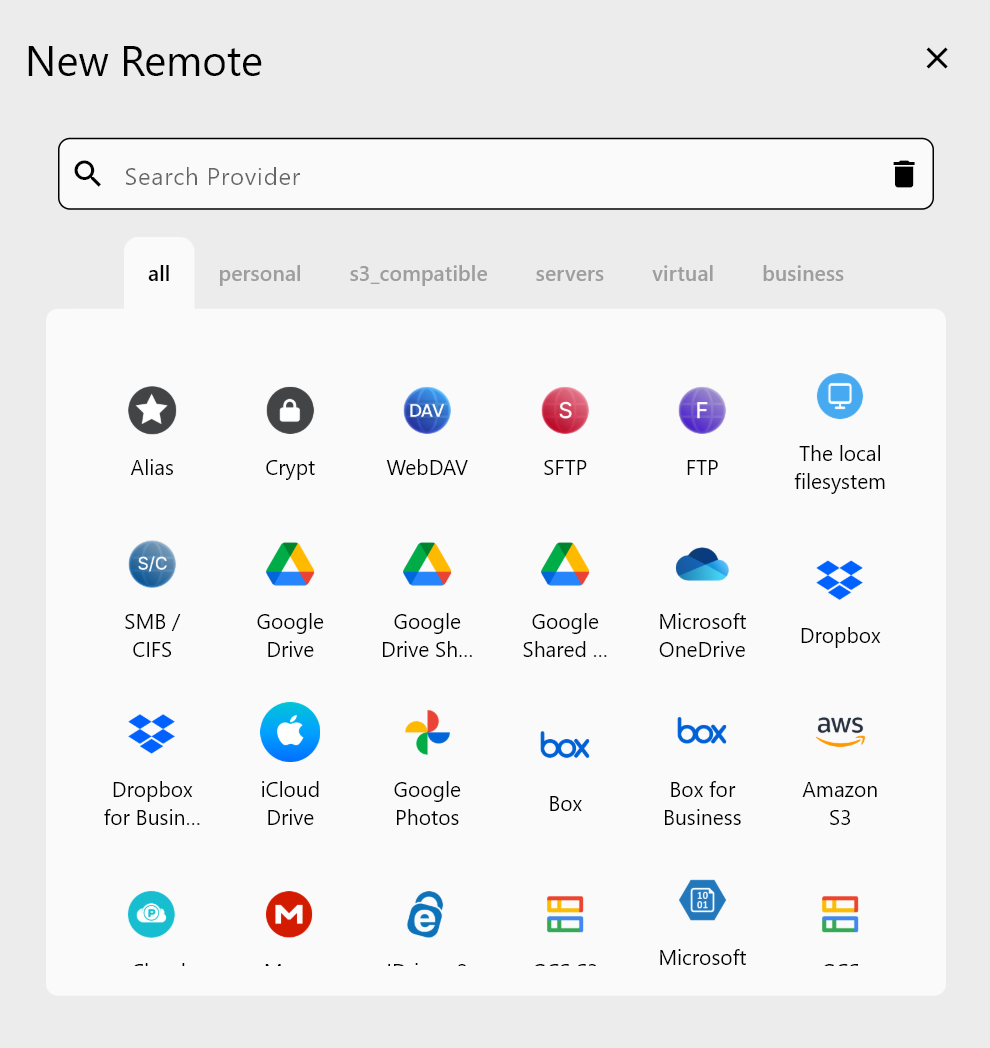
Configuring Cloud Storage Remotes
Once RcloneView is running, connecting to cloud storage providers is handled through the remote configuration panel. Click the add remote button to start the guided setup. For Google Drive, OneDrive, and Dropbox, RcloneView launches an OAuth browser flow to authorize access. For S3-compatible storage (AWS, Wasabi, MinIO), you enter the endpoint URL, access key, and secret key directly.
openSUSE's default firewall (firewalld) may need a temporary exception during the OAuth flow, as the authorization callback uses a local port. If the browser redirect fails, check that the port is not blocked. Alternatively, you can use rclone's headless authorization mode through RcloneView's integrated terminal.
A practical setup for openSUSE workstations includes a Google Drive remote for documents, a Wasabi or Backblaze B2 remote for backups, and an SFTP remote for accessing a home server or NAS. RcloneView manages all of these from a single interface, with the dual-pane file browser letting you navigate and transfer between any combination.
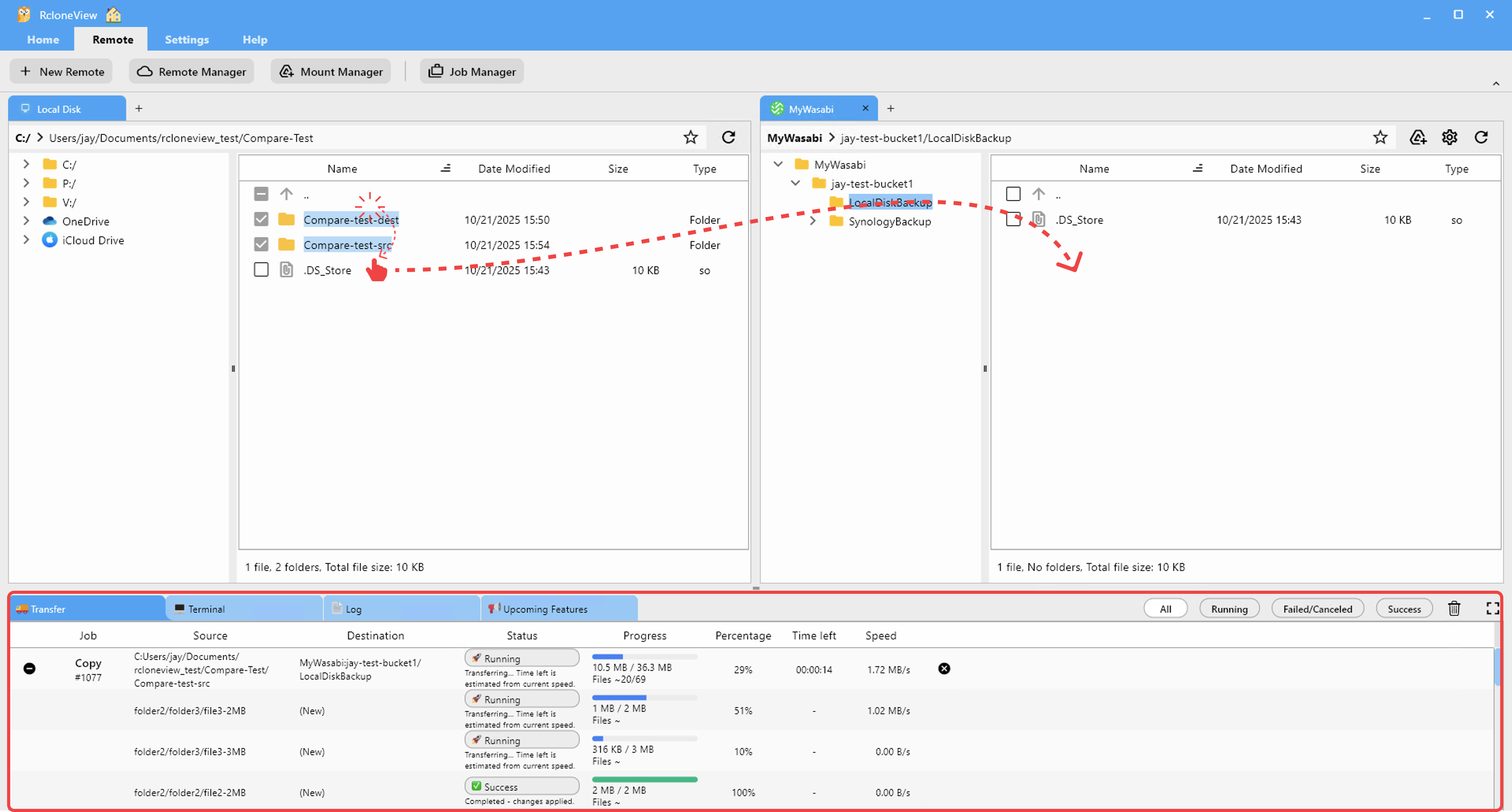
Automated Sync and Backup on openSUSE
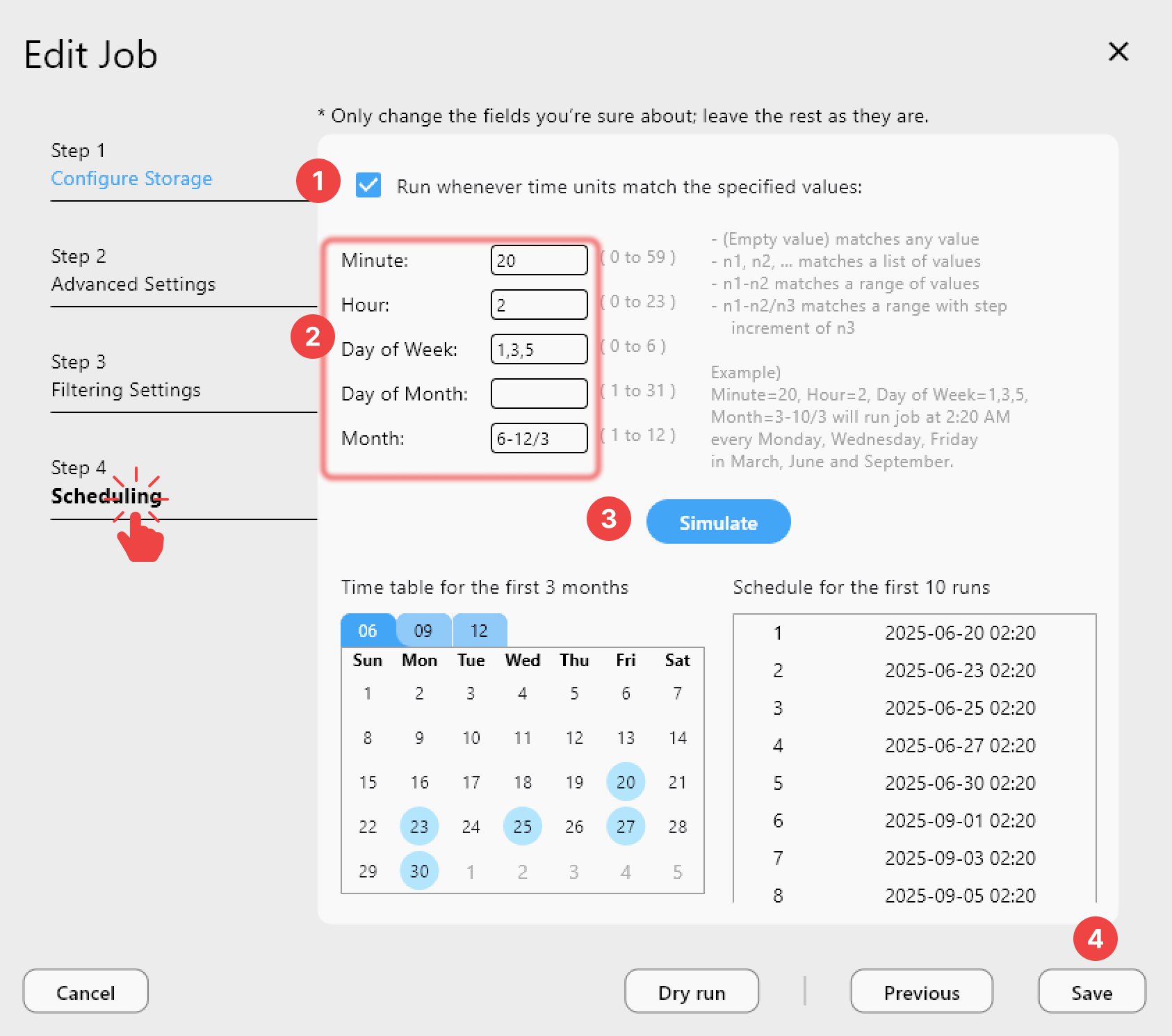
RcloneView's built-in job scheduler eliminates the need to write custom cron jobs or systemd timers for cloud backup automation. Create a sync or copy job in the GUI, define the source and destination remotes, apply optional filter rules to include or exclude specific file patterns, and set the schedule using the visual cron editor.
For openSUSE workstations, a common workflow is backing up the home directory (excluding cache and temporary files) to an encrypted cloud remote on a nightly schedule. RcloneView's filter rules support glob patterns, so excluding ~/.cache/**, ~/.local/share/Trash/**, and build output directories is straightforward.
Job execution history is logged within RcloneView, providing timestamps, transferred byte counts, file counts, and error details. This is useful for verifying that automated backups completed successfully without manually checking cloud storage contents.
Mounting Cloud Storage as Local Directories
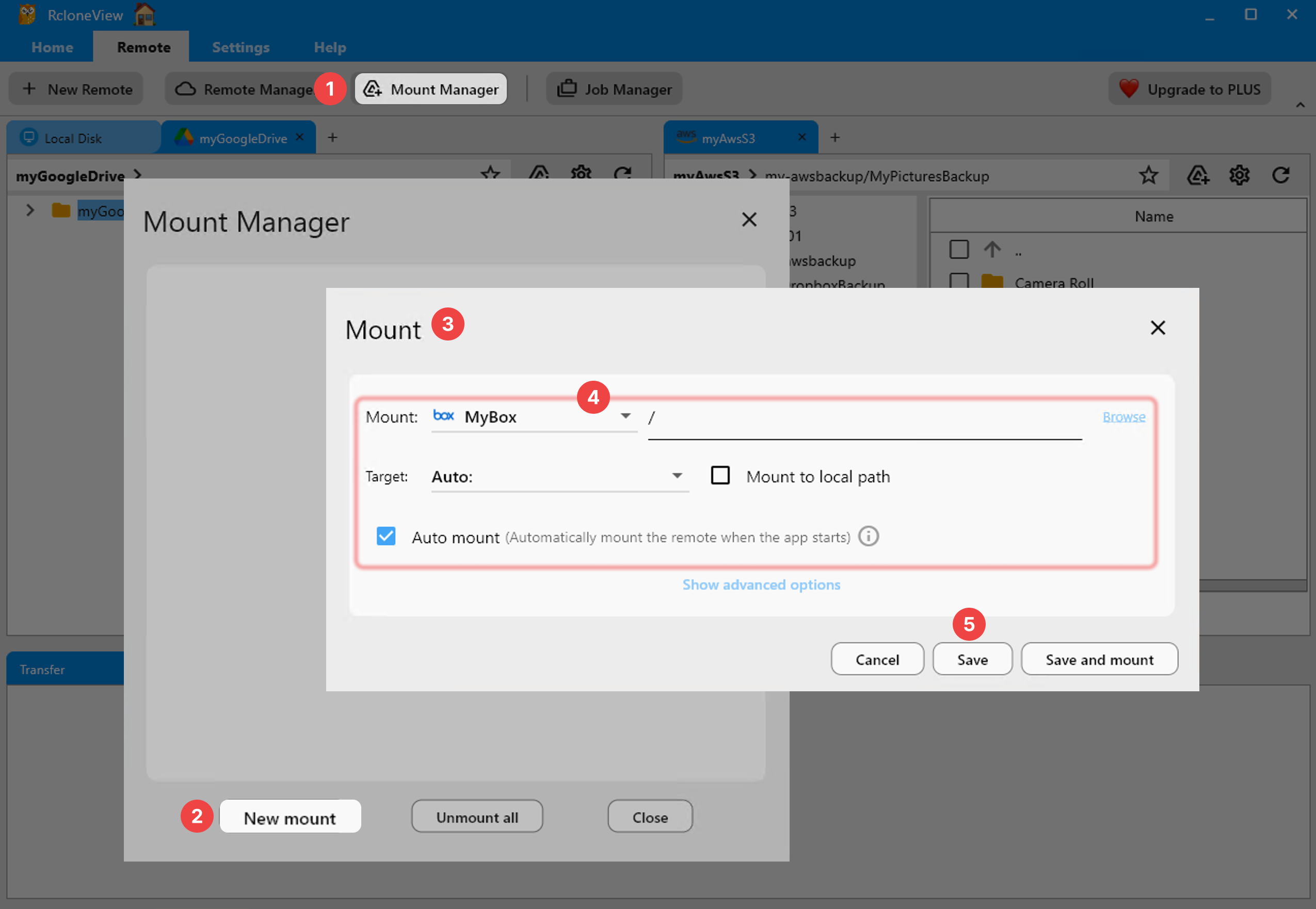
RcloneView supports mounting cloud storage providers as local directories on openSUSE using FUSE. This allows applications like LibreOffice, GIMP, or any file manager (Dolphin, Nautilus) to access cloud files as if they were on a local disk. Ensure that fuse or fuse3 is installed via zypper: sudo zypper install fuse3.
From RcloneView's mount manager, select a remote and a local mount point. The mount appears in your file manager and persists until you unmount it or close RcloneView. This is particularly useful for working with large media files or project assets stored in cloud object storage.
Getting Started
- Download RcloneView from rcloneview.com.
- Make the AppImage executable with
chmod +xand launch it on your openSUSE system. - Add your cloud storage remotes through the guided configuration wizard.
- Create your first sync or backup job and set a recurring schedule.
RcloneView transforms openSUSE into a fully capable multi-cloud management workstation with minimal setup effort.
Related Guides:
- Install RcloneView on Ubuntu and Debian Linux
- RcloneView on Fedora and RHEL Linux — Cloud Sync
- RcloneView on Arch Linux — Cloud Sync
Supported Cloud Providers