Sync Nextcloud to Backblaze B2 — Offsite Backup with RcloneView
Nextcloud is excellent for self-hosted collaboration, but without an offsite backup, a single server failure can mean permanent data loss — RcloneView syncs it automatically to Backblaze B2.
Self-hosting Nextcloud gives you full control over your data, but control comes with responsibility. If your server is damaged, ransomed, or decommissioned without a proper backup, there's no safety net. Backblaze B2 provides affordable, durable offsite object storage that pairs perfectly with Nextcloud. RcloneView connects Nextcloud via WebDAV and B2 via Application Key, giving you a GUI to set up and schedule recurring backups.
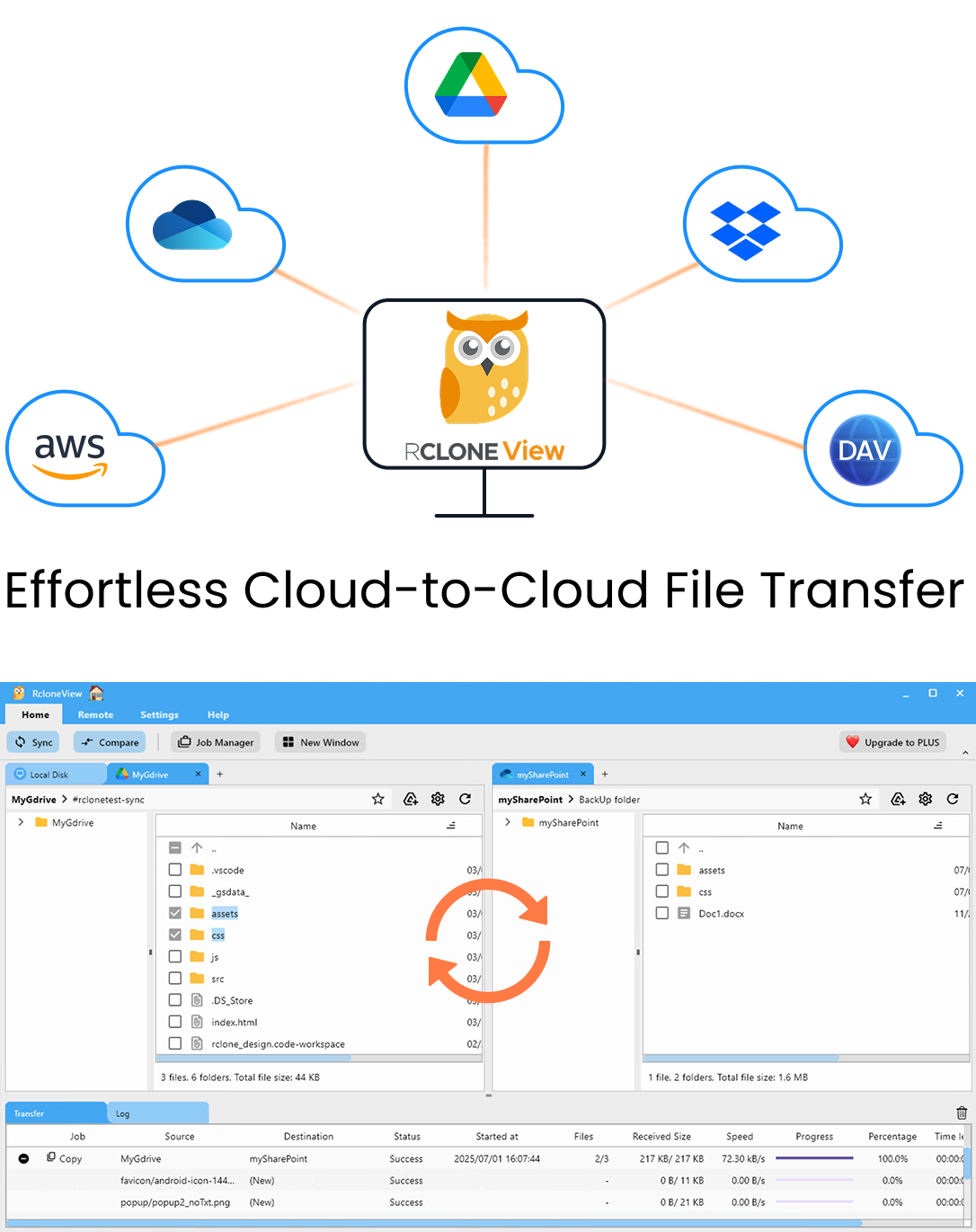
Manage & Sync All Clouds in One Place
RcloneView is a cross-platform GUI for rclone. Compare folders, transfer or sync files, and automate multi-cloud workflows with a clean, visual interface.
- One-click jobs: Copy · Sync · Compare
- Schedulers & history for reliable automation
- Works with Google Drive, OneDrive, Dropbox, S3, WebDAV, SFTP and more
Free core features. Plus automations available.
Connecting Nextcloud via WebDAV
Open RcloneView and go to Remote Manager. Click New Remote and select WebDAV. Nextcloud exposes its files over WebDAV at a standard path. Fill in:
- URL:
https://your-nextcloud-domain/remote.php/dav/files/your-username/ - Vendor: Nextcloud
- User: your Nextcloud username
- Password: your Nextcloud account password (or an app password if you have 2FA enabled)
Save the remote and open it in the File Explorer to confirm your Nextcloud files appear. Navigate a few folders to verify access.
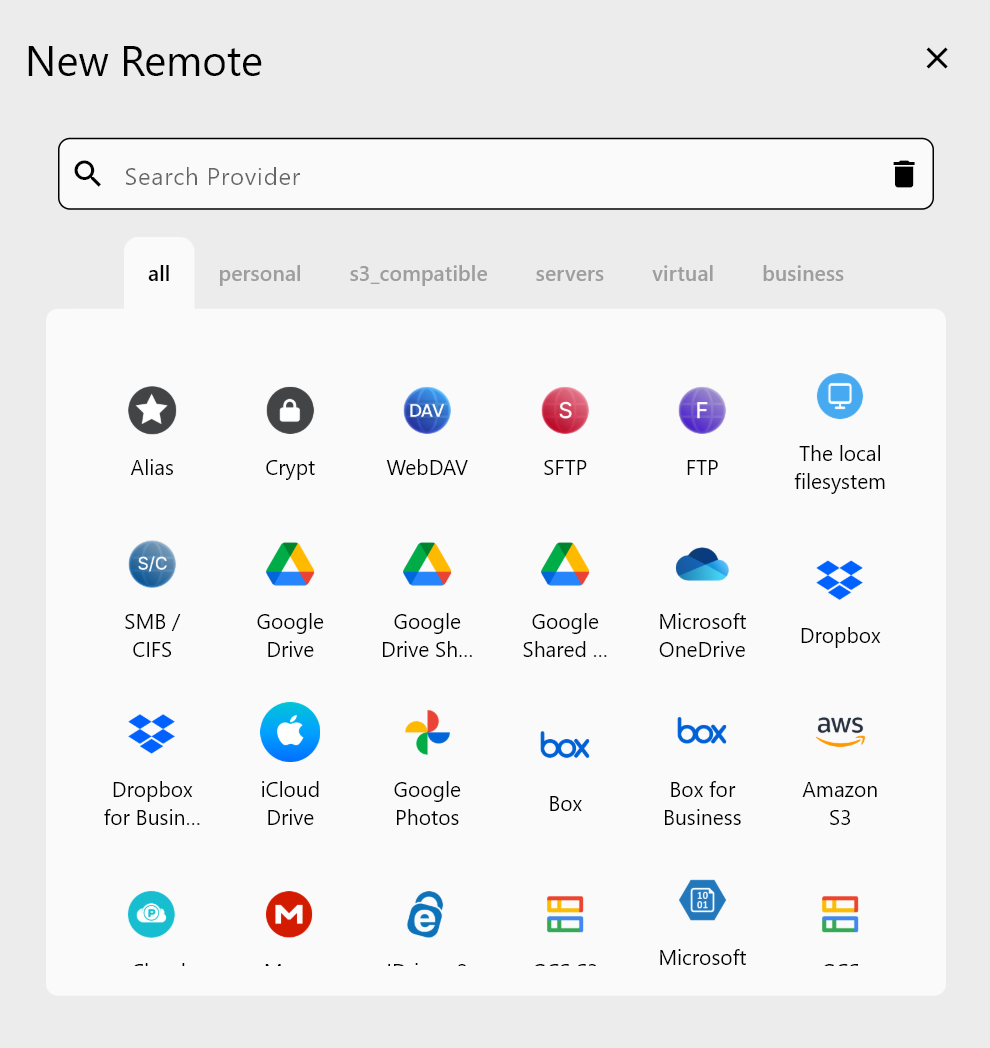
Connecting Backblaze B2
Back in Remote Manager, click New Remote and select Backblaze B2. In the Backblaze console, go to App Keys and create a key with read/write access to your backup bucket. Enter the Application Key ID and Application Key in RcloneView. Save the remote and open it to verify your B2 buckets are accessible.
Create the destination bucket if you haven't already — for Nextcloud backups, a dedicated bucket (e.g., nextcloud-backup) keeps things organized.
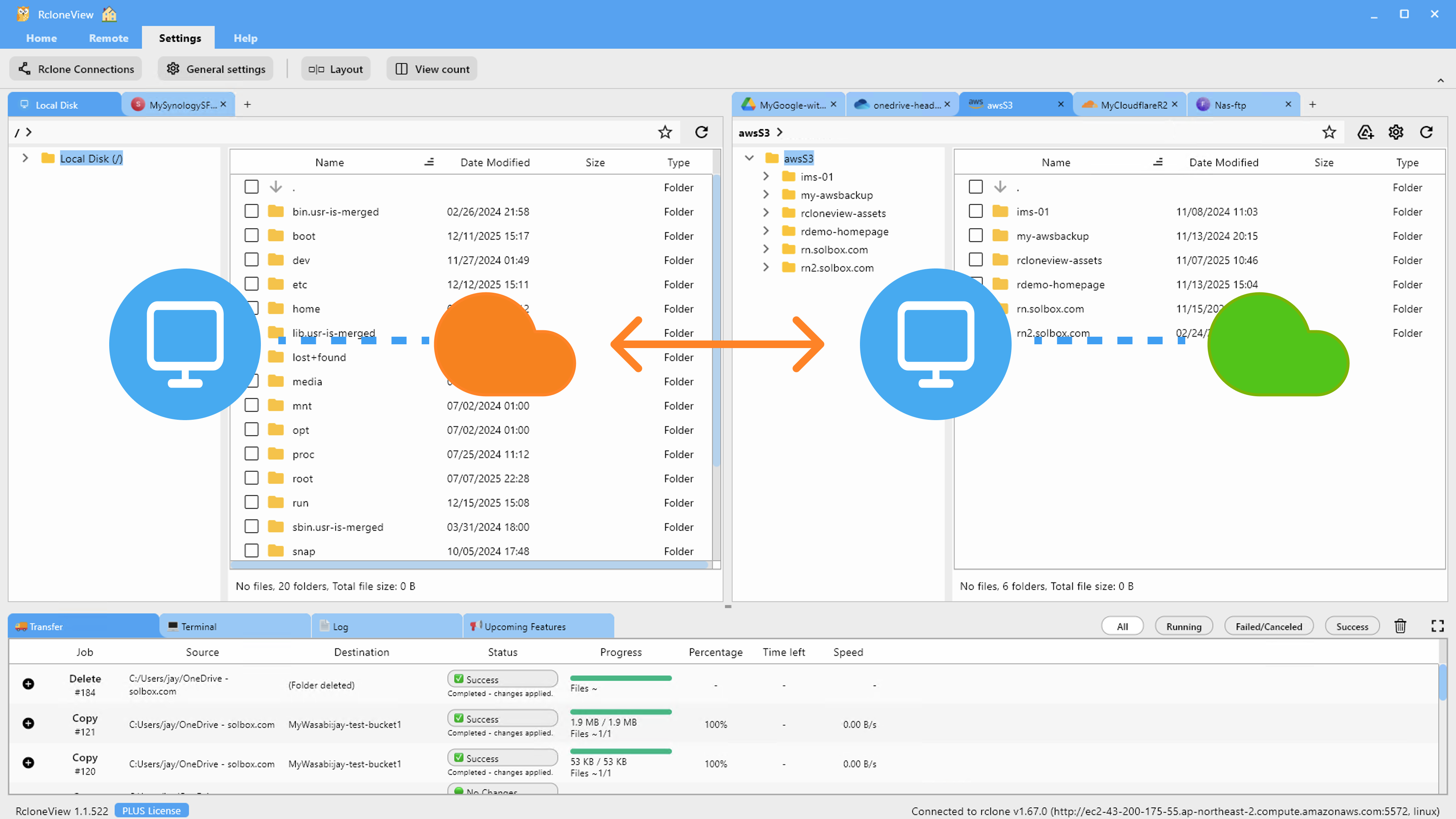
Setting Up the Backup Job
Go to Jobs and click New Job. Configure:
- Source: your Nextcloud WebDAV remote, pointing to the root or a specific directory
- Destination: your Backblaze B2 remote and the backup bucket
In step 2 of the job wizard, recommended options for Nextcloud backups:
- Set transfers to 4 (WebDAV has per-connection overhead, so lower concurrency is stable)
- Enable checksum verification for integrity assurance
- Enable Dry Run on the first run to review scope before committing
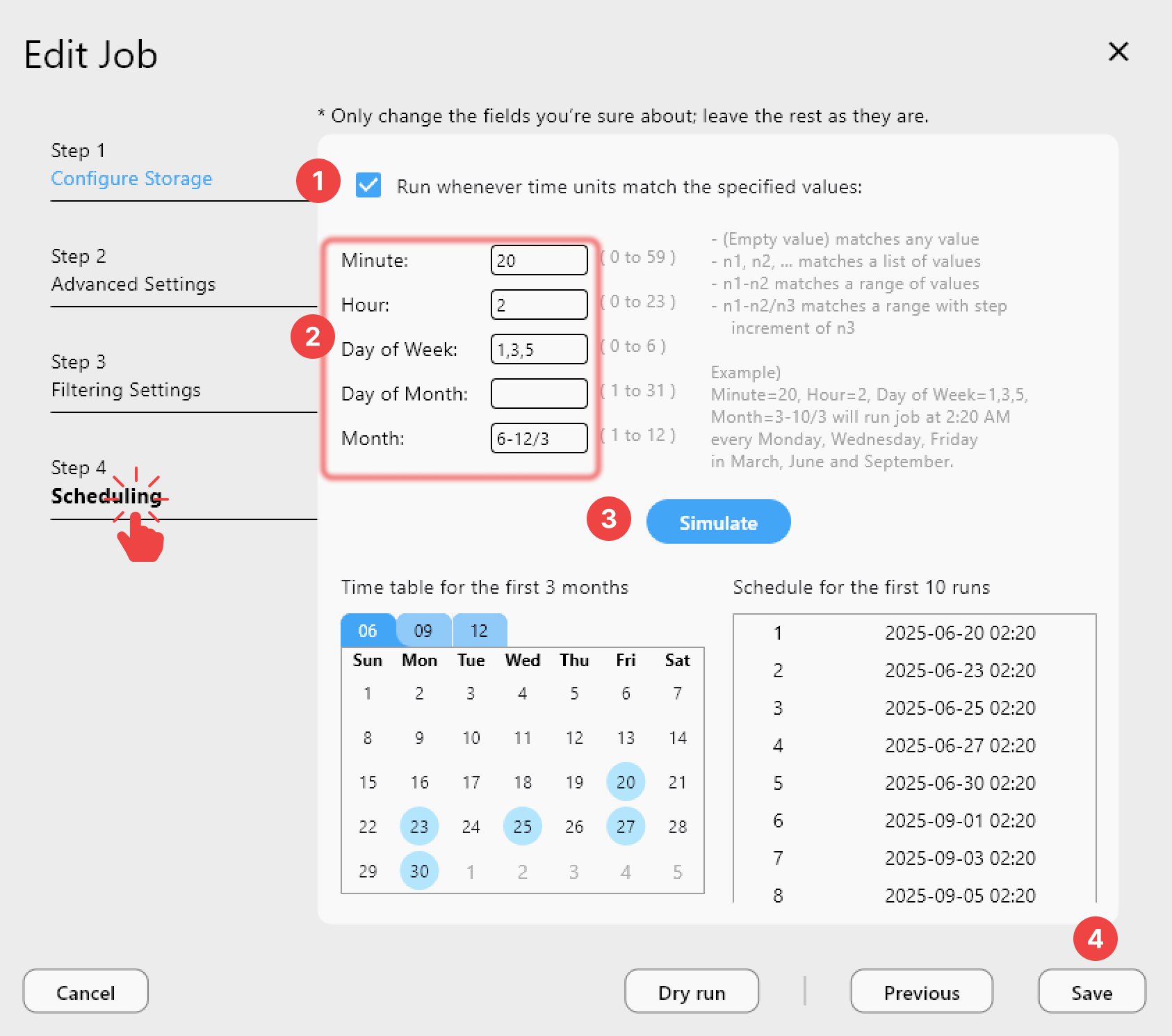
Scheduling Automated Backups
With a PLUS license, add a schedule in step 3 of the job wizard using cron syntax. For daily backups at 1 AM: 0 1 * * *. For weekly: 0 1 * * 0. RcloneView runs the job silently in the background at the scheduled time and records the result in Job History.
Each Job History entry shows: files checked, files transferred (only changed files are re-sent), data volume, duration, and any errors. This lets you quickly confirm the nightly backup ran successfully without opening the application manually.
Backup Strategy Notes
- RcloneView's sync job is incremental by default — only new or changed files are transferred after the initial run
- Consider keeping --backup-dir style versioning if you want to preserve deleted files in B2
- For Nextcloud database backups, those need to be handled separately (mysqldump or similar), but all file data in Nextcloud's data directory syncs cleanly via WebDAV
Getting Started
- Download RcloneView from rcloneview.com.
- Connect Nextcloud via WebDAV in Remote Manager using your server URL and credentials.
- Connect Backblaze B2 using your Application Key ID and Application Key.
- Create and schedule a sync job from Nextcloud to B2 for automated nightly offsite backup.
An automated Nextcloud → Backblaze B2 backup running nightly means your self-hosted data has enterprise-grade redundancy at minimal cost.
Related Guides:
- Sync Nextcloud to Google Drive and S3 with RcloneView
- Backup Nextcloud WebDAV with RcloneView
- Automate Daily Cloud Backups with RcloneView
Supported Cloud Providers