Fix Slow Cloud Uploads — Optimize Bandwidth and Transfer Speed with RcloneView
When cloud uploads in RcloneView feel slower than expected, a few targeted settings changes can dramatically increase throughput — here's how to diagnose and fix common performance bottlenecks.
Slow cloud upload speeds are one of the most common frustrations for RcloneView users. The root cause is rarely obvious: it might be too few concurrent transfers, an accidental bandwidth cap, a throttled API endpoint, or a mismatch between your network's MTU and the cloud provider's requirements. This guide walks through each potential cause systematically so you can identify and resolve the issue quickly.
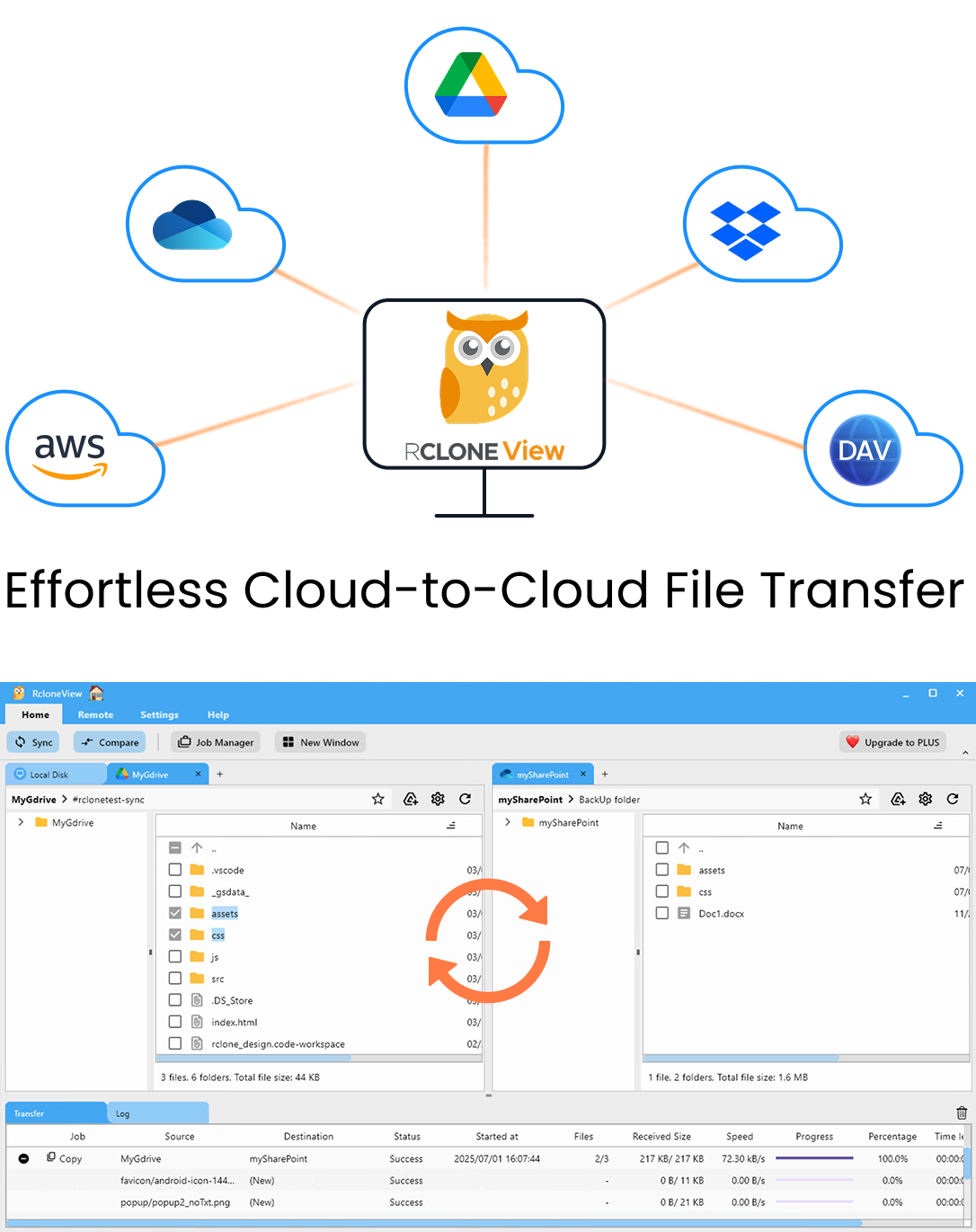
Manage & Sync All Clouds in One Place
RcloneView is a cross-platform GUI for rclone. Compare folders, transfer or sync files, and automate multi-cloud workflows with a clean, visual interface.
- One-click jobs: Copy · Sync · Compare
- Schedulers & history for reliable automation
- Works with Google Drive, OneDrive, Dropbox, S3, WebDAV, SFTP and more
Free core features. Plus automations available.
Check and Increase Concurrent Transfers
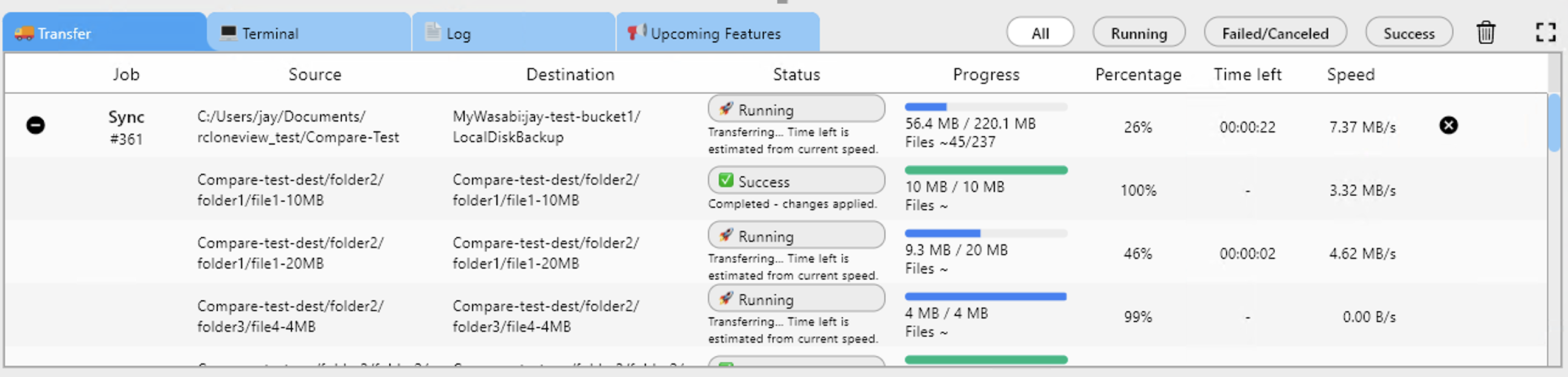
The most impactful setting for upload throughput is the number of concurrent file transfers. By default, rclone transfers files sequentially or with limited concurrency. In RcloneView's sync job configuration (Step 2: Advanced Settings), increase the Number of file transfers setting — try 8 to 16 for high-bandwidth connections. Each concurrent transfer adds independent throughput, effectively multiplying your effective upload speed.
For providers like Amazon S3 and Cloudflare R2 that support multipart uploads, also increase the Number of multi-thread transfers (default: 4) to parallelize each large file's upload into chunks. This is especially beneficial when uploading large video files or database dumps.
Remove Accidental Bandwidth Caps
RcloneView passes Global Rclone Flags from Settings > Embedded Rclone to every operation. Check whether --bwlimit or --bwlimit-file flags are set there — these cap upload speed to the specified value. If you previously set a bandwidth limit to avoid saturating your connection and forgot to remove it, that flag will silently throttle all your uploads.
Remove or modify the --bwlimit flag in Settings > Embedded Rclone > Global Rclone Flags, then re-run your sync job to see if speed improves.
Check for Provider-Side API Rate Limits
Some cloud providers enforce rate limits that can make uploads appear slow. Google Drive limits API calls per user per second. Dropbox throttles applications that make too many requests. Amazon S3 has per-prefix request limits. When you see uploads proceeding slowly with many small files but faster with large files, API rate limiting is often the cause.
In RcloneView's Log tab, look for messages containing 429 Too Many Requests or Rate limit exceeded. If present, reduce the number of concurrent transfers to stay within the provider's API limits. For Google Drive specifically, reduce concurrent transfers to 4 and limit the number of checkers to 8 or fewer.
Tune Multi-Part Upload Chunk Size
For large files uploaded to S3-compatible providers, the chunk size for multipart uploads affects throughput. RcloneView allows you to pass advanced rclone flags in the sync job's custom settings. Adding --s3-chunk-size 64M (increasing from the default 5MB) reduces API call overhead for large file uploads and can significantly improve throughput on high-bandwidth connections.
Similarly, for Backblaze B2, use --b2-chunk-size 100M for large file uploads. These flags can be added via the custom rclone flags field in RcloneView's sync job configuration.
Getting Started
- Download RcloneView from rcloneview.com.
- In your sync job's advanced settings, increase concurrent transfers to 8–16.
- Check Settings > Embedded Rclone for any
--bwlimitflags that may cap speed. - Review the Log tab for rate limit errors and reduce concurrency if needed.
Optimizing upload speed in RcloneView is a process of tuning concurrency, removing accidental caps, and aligning your settings with each provider's API characteristics.
Related Guides:
- Accelerate Large Cloud Transfers with RcloneView
- Fix Cloud Transfer Stalled Progress — Resolve Stuck Uploads with RcloneView
- Custom Rclone Flags and Advanced Options in RcloneView
Supported Cloud Providers