Fix Azure Files Connection Errors — Resolve Azure SMB Issues with RcloneView
Azure Files connection errors in RcloneView are almost always caused by one of three issues — wrong credentials, a blocked SMB port, or a TLS configuration mismatch. Here is how to fix each one.
Azure Files provides managed SMB and NFS file shares hosted in Azure, and RcloneView supports Azure File Storage directly as a remote type. However, Azure Files connections fail more often than other providers because they depend on correct credentials, firewall rules, and TLS settings all aligning simultaneously. This guide covers the most common failure modes and how to resolve them.
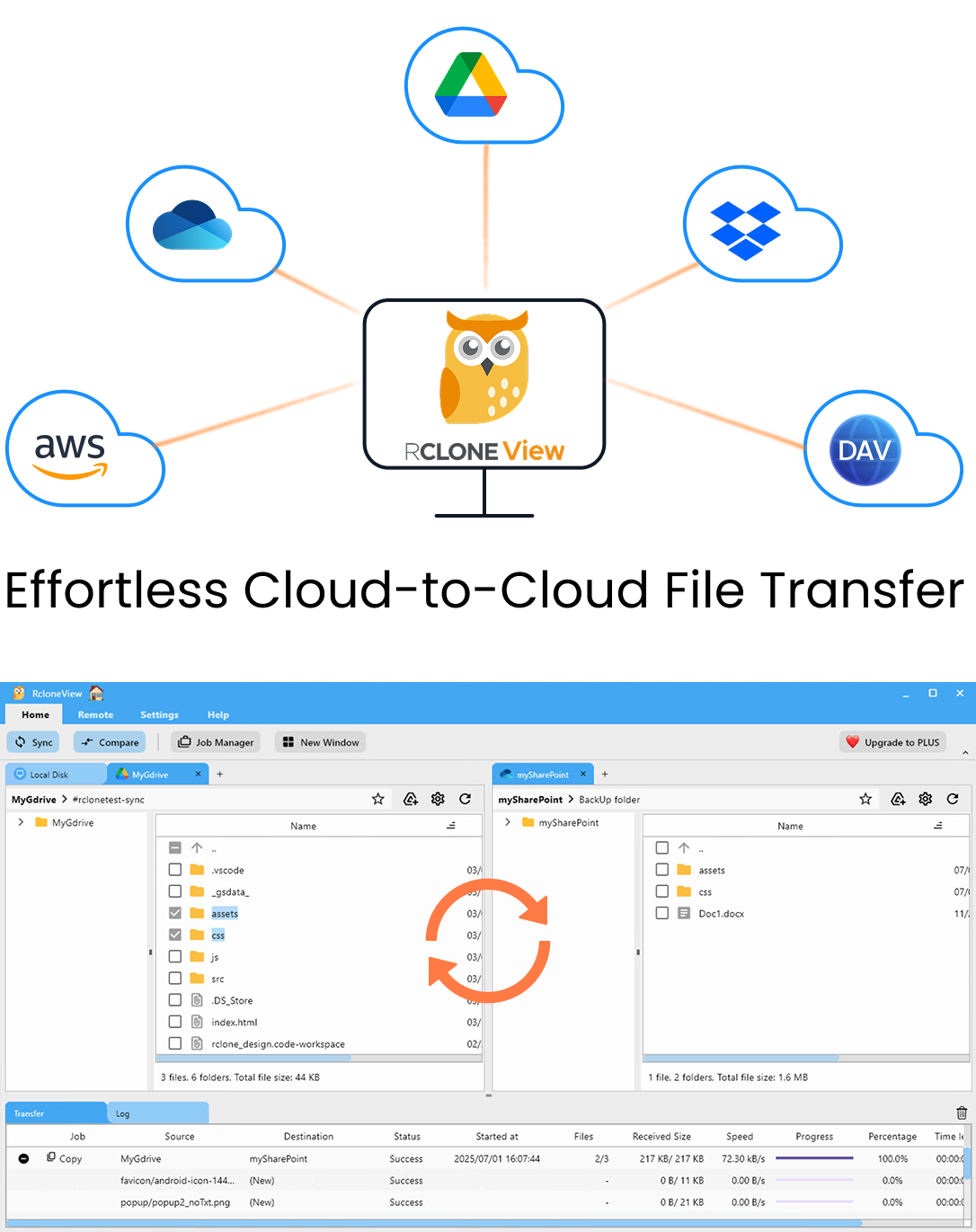
Manage & Sync All Clouds in One Place
RcloneView is a cross-platform GUI for rclone. Compare folders, transfer or sync files, and automate multi-cloud workflows with a clean, visual interface.
- One-click jobs: Copy · Sync · Compare
- Schedulers & history for reliable automation
- Works with Google Drive, OneDrive, Dropbox, S3, WebDAV, SFTP and more
Free core features. Plus automations available.
Verifying Your Azure Files Credentials
Azure Files requires three pieces of information: the Storage Account Name, the Shared Key (also called the Storage Account Key), and the Share Name. A mismatch in any of these three fields causes an immediate authentication failure. The error messages from Azure in these cases are not always specific about which field is wrong.
In RcloneView, open your Azure Files remote configuration and double-check each field:
- Account Name: This is the storage account name, not the display name or subscription name.
- Account Key: Found in the Azure Portal under your storage account > Access Keys > Key1 or Key2. Copy the full key — they are long base64 strings and easy to truncate accidentally.
- Share Name: The exact name of the file share within the storage account, case-sensitive.
If you have recently rotated your access keys in the Azure Portal, update the key in RcloneView's remote configuration immediately, as the old key will be invalidated.
SMB Port 445 Firewall Issues
Azure Files uses SMB protocol over TCP port 445. Many corporate networks and ISPs block outbound port 445 as a security measure against older SMB vulnerabilities. If your credentials are correct but connections still time out, port 445 blocking is the most likely cause.
To test whether port 445 is accessible, run Test-NetConnection -ComputerName <storage-account>.file.core.windows.net -Port 445 in PowerShell (Windows) or nc -zv <storage-account>.file.core.windows.net 445 on Linux/macOS. If the connection fails, you have two options: work with your network administrator to allow outbound port 445, or use Azure Files via NFS (where available) or access the underlying Azure Blob Storage instead.
TLS and Endpoint Configuration
RcloneView's Azure Files remote uses HTTPS for the control plane and SMB for data transfer. Ensure that your endpoint is set correctly — for standard Azure storage accounts the endpoint is <accountname>.file.core.windows.net. If you are using Azure Government, Azure China, or a private endpoint, the hostname will be different and must be specified explicitly in the remote configuration.
TLS version mismatches can occur on older Windows systems where TLS 1.2 is not enabled by default. Azure Files requires TLS 1.2 or higher. On Windows, enable TLS 1.2 through the registry or via Group Policy if connections fail with TLS-related error messages. On Linux, ensure your system's OpenSSL version supports TLS 1.2 (any modern distribution does).
Getting Started
- Download RcloneView from rcloneview.com.
- Verify your Account Name, Account Key, and Share Name are all correct and match the Azure Portal exactly.
- Test outbound connectivity to port 445 using
ncor PowerShellTest-NetConnection. - If port 445 is blocked, contact your network team or consider an alternative access method.
- Ensure TLS 1.2 is enabled on your system if you see TLS handshake errors.
Resolving Azure Files connection errors is usually a matter of checking credentials and network configuration — once those are correct, the remote works reliably in RcloneView for browsing, sync, and backup jobs.
Related Guides:
- Manage Azure Files — Cloud Sync with RcloneView
- Fix SMB Windows Network Share Mount Errors with RcloneView
- Fix Azure Blob SAS Token Auth Errors with RcloneView
Supported Cloud Providers