Fix Dropbox Sync Errors — How to Resolve Common Issues with RcloneView

When Dropbox sync fails silently or throws cryptic errors, RcloneView gives you the visibility and controls to pinpoint the problem and get transfers back on track.
Dropbox sync errors are more common than most users expect — from expired OAuth tokens and API rate limits to file permission issues and configuration mismatches. The trouble is that the Dropbox desktop client offers little diagnostic information when something goes wrong. RcloneView, built on rclone's mature Dropbox driver, surfaces detailed logs, lets you tune transfer parameters, and provides a dry-run mode so you can verify exactly what will happen before touching real data.
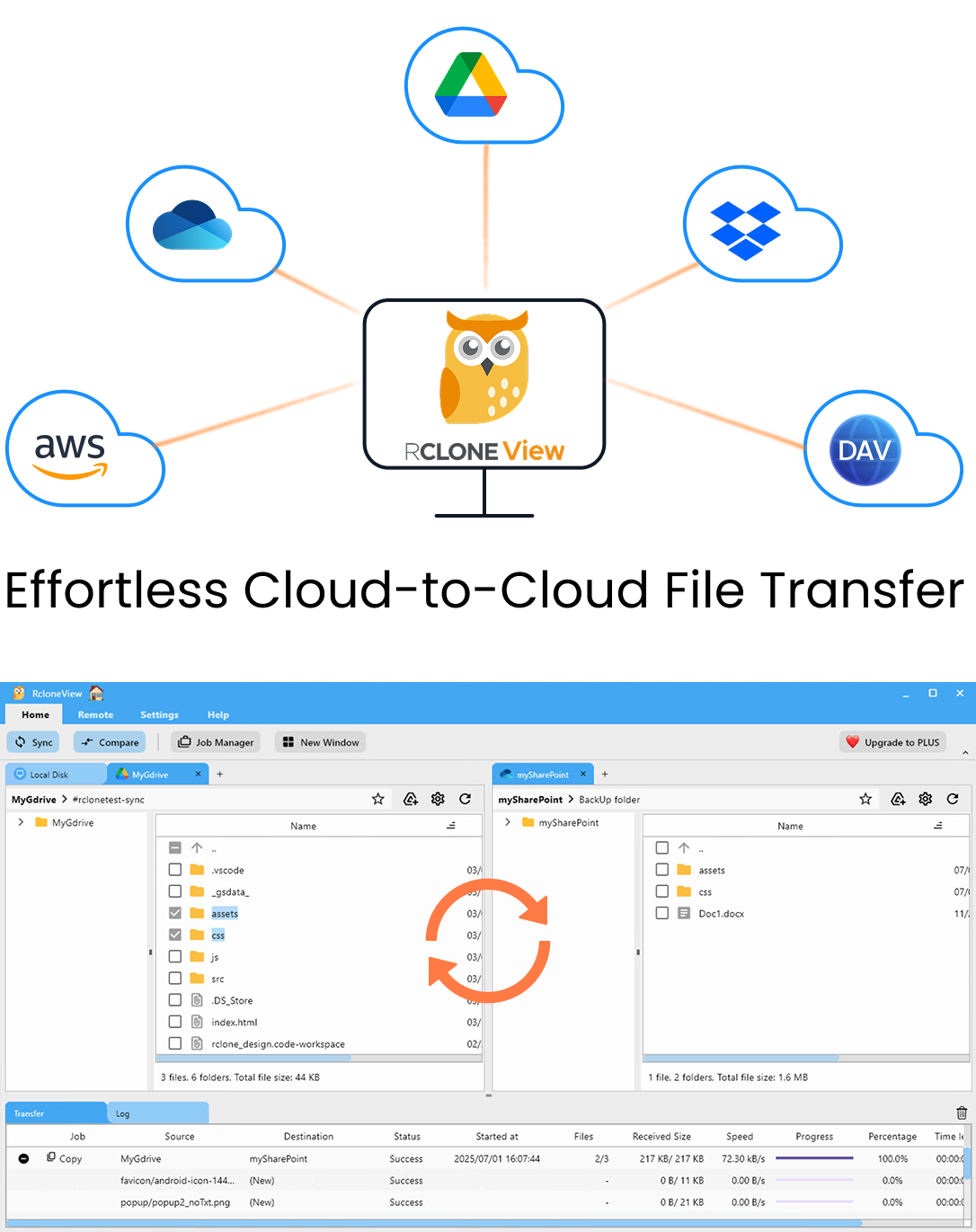
Manage & Sync All Clouds in One Place
RcloneView is a cross-platform GUI for rclone. Compare folders, transfer or sync files, and automate multi-cloud workflows with a clean, visual interface.
- One-click jobs: Copy · Sync · Compare
- Schedulers & history for reliable automation
- Works with Google Drive, OneDrive, Dropbox, S3, WebDAV, SFTP and more
Free core features. Plus automations available.
Re-Authenticate Your Dropbox Remote
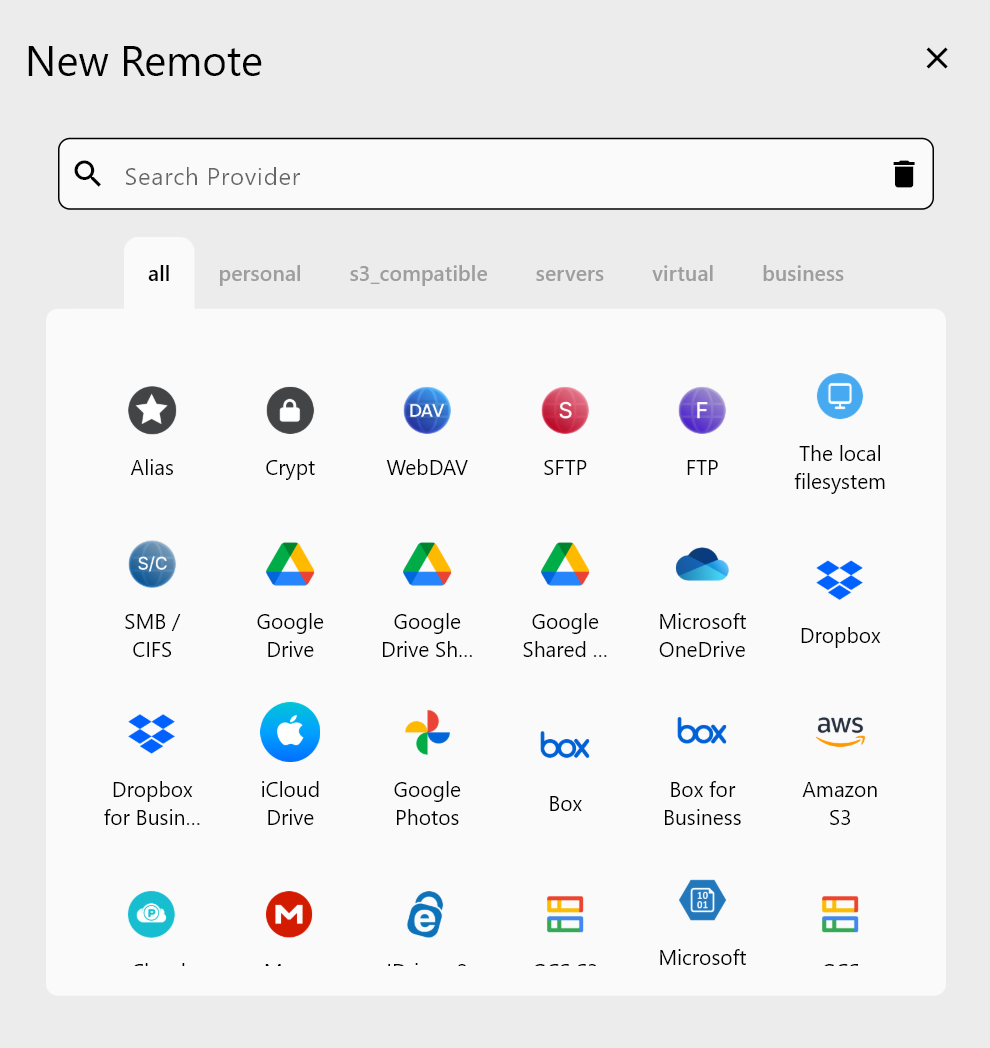
The most frequent cause of Dropbox sync failures is an expired or revoked OAuth token. Dropbox periodically invalidates tokens — especially after password changes or security reviews. In RcloneView, open Remote Manager from the Remote tab, select your Dropbox remote, and choose Edit. From there, trigger a fresh OAuth browser login to establish a new valid token automatically.
For Dropbox for Business accounts, verify the remote configuration includes dropbox_business = true in the advanced settings. Without this flag, shared team folders may appear inaccessible or fail to list files correctly. Once re-authenticated, run a quick test by navigating into the remote in the Explorer panel — if folders load, the token is working.
Adjust Transfer Settings to Avoid Rate Limiting
Dropbox enforces API rate limits that cause sync operations to stall or fail when too many concurrent requests are made. In RcloneView's sync job wizard (Step 2: Advanced Settings), reduce the Number of file transfers to 2 or 4 when working with large Dropbox folders. This paces API requests within Dropbox's acceptable thresholds and prevents batch failures.
The Retry entire sync if fails setting (default: 3 retries) handles transient network errors and temporary rate-limit responses automatically. For jobs syncing hundreds of files, keeping this at 3 means RcloneView will reattempt the full job before reporting failure. If errors persist across all retries, the Log tab in the bottom Info View shows timestamped rclone output with specific error codes — making it straightforward to distinguish between an authentication failure, a network timeout, or a file-level conflict.
Use Dry Run to Catch Problems Before They Happen
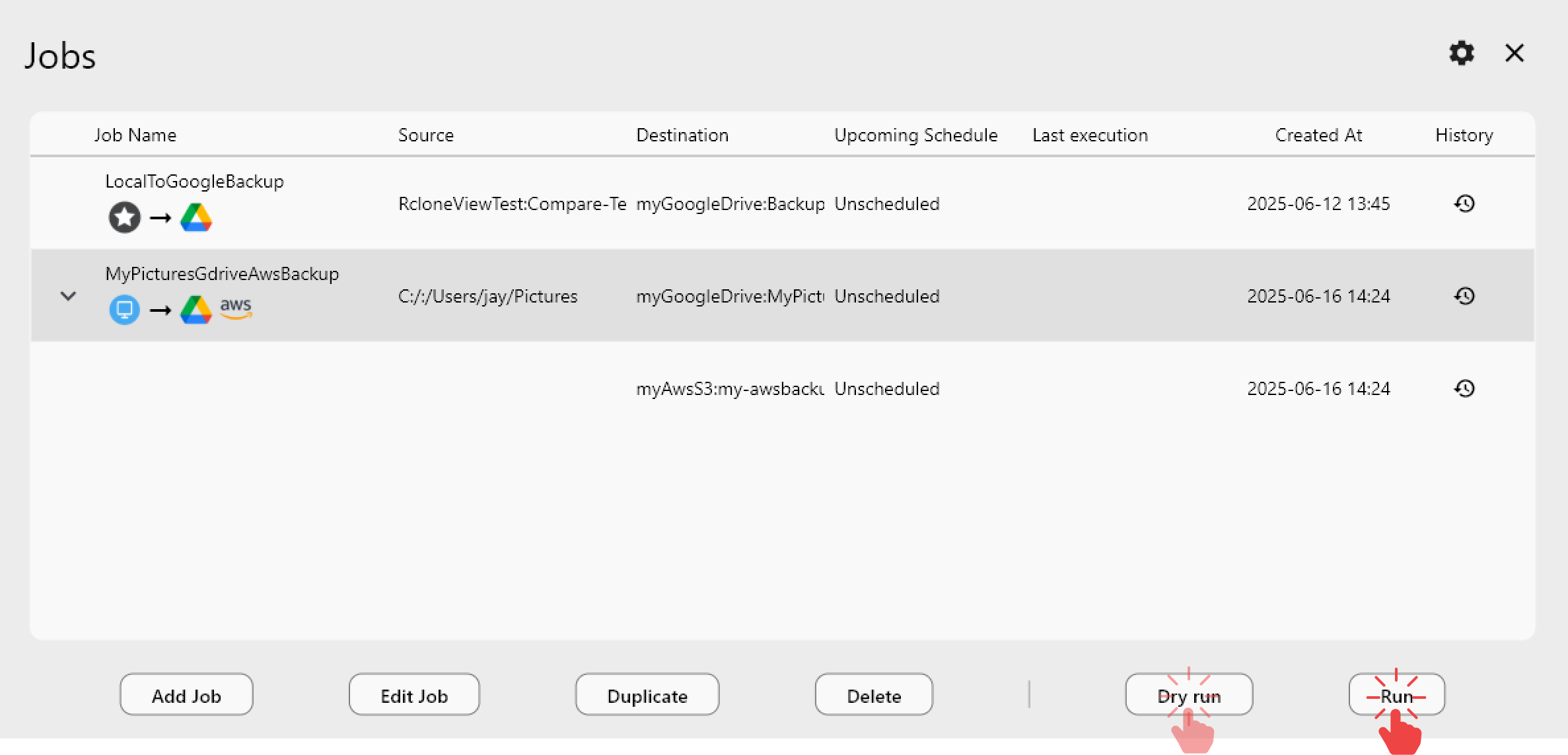
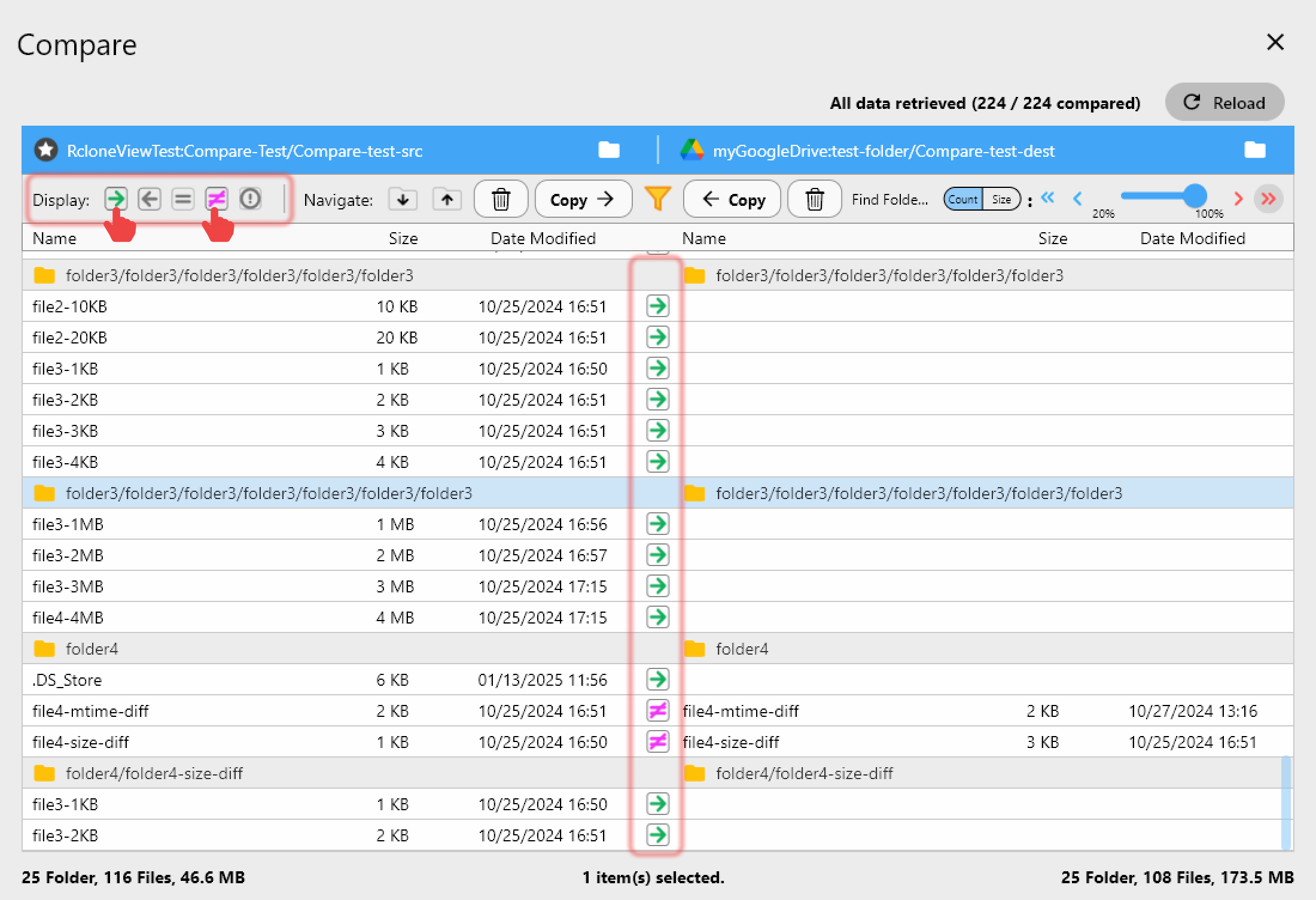
Before running any sync that could modify or delete files in Dropbox, use the Dry Run feature from the Job Manager. Dry Run simulates the sync completely — showing which files would be copied and which would be removed — without making any actual changes. For a marketing team syncing 50 GB of campaign assets into Dropbox, a dry run that reveals unexpected deletions can prevent a costly mistake.
Dry Run results appear in the Transferring tab as a detailed file-level preview. If you notice unexpected skips or deletions, review your filter rules in Step 3 of the sync wizard. Common culprits include max file size limits set too conservatively, or max file age filters that inadvertently exclude recently modified files from the transfer.
Review Job History to Diagnose Recurring Failures
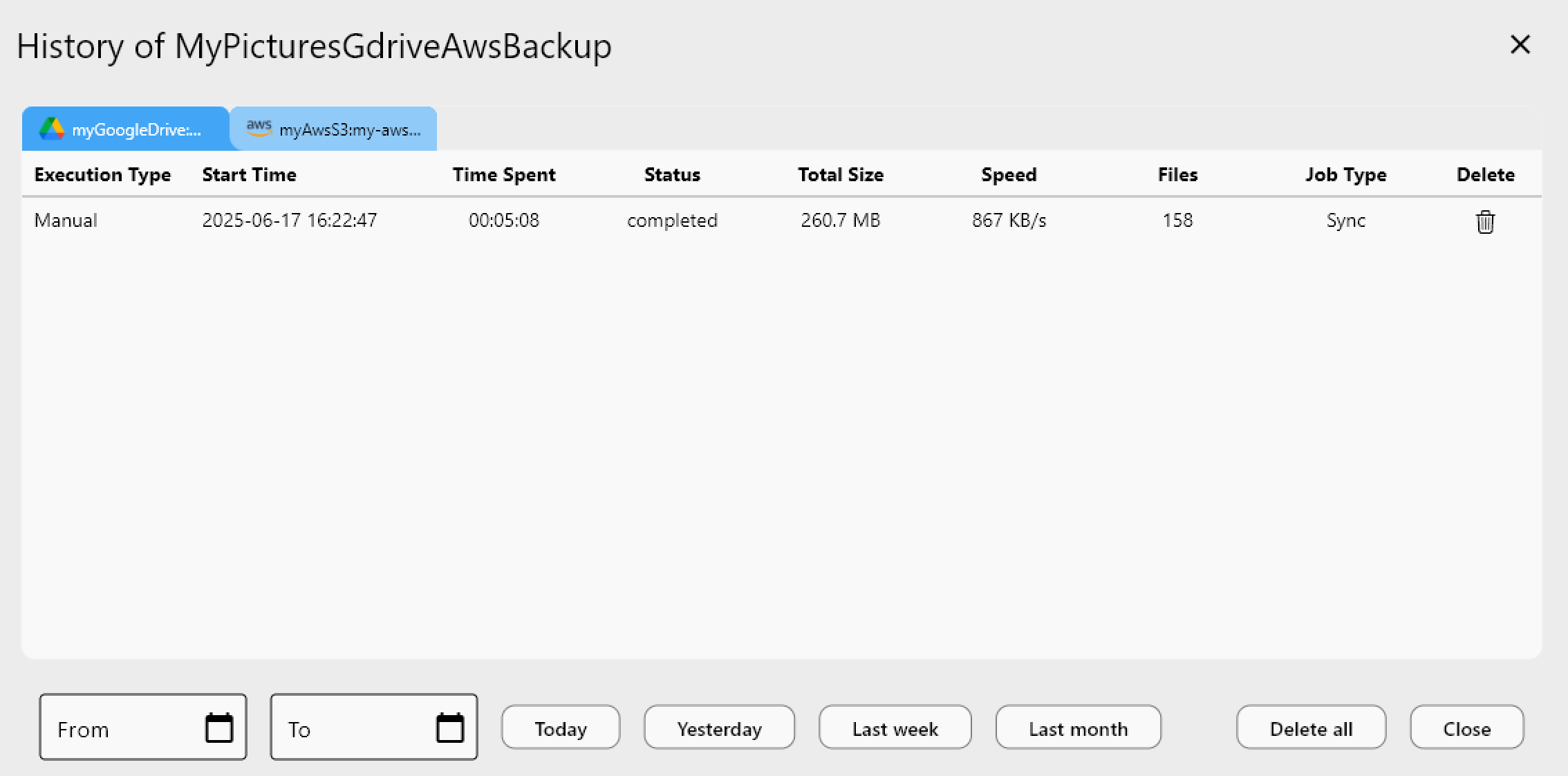
RcloneView maintains a complete job history for every sync operation, accessible directly from the Job Manager. Each history entry shows execution type (manual or scheduled), start time, duration, transfer speed, file count, total size, and final status — Completed, Errored, or Canceled. Filtering by date range lets you focus on recent failures and compare them against successful runs.
When errors recur consistently, the Log tab provides granular rclone output that identifies the nature of the problem. A media agency that runs nightly Dropbox backups, for instance, can review Monday's failed run against Tuesday's success to spot whether the issue correlates with specific files, network conditions, or a change in folder permissions.
Getting Started
- Download RcloneView from rcloneview.com.
- Open Remote Manager and re-authenticate your Dropbox remote via fresh OAuth browser login.
- Edit your sync job and lower concurrent transfers in Advanced Settings to reduce rate-limit risk.
- Run a Dry Run to preview sync results before executing the actual job.
- Review Job History and the Log tab to track down any persistent error patterns.
With full log visibility and granular transfer controls, RcloneView turns Dropbox troubleshooting from guesswork into a systematic diagnostic process.
Related Guides:
- Fix Bandwidth & Throttle Slow Uploads with RcloneView
- Fix Cloud Transfer Permission Denied Errors with RcloneView
- Migrate Dropbox to Google Drive with RcloneView
Supported Cloud Providers